Cyclist’s Ride Through The World’s Largest Albatross Colony Is Pure Magic
A U.S. Fish and Wildlife Service (USFWS) volunteer shared this fascinating point-of-view video of his commute to work at the world’s largest albatross colony.
Beach cruiser bikes are the principal means of transportation on Midway Atoll National Wildlife Refuge, an island in the central Pacific ocean which is home to millions of seabirds. Biking is the best way to navigate the atoll’s minimal road system, according to USFWS volunteer Dan Rapp, who captured the footage that shows the chicks barely acknowledging the passing bicycle.
Bikes “are also the easiest way to maneuver ‘the chick traffic,'” according to Rapp.
USFW shared further information about the “chick traffic” on Facebook, noting that during the annual nest survey this year “nearly 645,000 albatross nests were counted.”
“That means every year there are hundreds of thousands of downy albatross chicks, like the ones seen in this biking video, meandering about on the refuge’s 2.4 square miles of land,” they wrote.
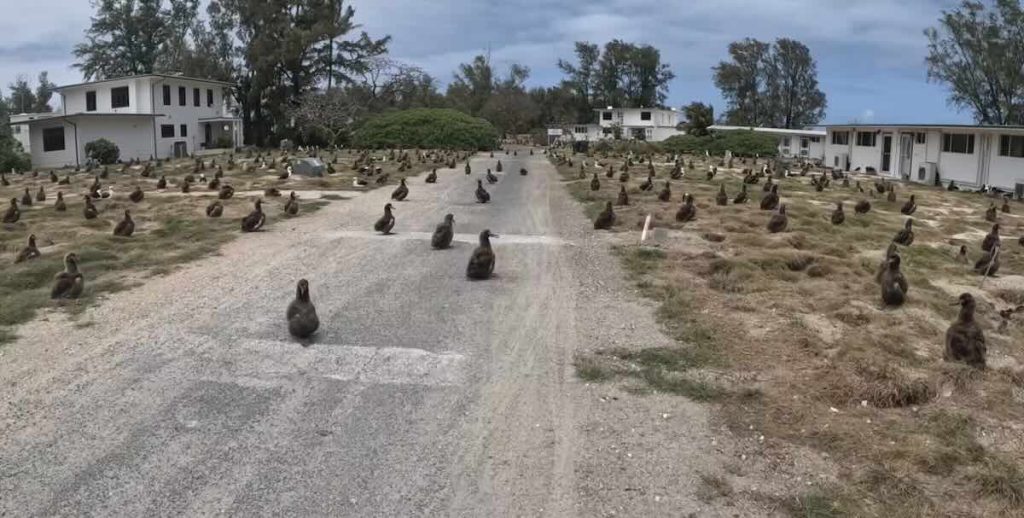
USFW continued, “‘As they grow, albatross chicks will move out from vegetation onto roads to take advantage of increased winds for cooling in hot weather and to exercise their wings before they can take flight,’ said Jon Plissner, supervisory wildlife biologist at the refuge.”
“’As the wings get stronger, they also start hopping and flapping in windy weather, gradually getting a bit more airborne,’ explained Plissner. ‘Like their parents, they soon learn to run into the wind to get more lift.’”
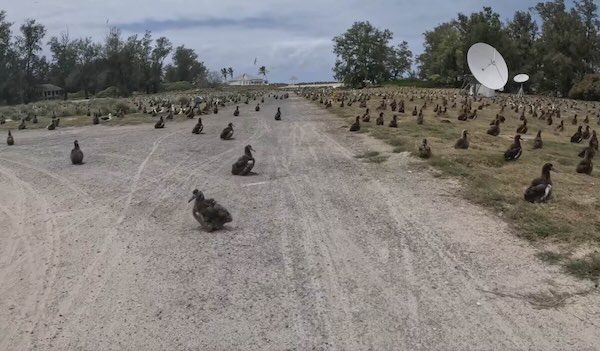
According to the USFWS, the enormous albatross colony sprawls across all three islands of the atoll. They arrive every fall to breed and nest where they were born. Around late July the newly fledged chicks are starting to depart for sea.
Once grown, albatrosses will spend most of their lives at sea and only come back to land to breed. Albatrosses are truly amazing birds. They have the biggest wingspan of any bird on the planet. They can fly for 13 straight months and can fly millions of miles during their lifetimes.
Here is a video about their mating rituals on Resurrection Island.
They also have unusual biology to keep them in the air. They use their nostrils and specialized organs that help them utilize a specialized technique known as dynamic soaring.
Disclosure: This post may include affiliate links.