Ocean Photographer of the Year Winners Capture Breathtaking Marine Life
An incredible photo of synchronized “ladybugs of the sea” by macro photographer Yury Ivanov has won Ocean Photographer of the Year 2025. The image shows two amphipods from the Cyproideidae family, each only about 3 millimetres long, resting on coral in Bali, Indonesia. Ivanov, based in Indonesia, said capturing it took patience and precision: “The result reveals an intimate glimpse of underwater life that is often overlooked.”
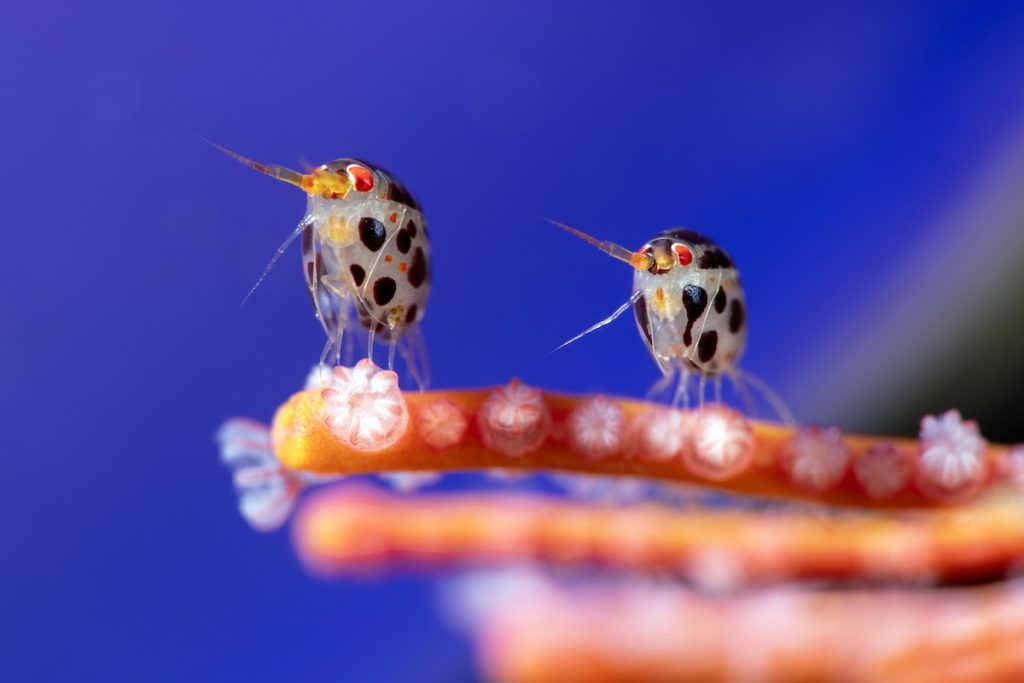
Judges selected the image from over 15,000 entries, praising its simple message that the ocean is a place of wonder, color, and life in every size. The image was selected as the winner from over 15,000 entries.
This year’s competition also features breathtaking work from the planet’s leading ocean photographers, showcasing the extraordinary beauty and diversity of life hidden beneath the water’s surface.
Take a look at more incredible winners and finalists across the categories below.
Category: WILDLIFE FINALISTS
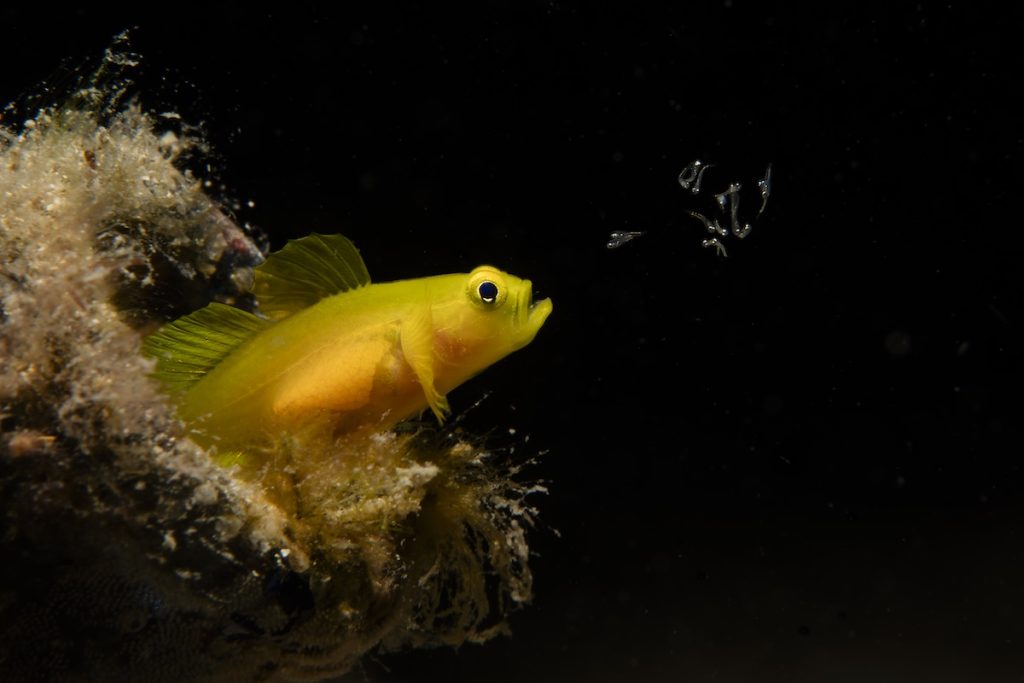
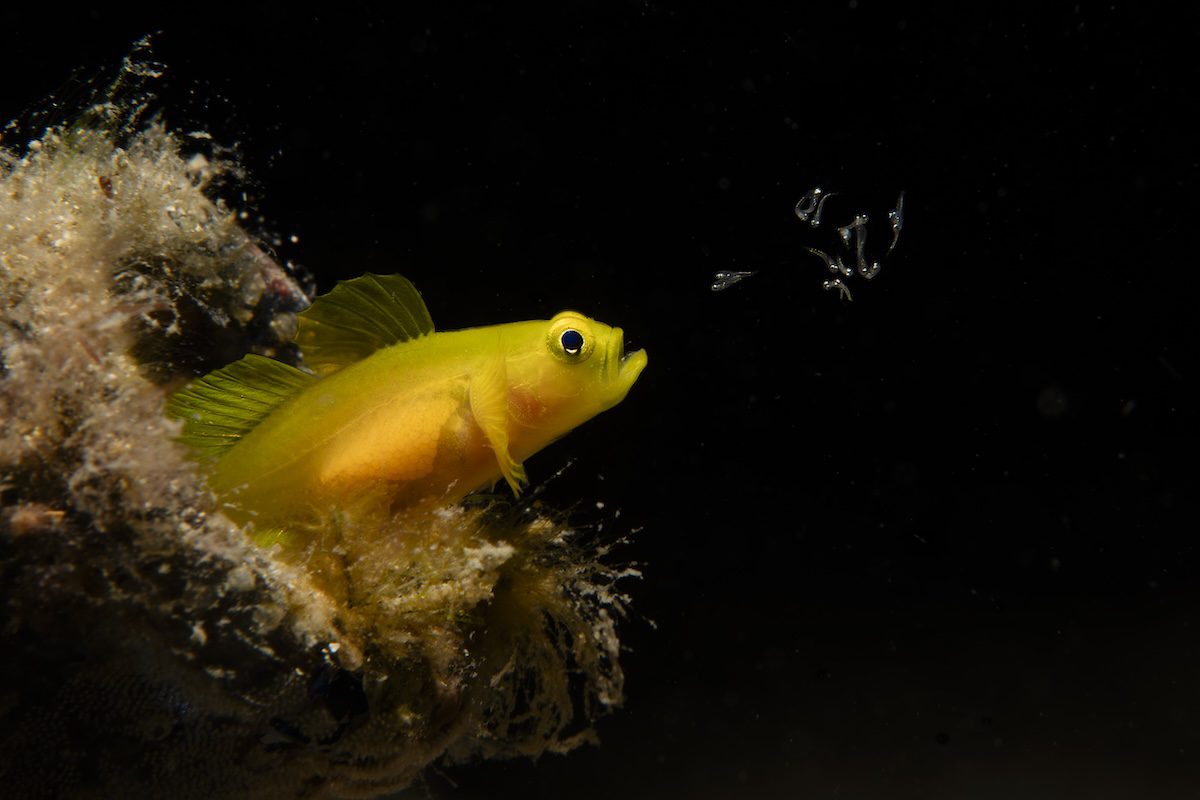
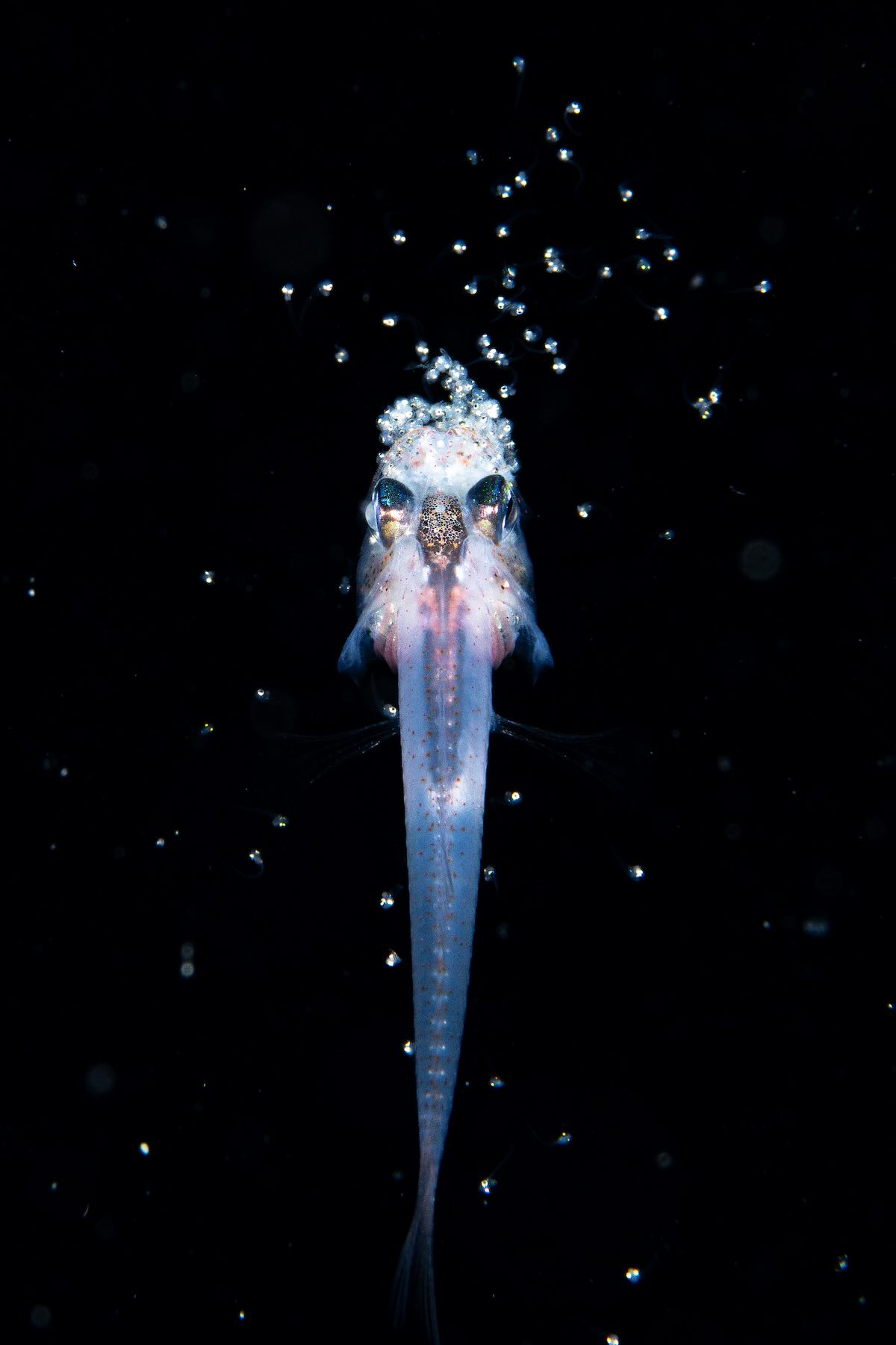
WINNER Takumi Oyama. A female yellow pygmy goby releases newly hatched larvae into the water column from her mouth. “In gobiid fishes, male parental care is common. In the yellow pigmy goby, however, the females also participate in parental hatching care,” says Oyama. © Ocean Photographer of the Year 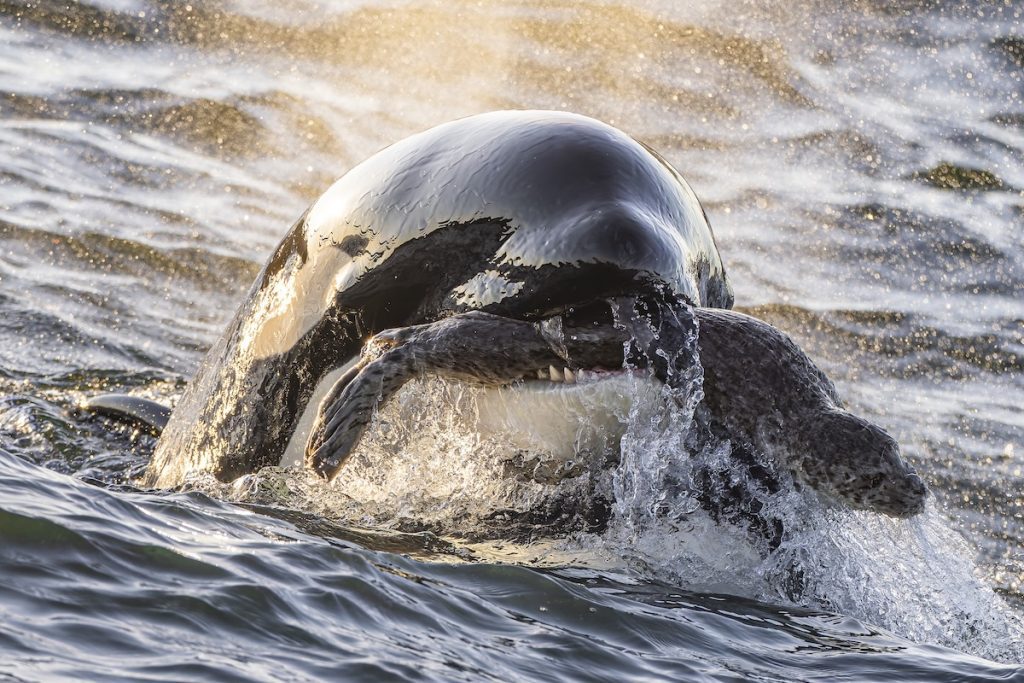
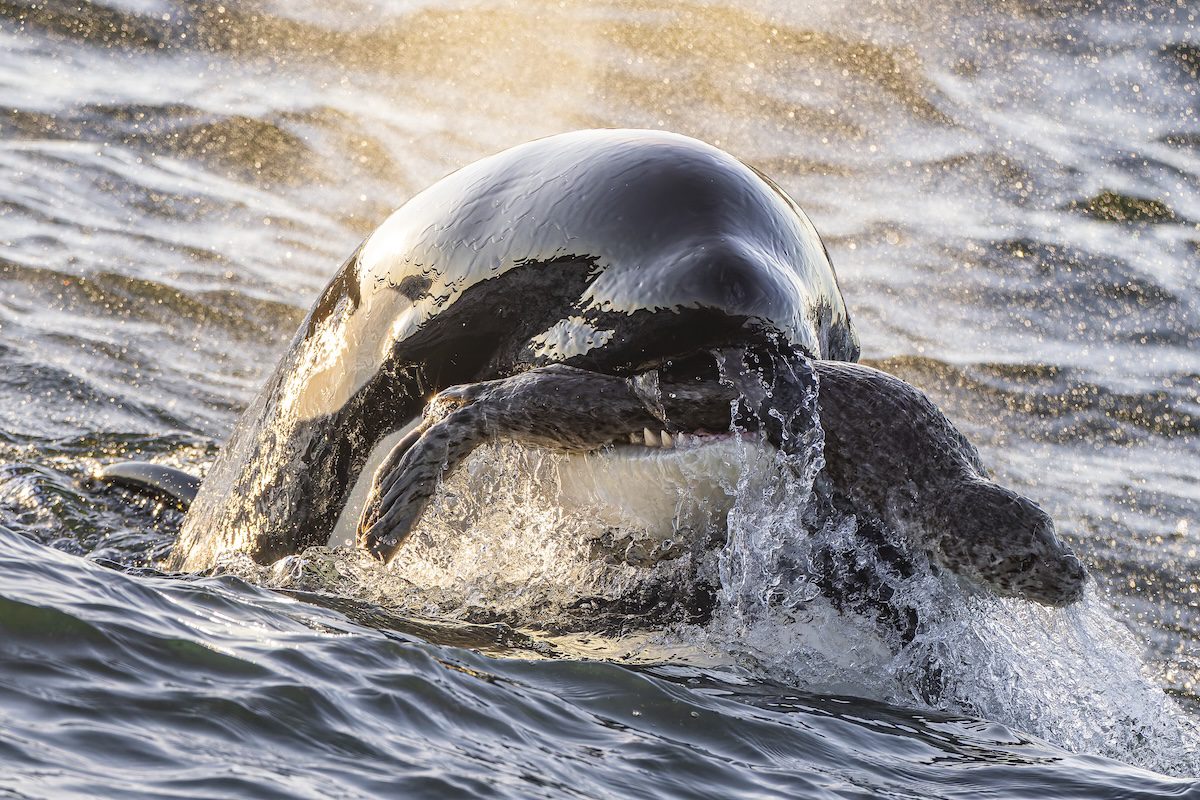
Second place Yifan Ling. A one-year-old Bigg’s orca catches a harbour seal. “At this age, orcas typically rely on milk,” Ling explains. “His skill highlights the Salish Sea’s richness, where harbour seals and orcas have rebounded thanks to the Marine Mammal Protection Act of 1972.” © Ocean Photographer of the Year 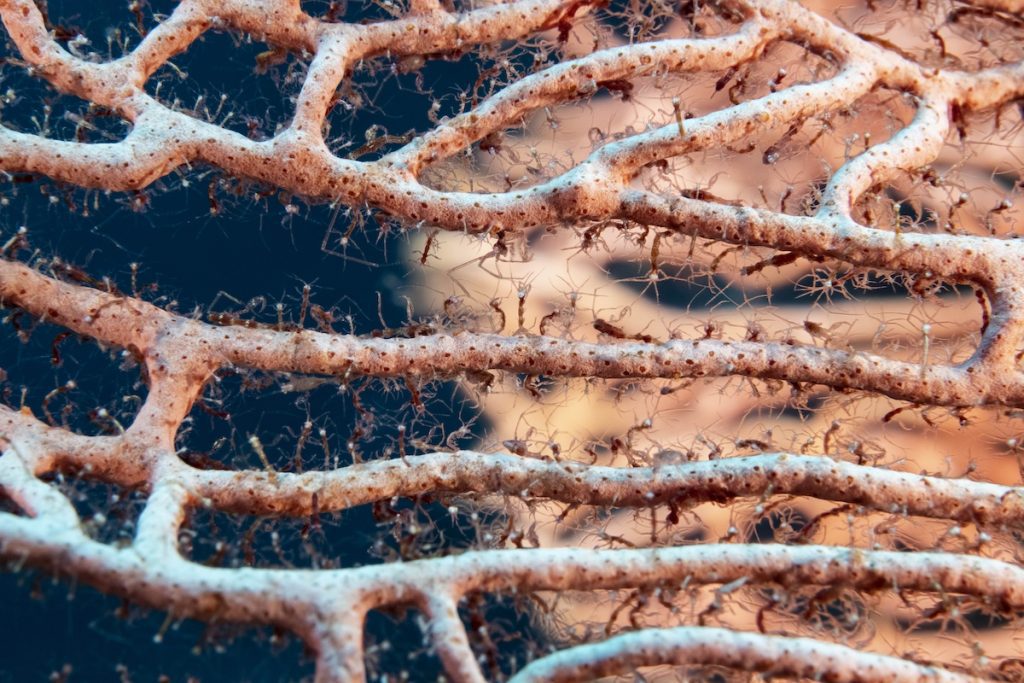
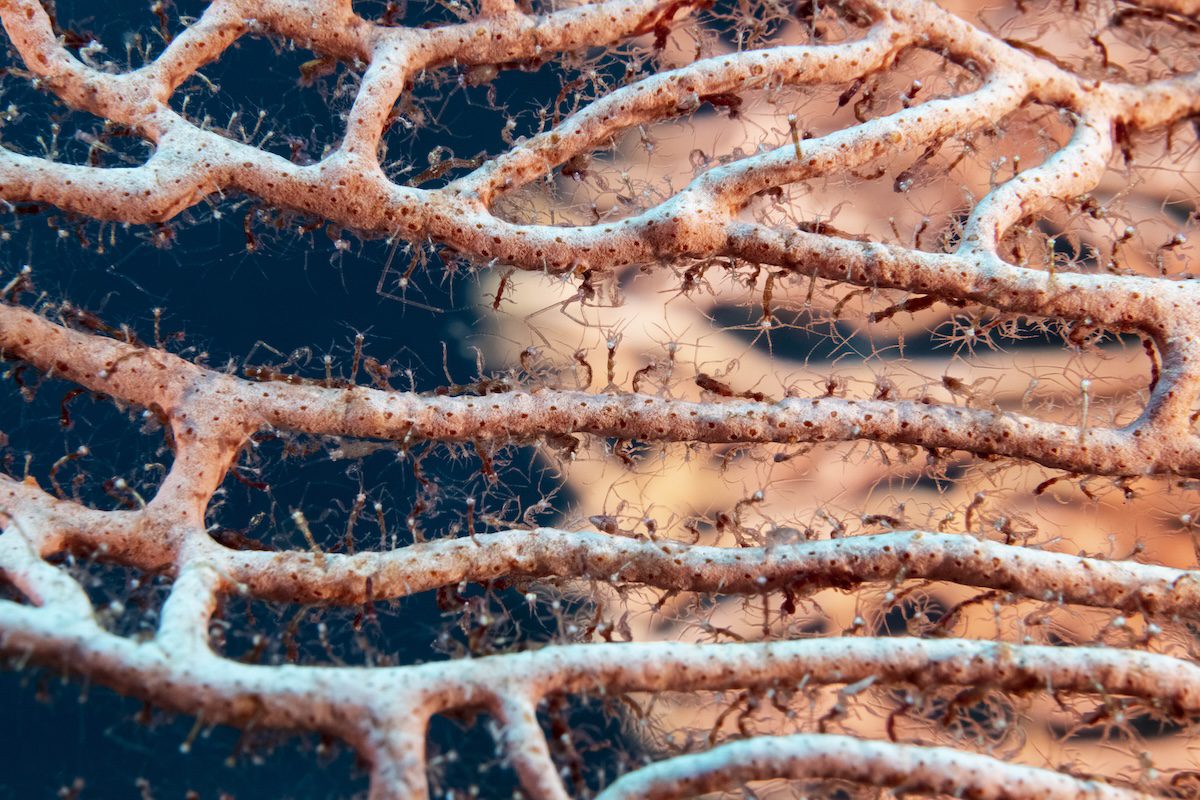
Third place Alexis Chappuis. Skeleton shrimps colonise a gorgonian coral. “As these crustaceans feed on plankton, they usually don’t impact their host,” says Chappuis. “In this case, there were so many of them that they most likely caused the gorgonian to retract its polyps.” © Ocean Photographer of the Year 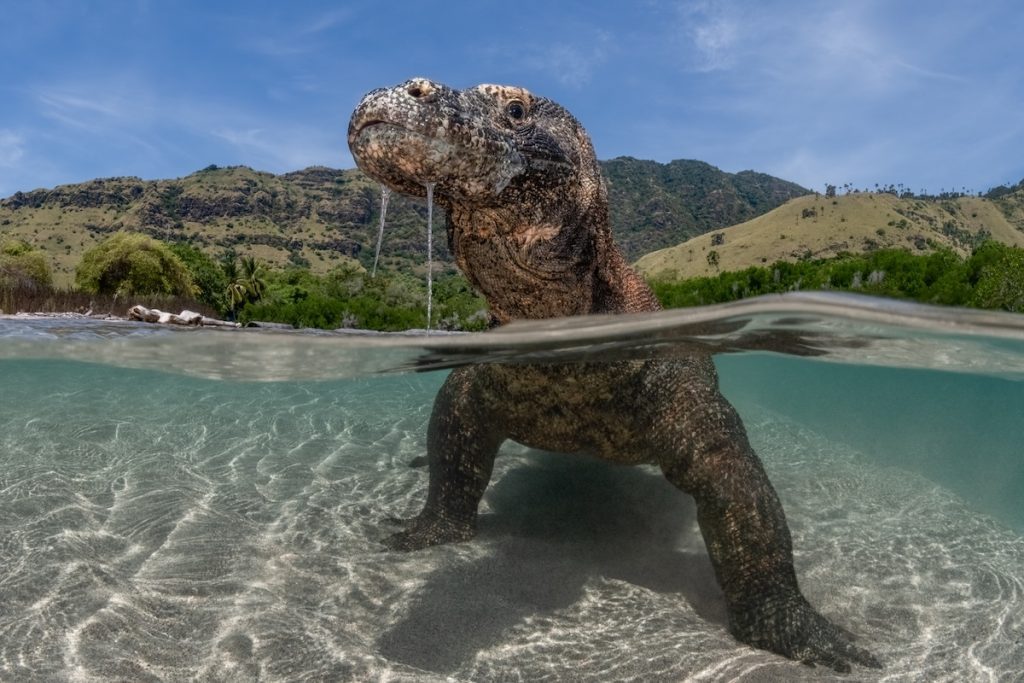
Suliman Alatiqi. A Komodo dragon stands in the shallows. “As cold-blooded animals, Komodo dragons rely on external sources to regulate their body temperature,” says Alatiqi. “They can be seen resting in shallow water or mud to lower their body temperature.” © Ocean Photographer of the Year 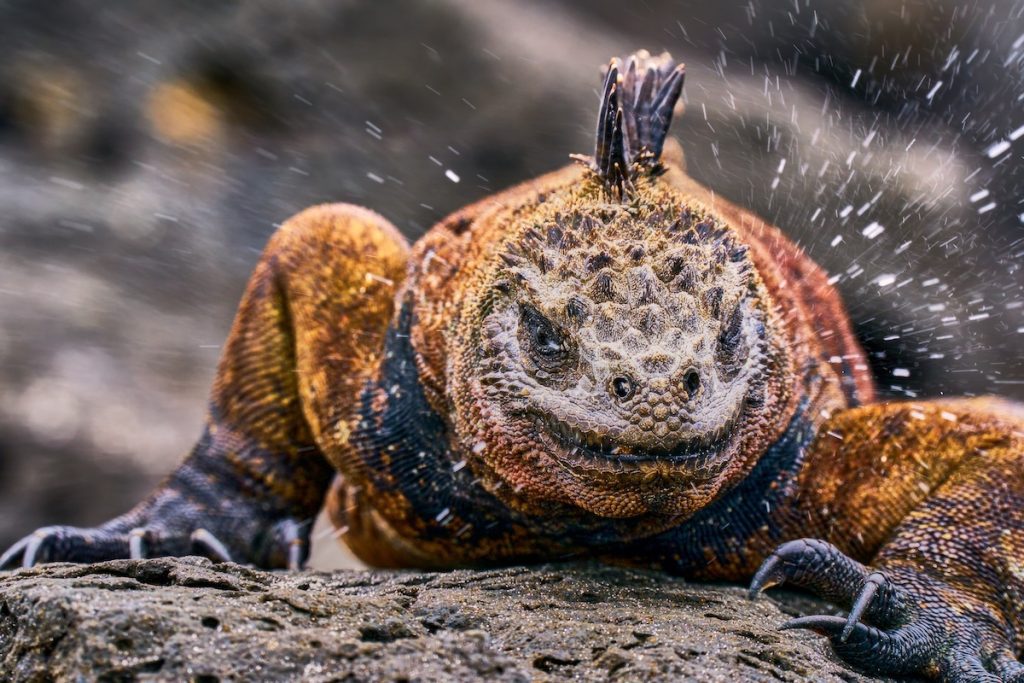
Arturo de Frias Marques. A marine iguana sneezes excess salt it absorbed during a dive. “This individual was resting after a foraging dive,” says de Frias. “By sheer luck, I photographed the split-second in which it was sneezing.” © Ocean Photographer of the Year 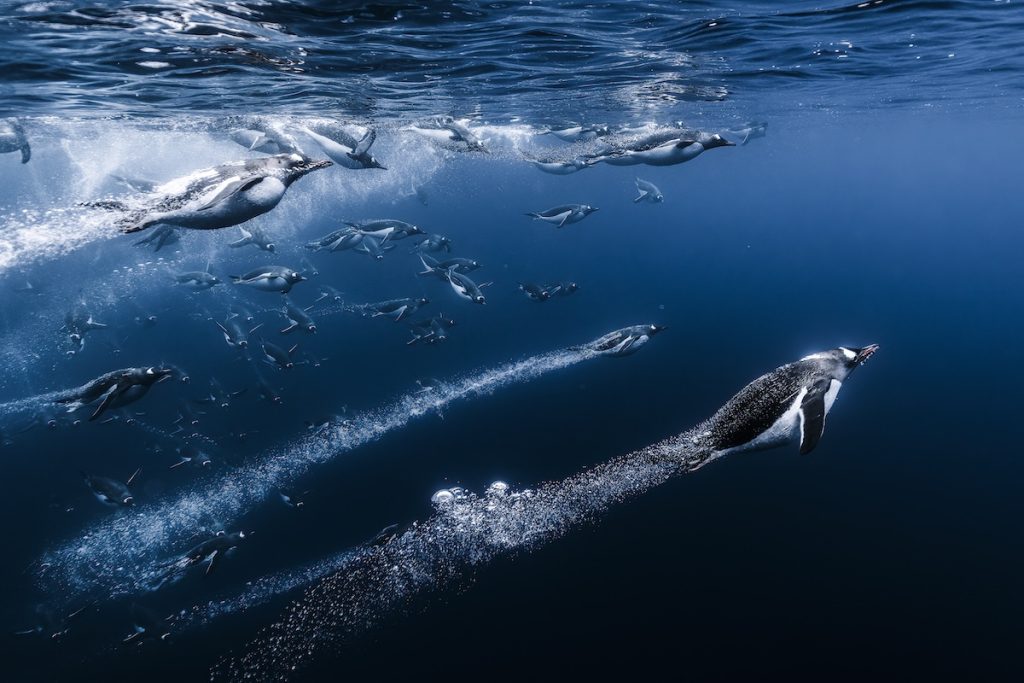
Romain Barats. Gentoo penguins resembling rockets dart through the water. “Clumsy on land, these birds are fast and agile in the water,” describes Barats. © Ocean Photographer of the Year 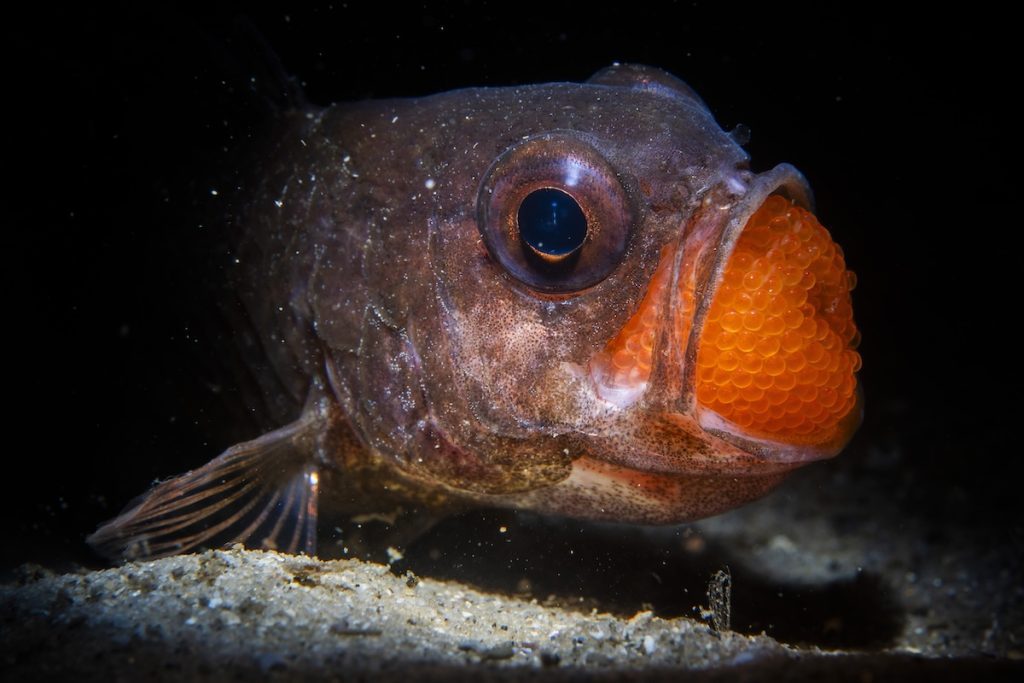
Daniel Sly. A male eastern gobbleguts carries its eggs. “These fish are really shy,” says Sly. “After a long wait, the gobbleguts emerged and I used a narrow beam of light to softly illuminate the fish and its egg clutch.” © Ocean Photographer of the Year 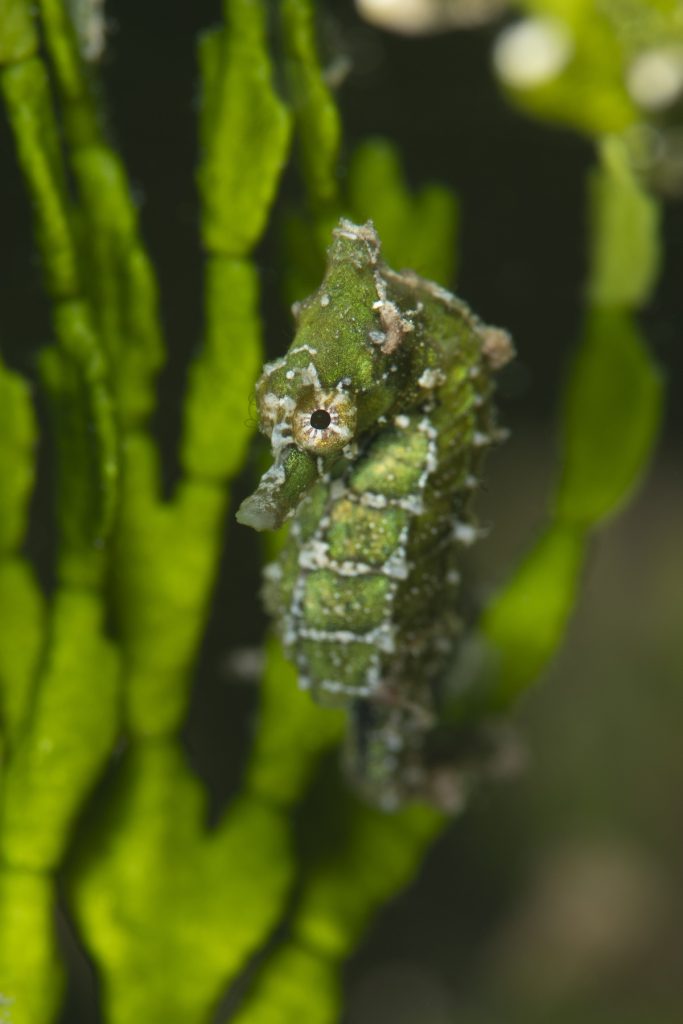
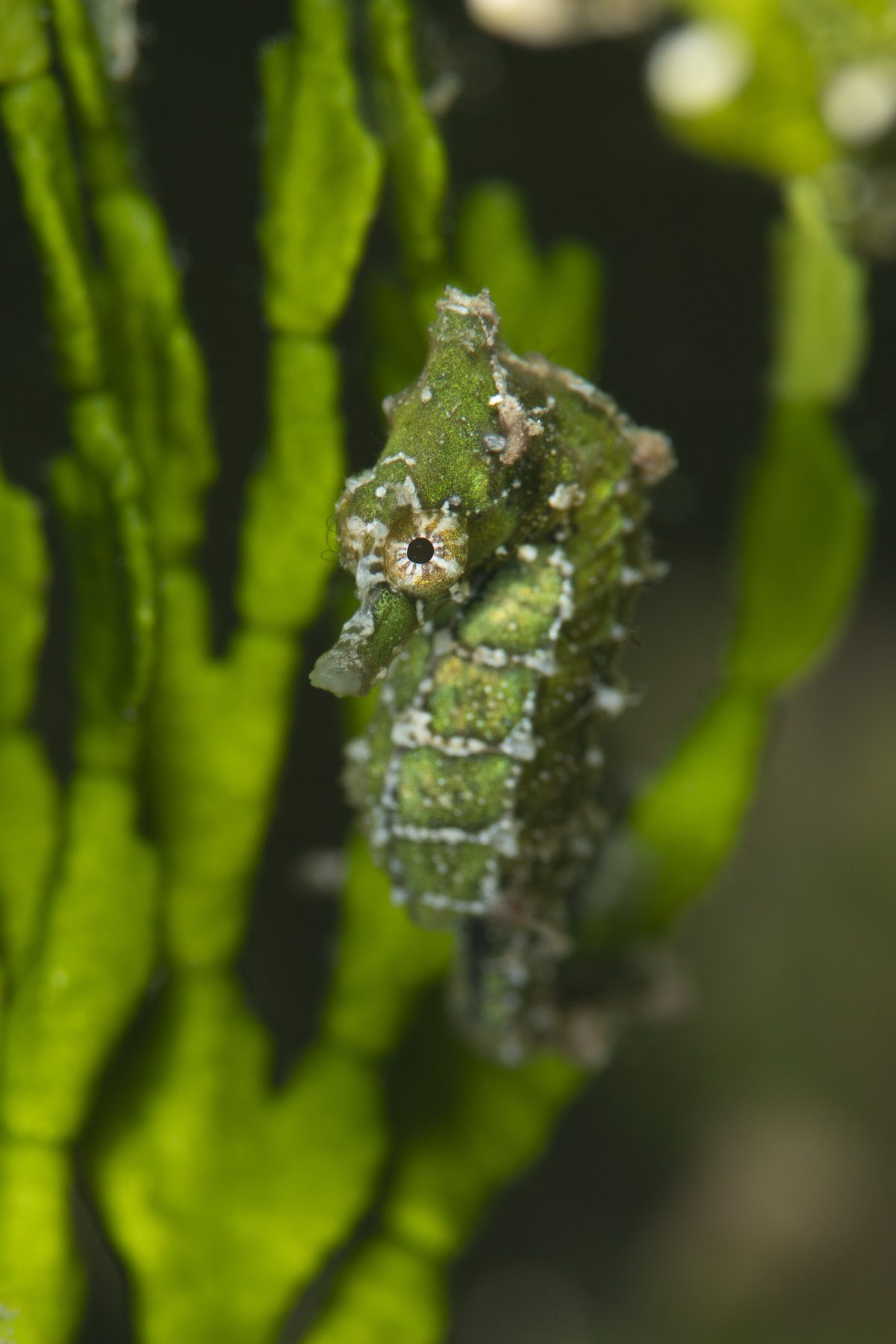
Richard Smith. A dwarf seahorse hides among green algae. “I had been searching for this species for years,” says Smith. “Although their conservation status is ‘Least Concern’, few people see them due to their incredible camouflage.” © Ocean Photographer of the Year 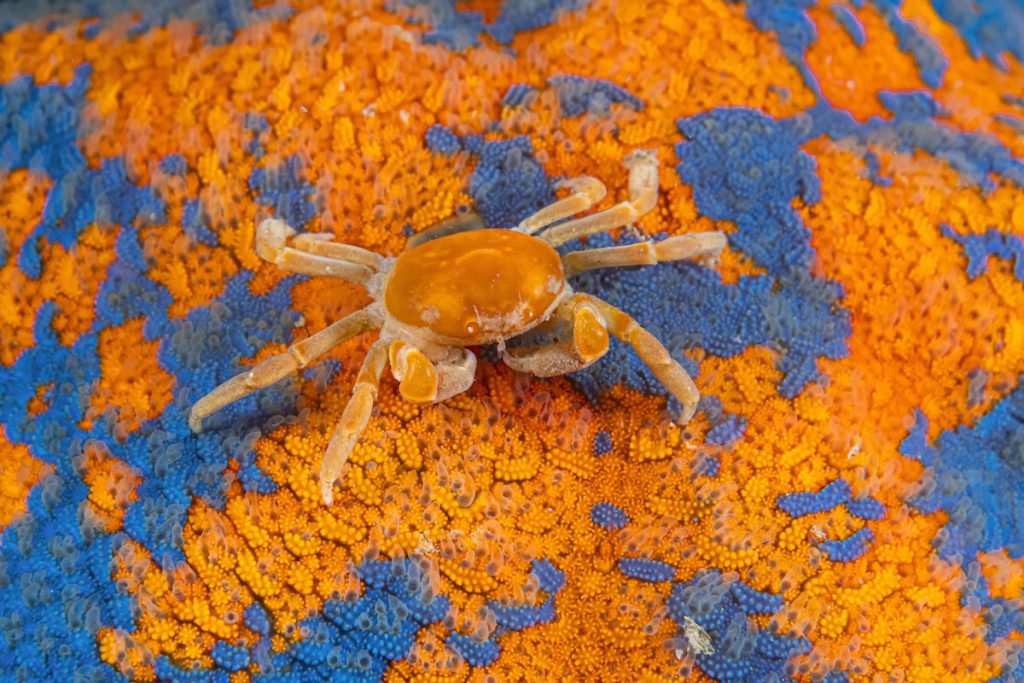
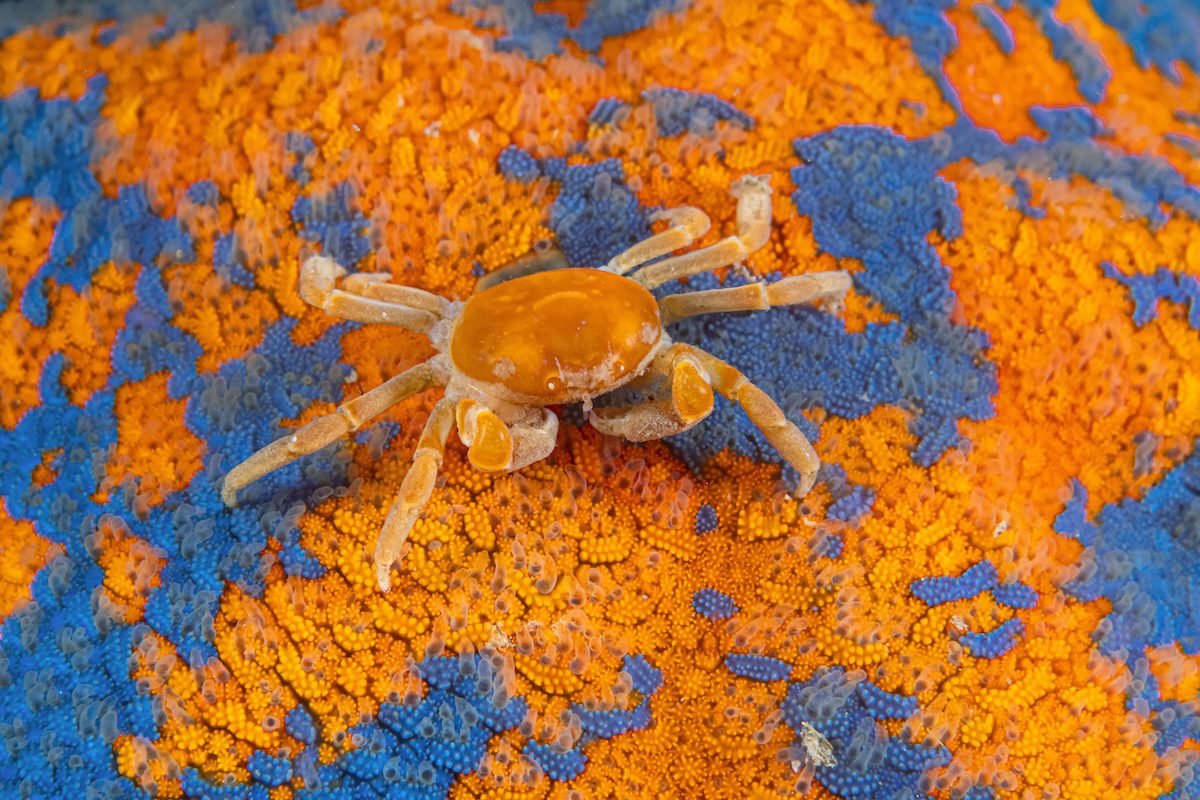
Andray Shpatak. A pea crab in the open – a rare sight. “I’ve never seen a pea crab,” Shpatak says. “They spend most of their lives inside grey mussels in a symbiotic relationship that only ends when the mussel or crab dies.” © Ocean Photographer of the Year 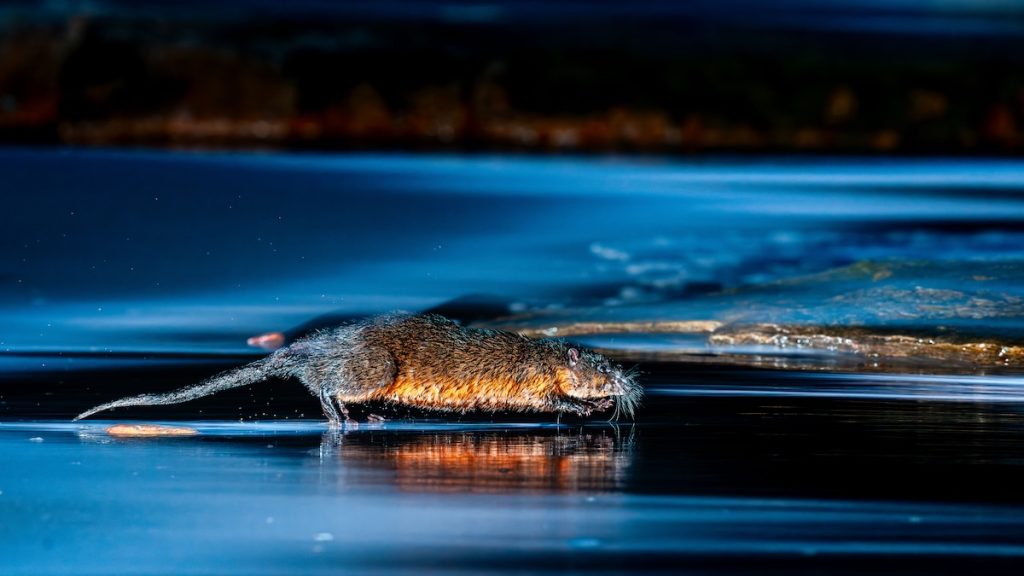
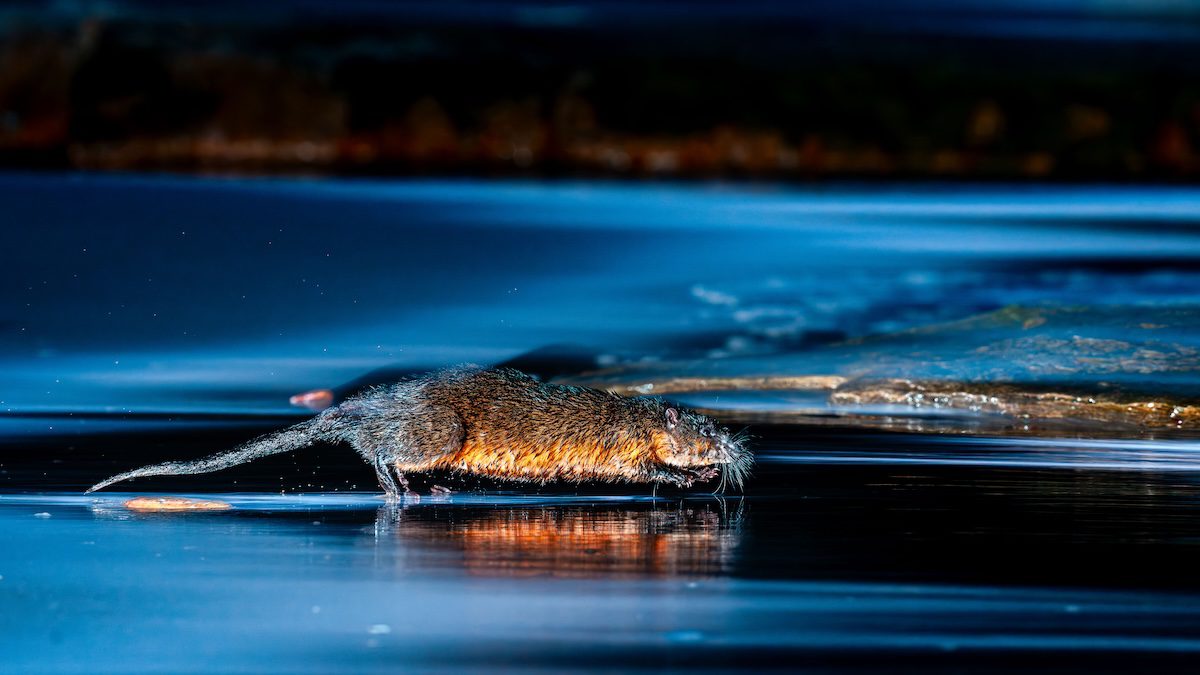
Daniel van Duinkerken. A rakali, a semi-aquatic rodent native to Australia, runs toward to the ocean in search of food. “I waited in silence at this spot for hours to get this shot,” says van Duinkerken. © Ocean Photographer of the Year 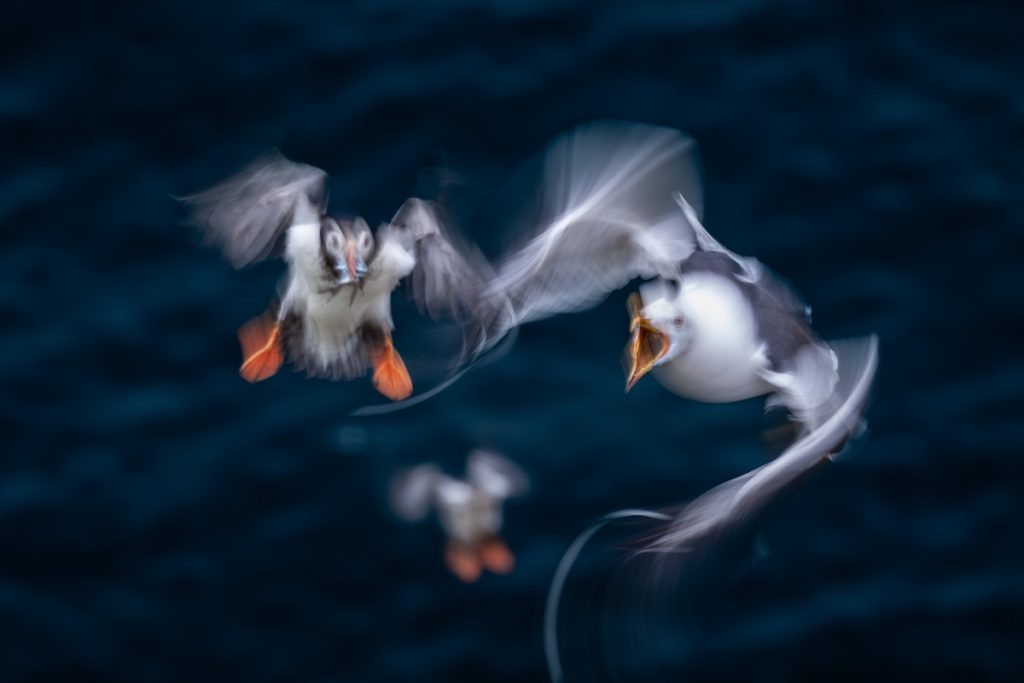
Matthew Watkinson. A great black-backed gull attacks a puffin mid-air to steal its catch. “The attack was really loud and determined,” says Watkinson. “When puffins feed chicks, gulls cruise around nesting sites looking for adults returning with fish to harass and rob.” © Ocean Photographer of the Year 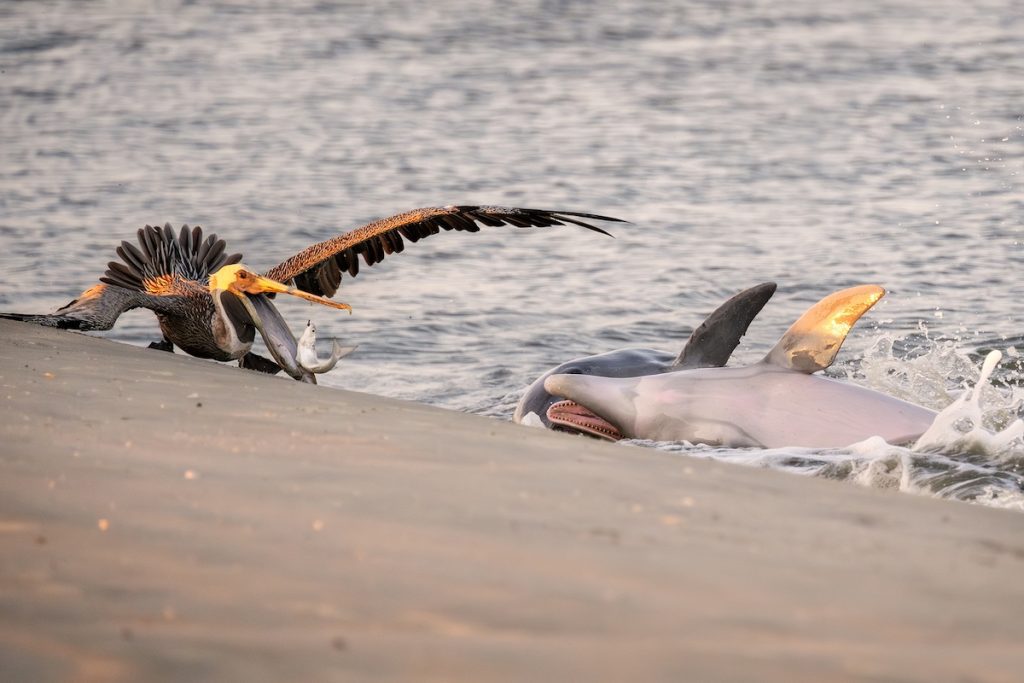
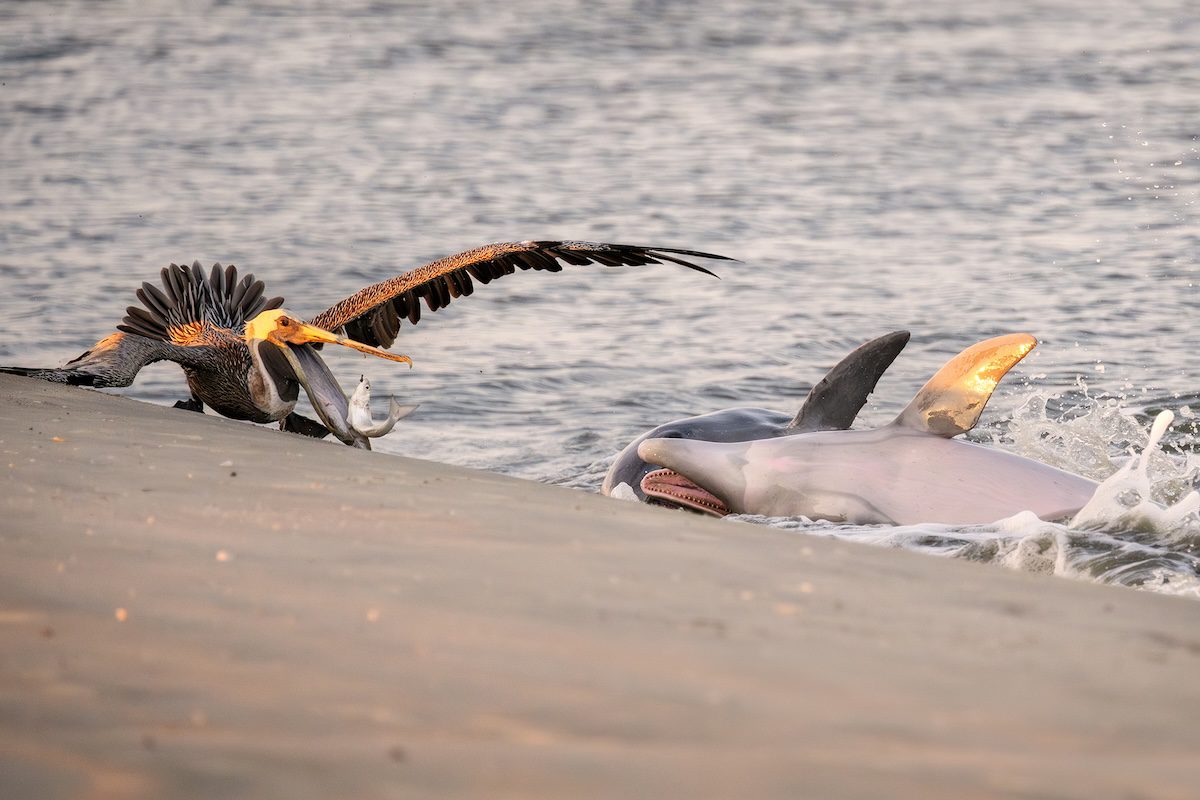
Kat Zhou. An opportunistic pelican steals a fish from strand-feeding dolphins. “When dolphins strand-feed, they corral baitballs and rush them onto shore,” says Zhou. “Though there are around 350 dolphins in South Carolina, this behaviour is only performed by a few individuals.” © Ocean Photographer of the Year
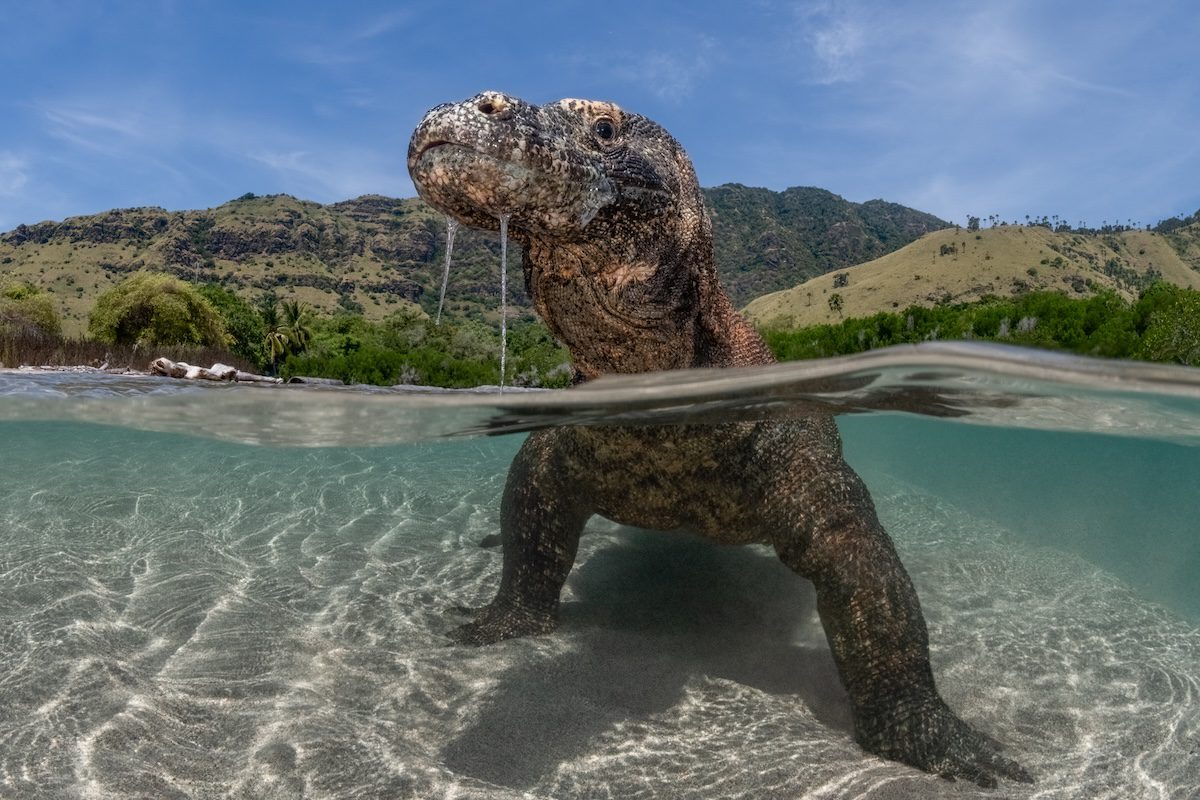
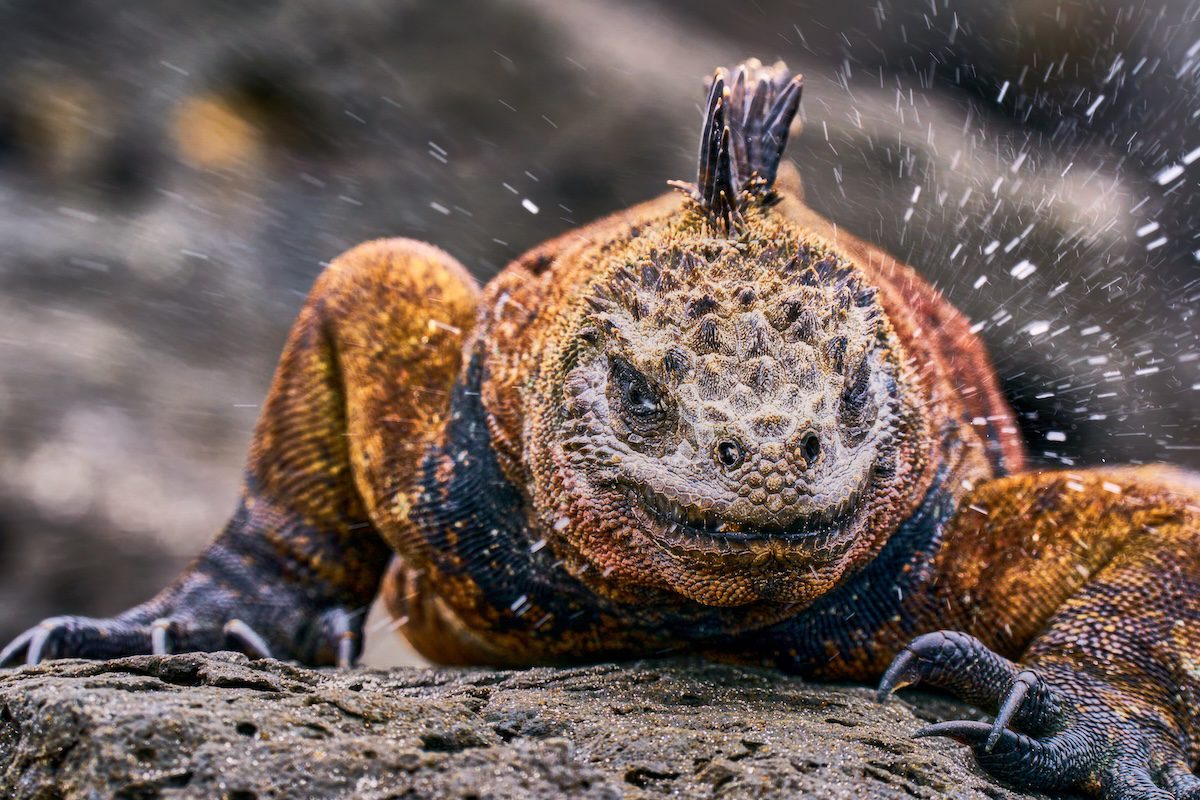
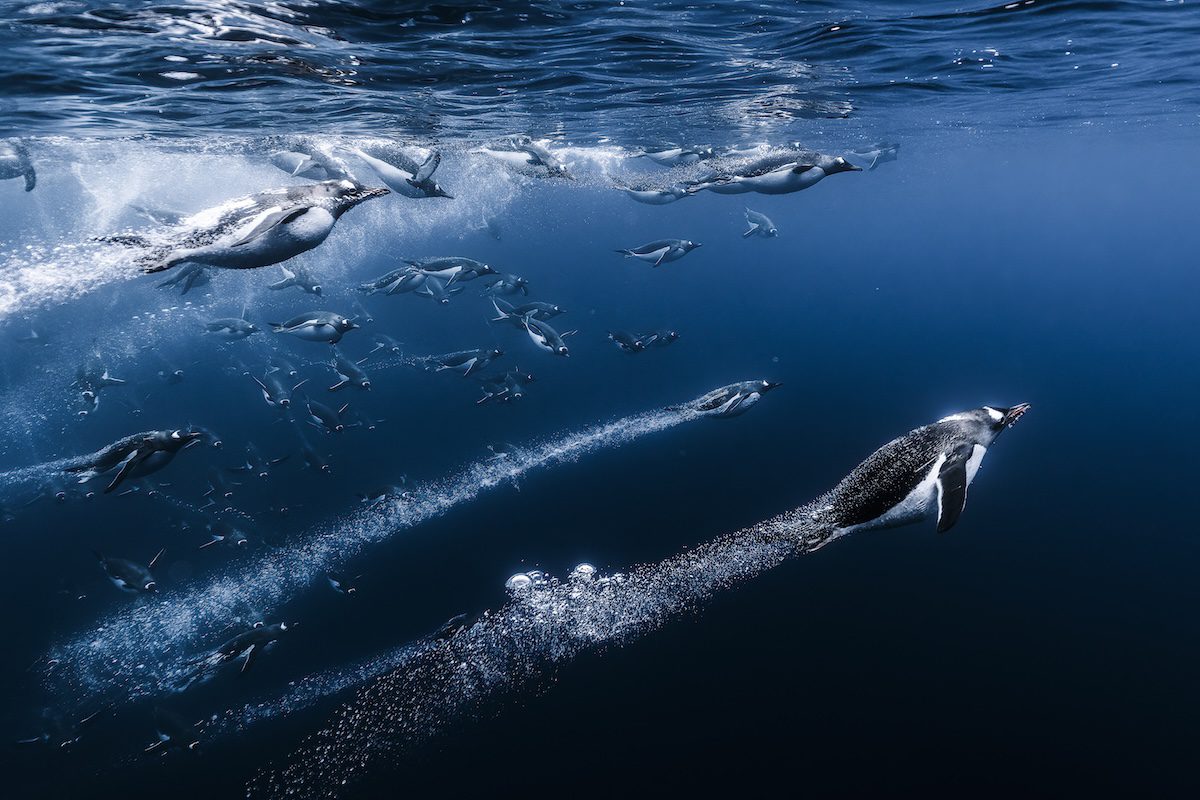
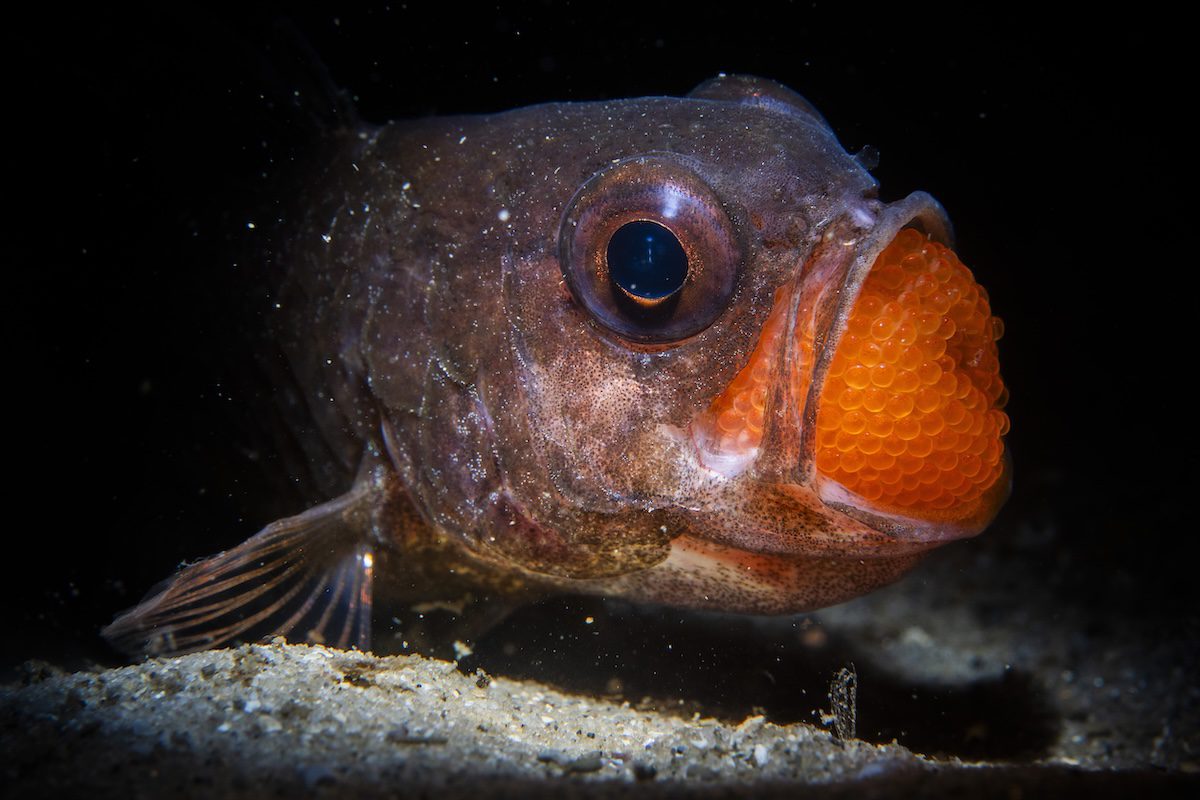
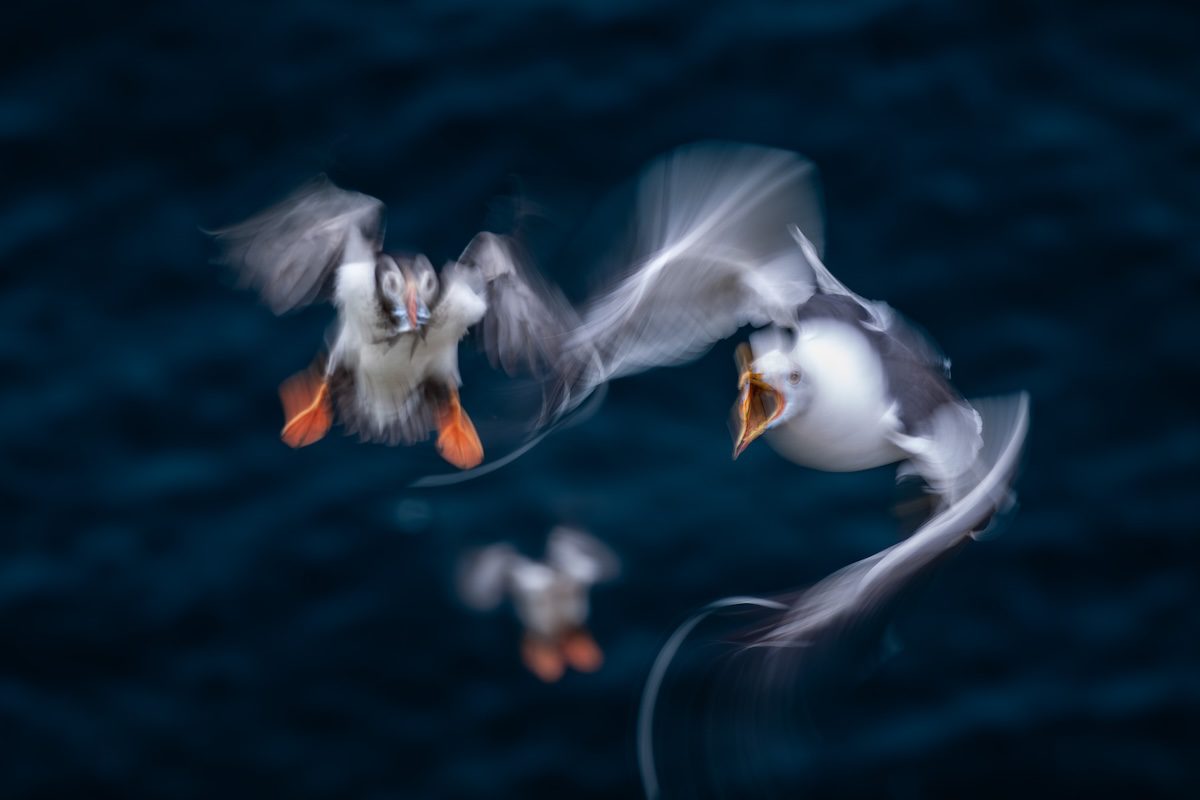
This year’s photographs comprise epic wildlife images, including a drooling dragon, torpedo-like penguins and a puffin desperately trying to evade a thief.
Category: YOUNG
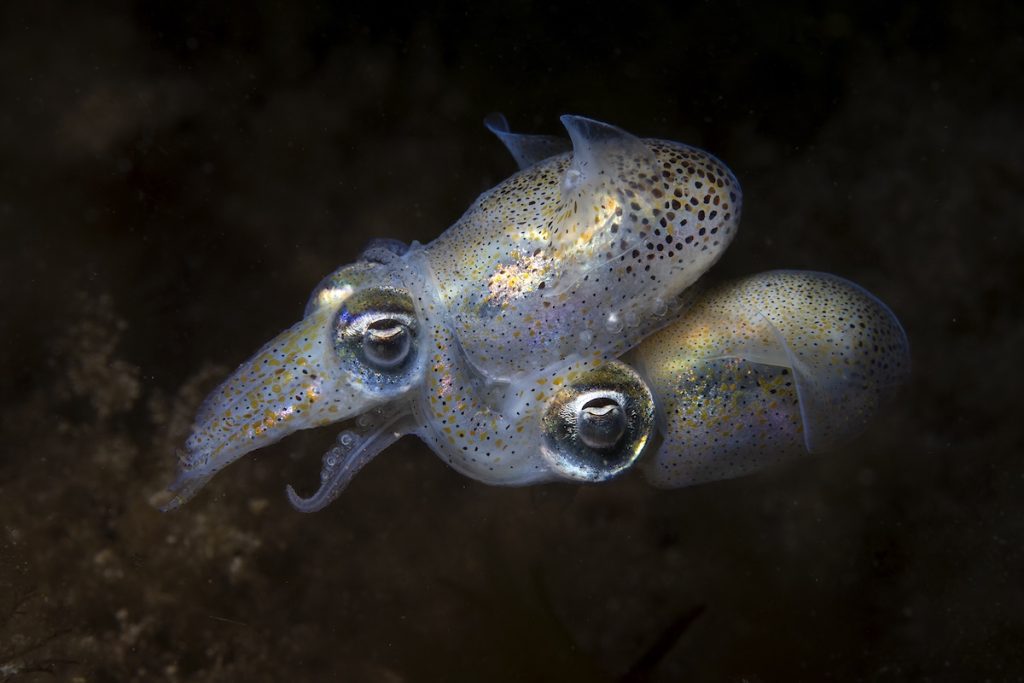
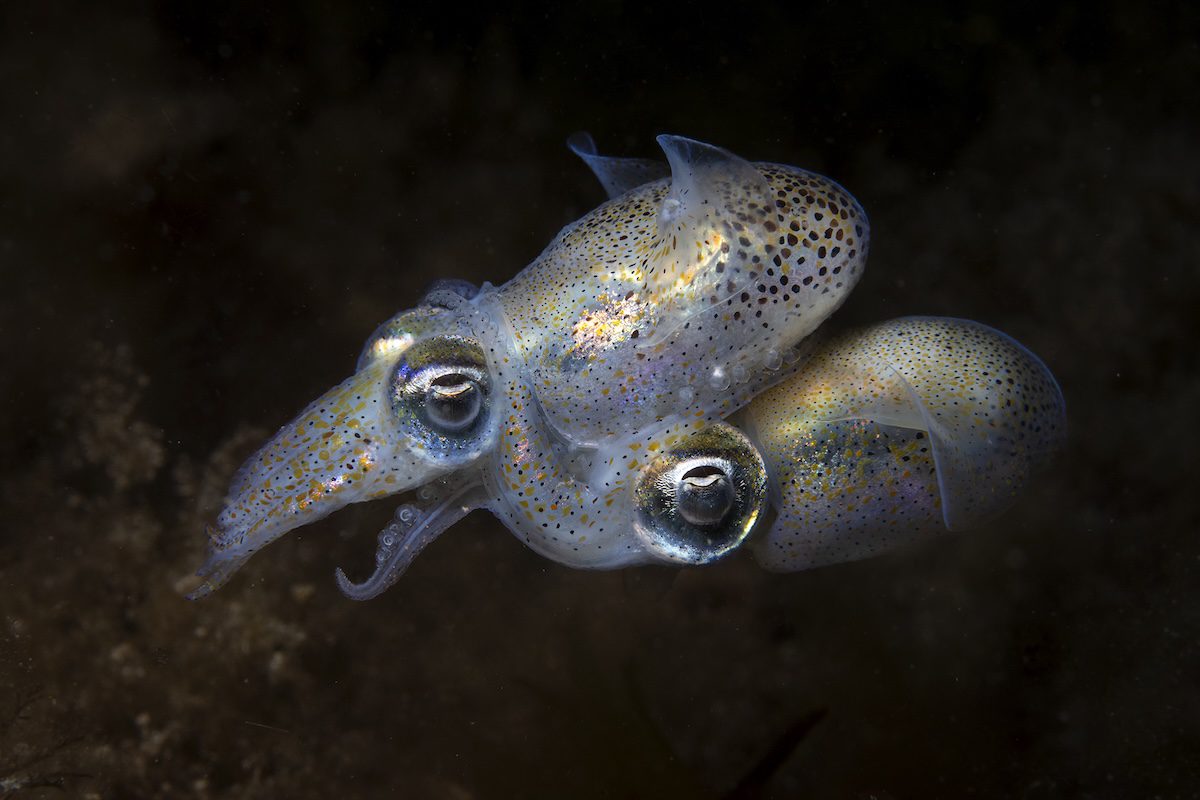
WINNER Aaron Sanders. Under the cover of night, two tiny bobtail squid engage in an intimate display, their arms intertwined as they mate on the seabed. “Waves of colour rippled across their bodies as chromatophores pulsed in a mesmerising rhythm,” says Sanders. © Ocean Photographer of the Year 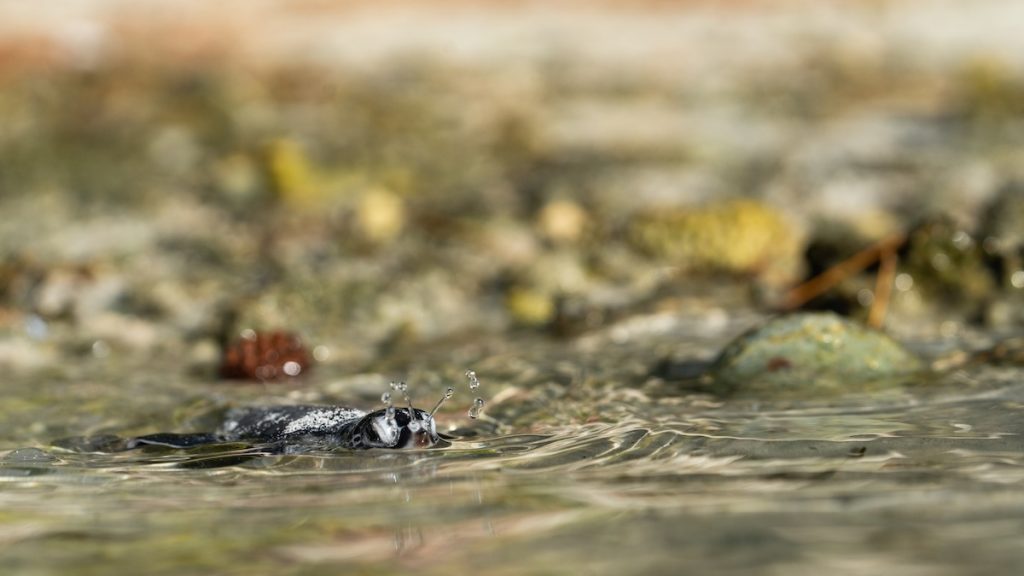
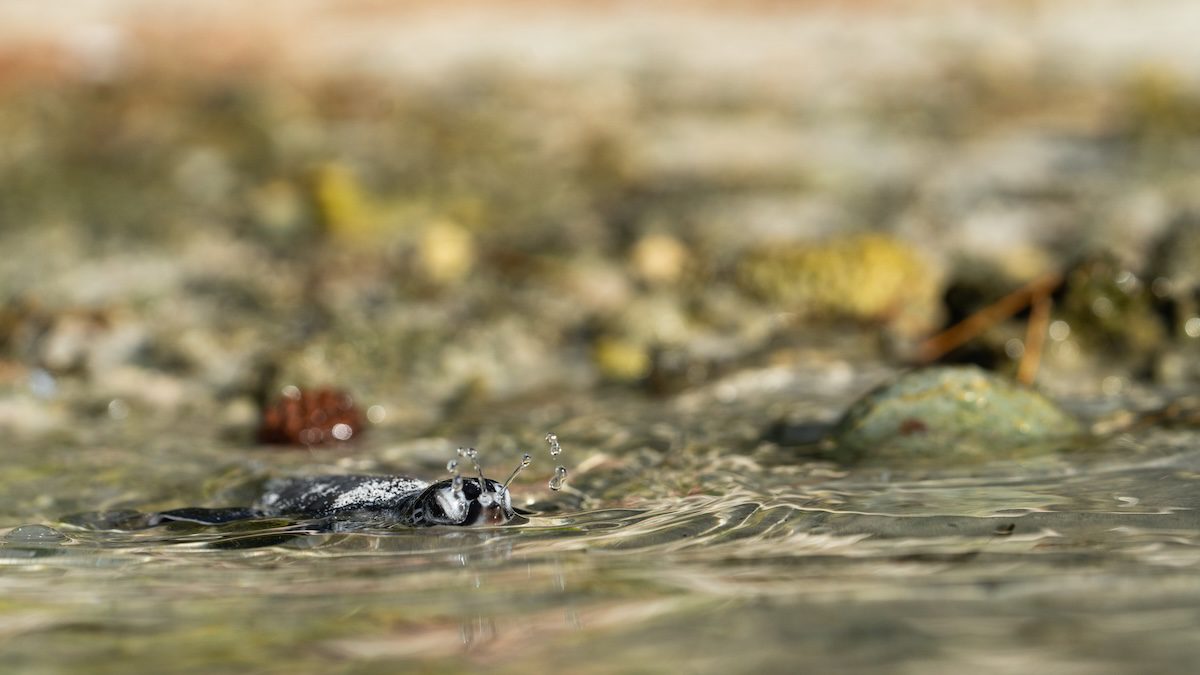
Second place Théo Guillaume. A sea turtle hatchling releases a delicate jet of water from its nostrils. “Sea turtles breathe through their mouths, but expel water through their noses, even at this age,” says Guillaume. © Ocean Photographer of the Year 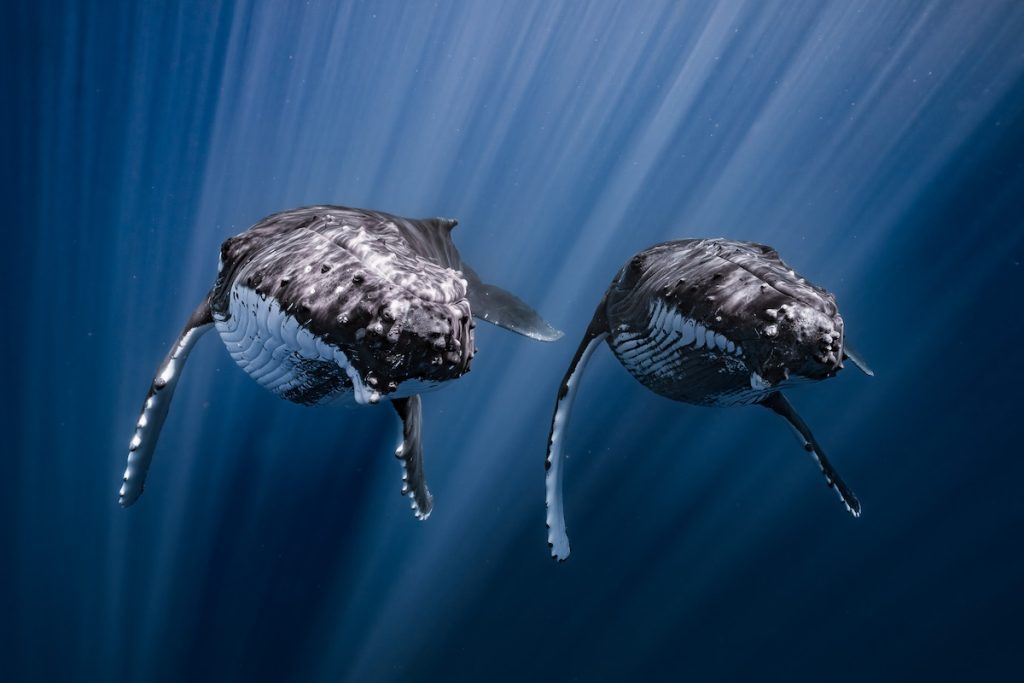
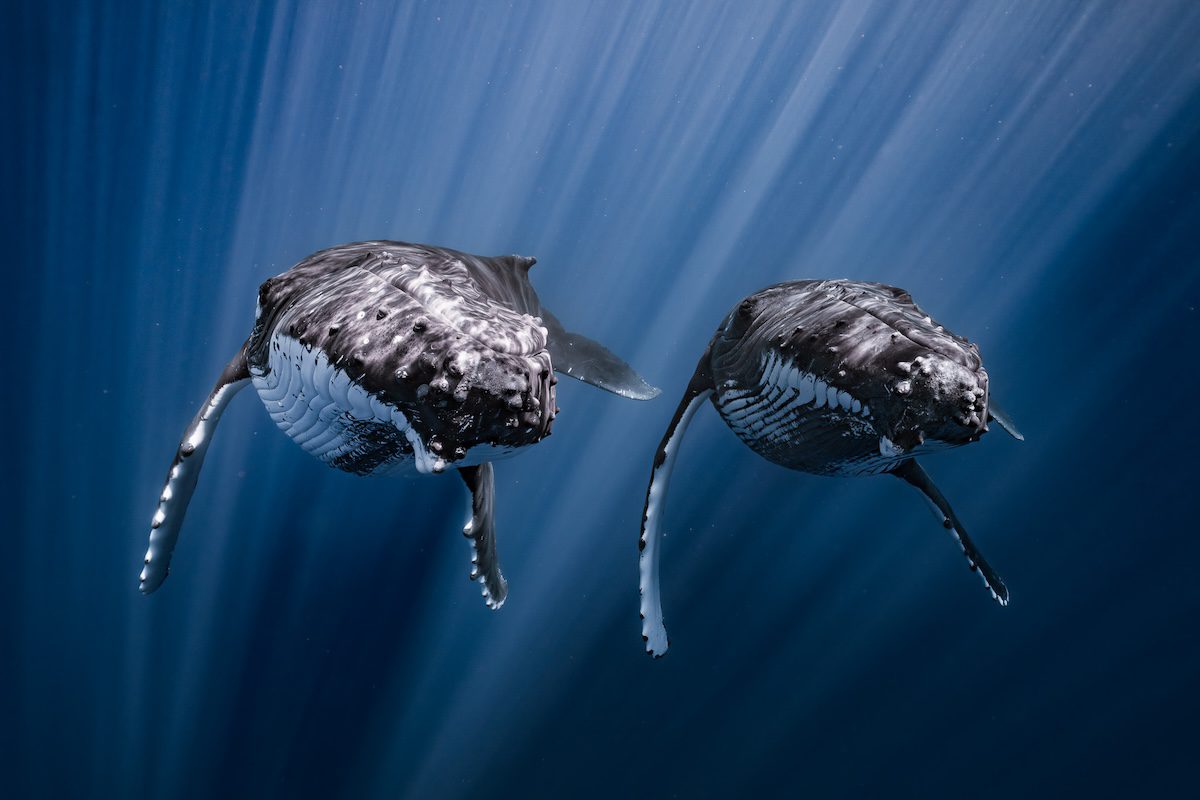
Yuka Takahashi. A pair of humpback whales. “These two humpback whales are always seen together, and I was fortunate to capture this rare moment of synchronicity,” says Takahashi. “This photo reflects the strong bond between them while revealing their playful personalities.” © Ocean Photographer of the Year
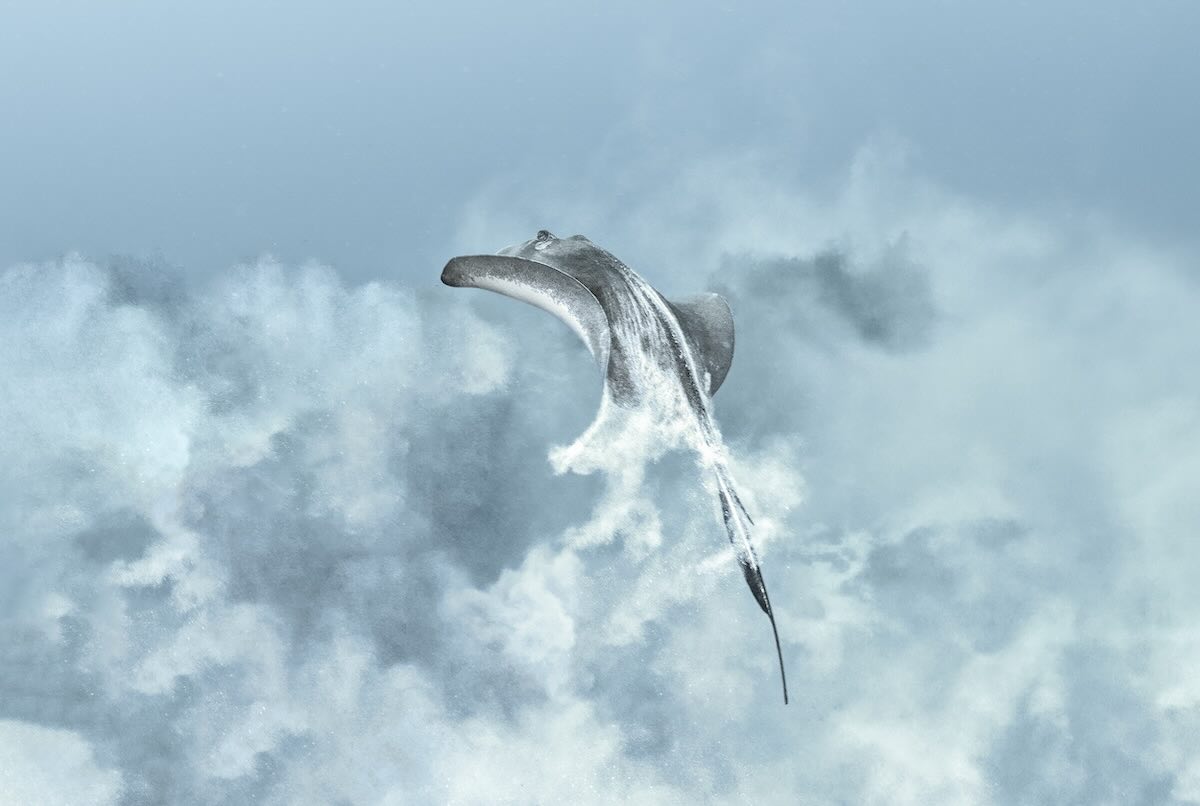
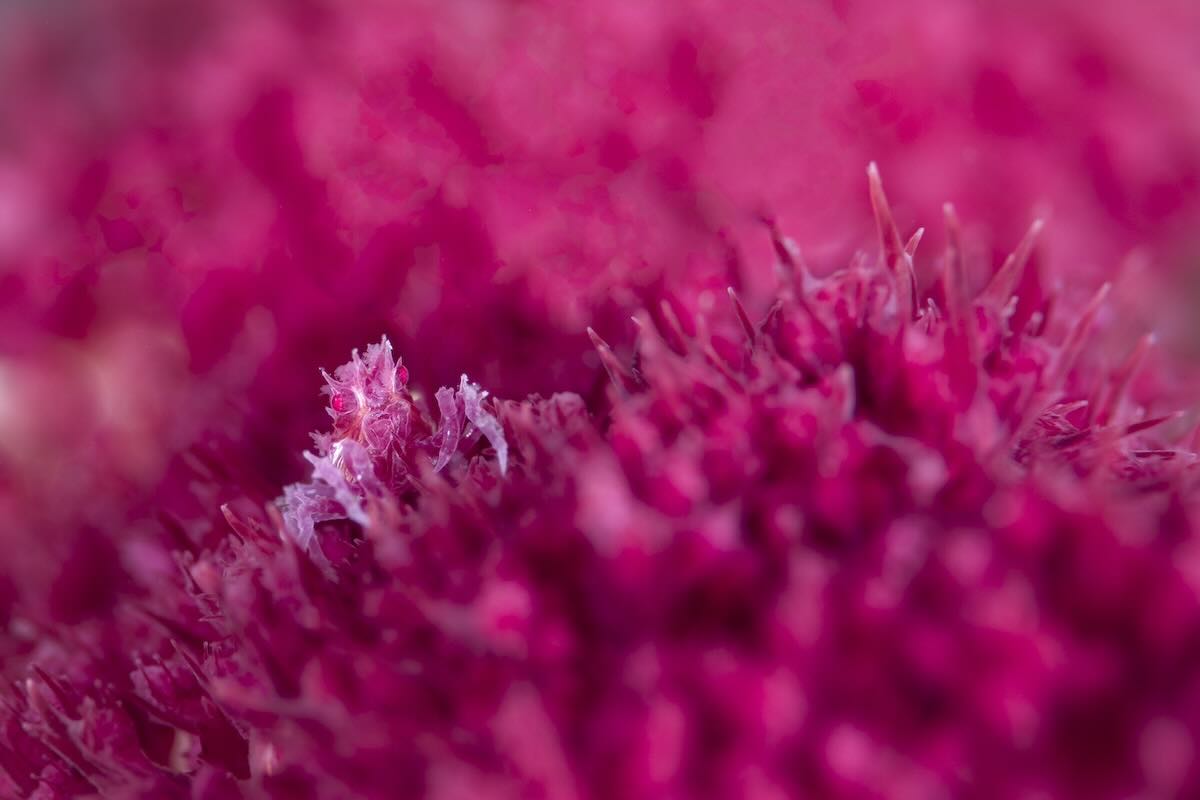
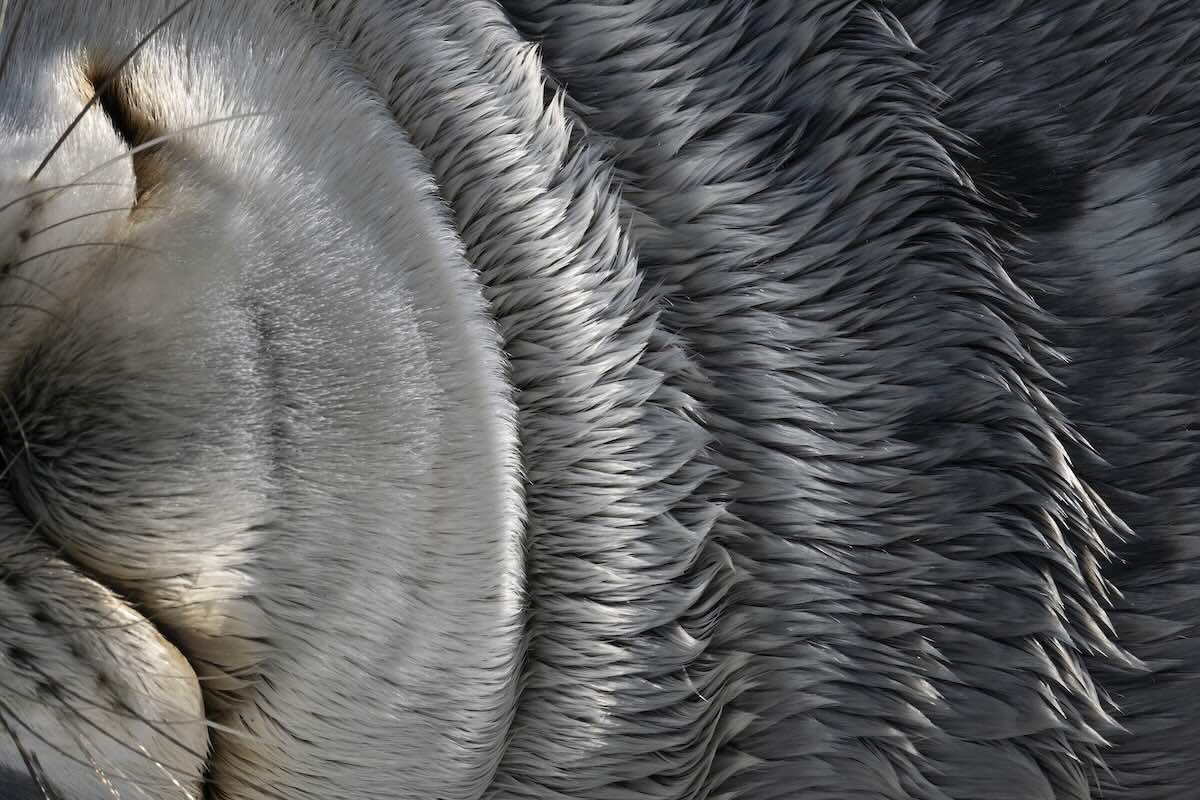
Other images include sensational visions of fine art, such as a stingray atop a billowing sand-cloud, the mountain range-like ruffles of a Weddel seal’s fur coat, and a juvenile candy crab ruling over its pink wonderland.
Category: HUMAN CONNECTION
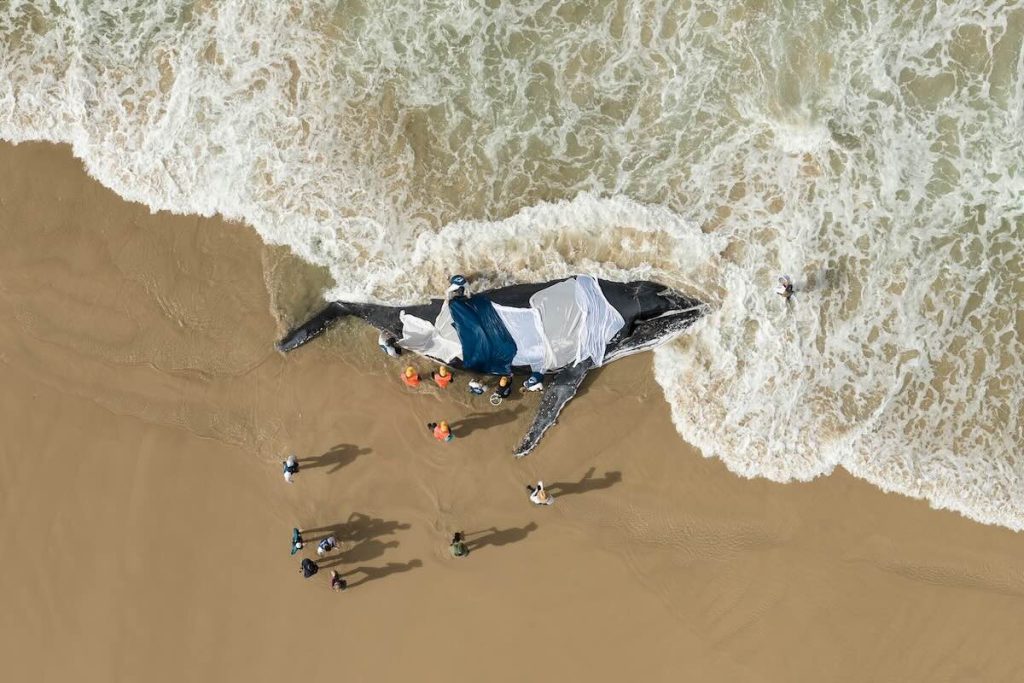
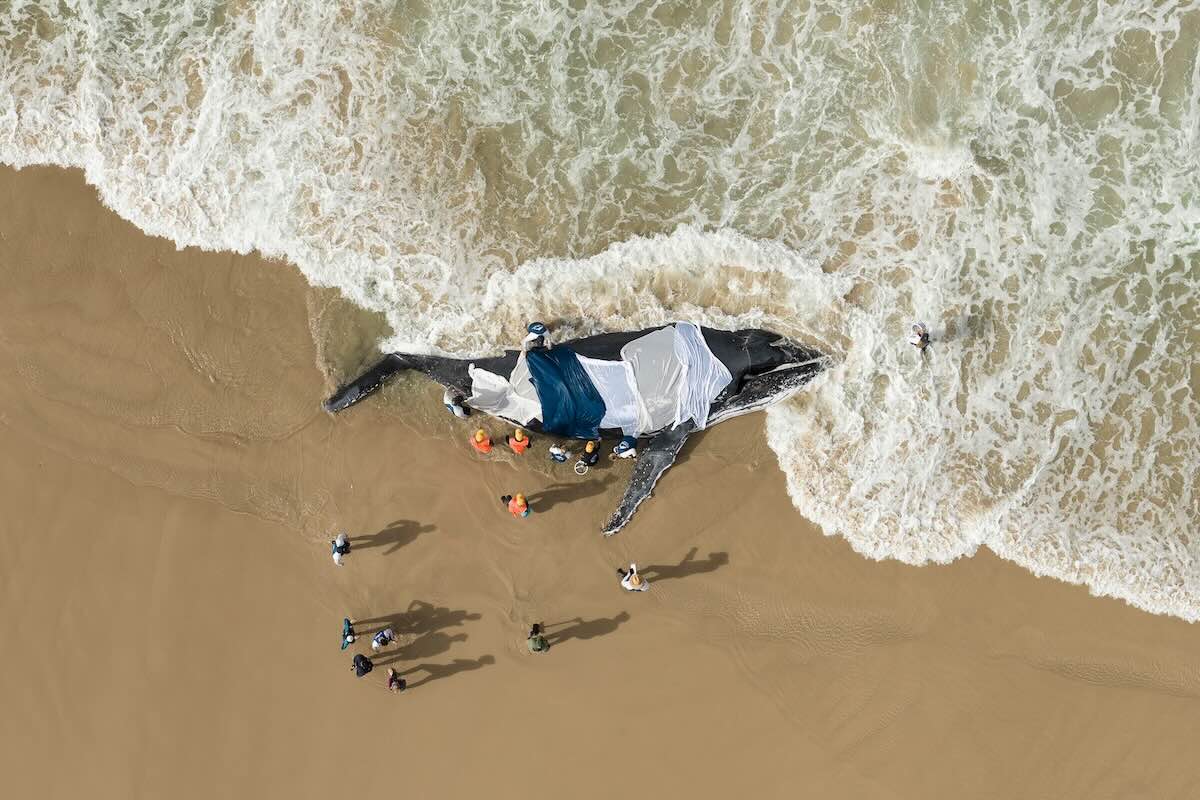
WINNER: Craig Parry. People try to rescue a stranded humpback whale. “For 15 hours, they worked tirelessly,” says Parry. “Sadly, she could not be saved, but the compassion shown is powerful reminder of what can be achieved when people come together.” © Ocean Photographer of the Year 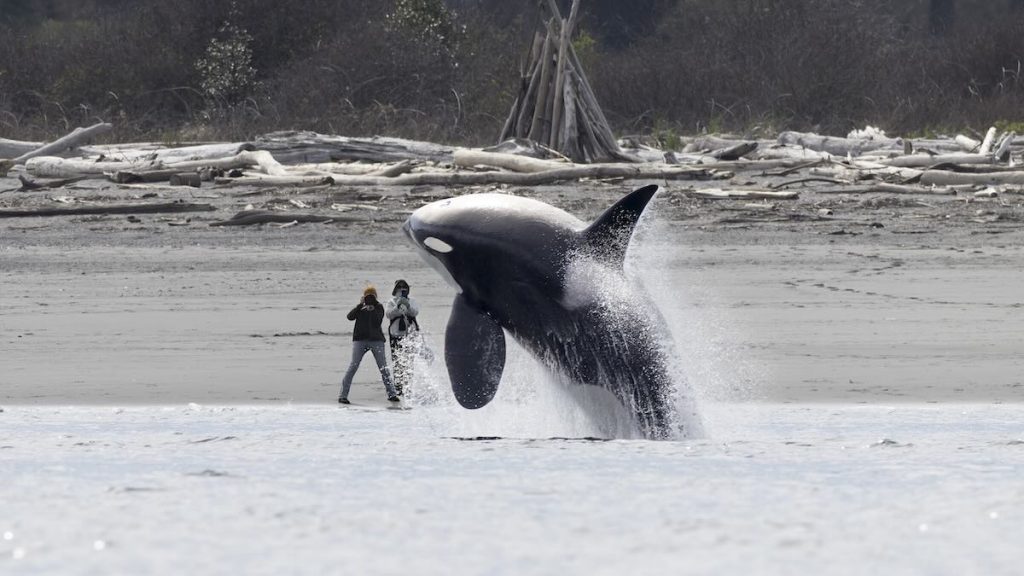
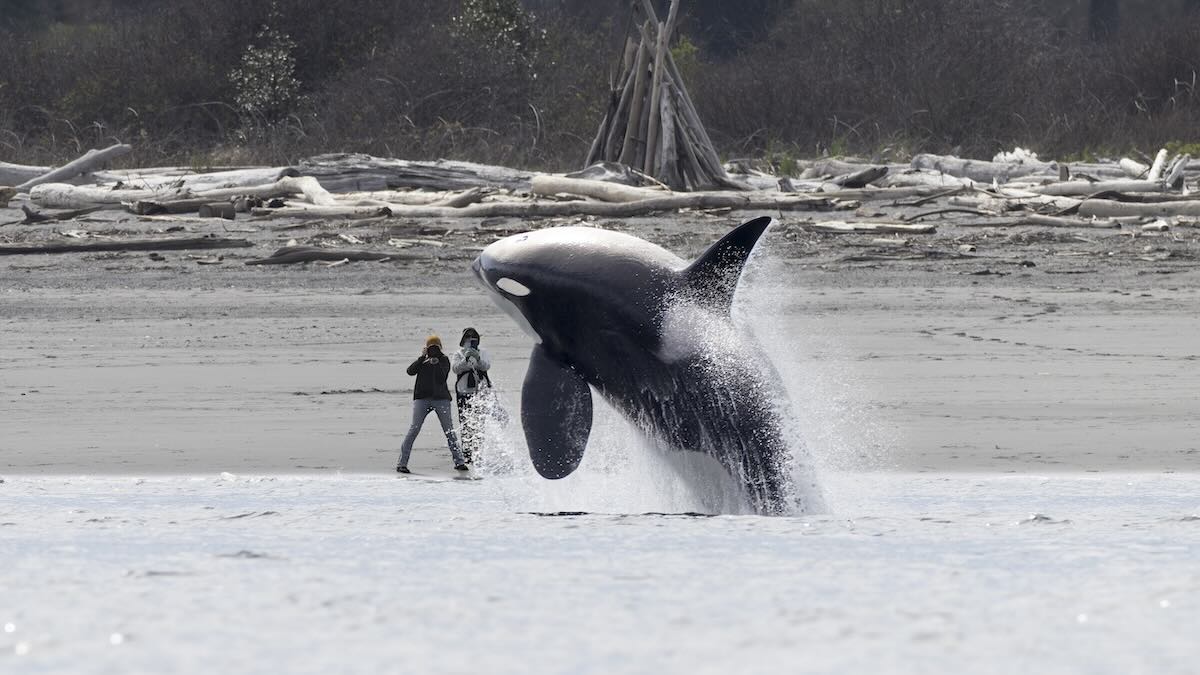
Second place: Yifan Ling. A breaching orca. “On April 1, 2024, more than 20 Bigg’s orcas entered Puget Sound,” says Ling. “A male orca suddenly began breaching and I captured a shot that reflects the connection between the orcas and land-based whale watchers.” © Ocean Photographer of the Year 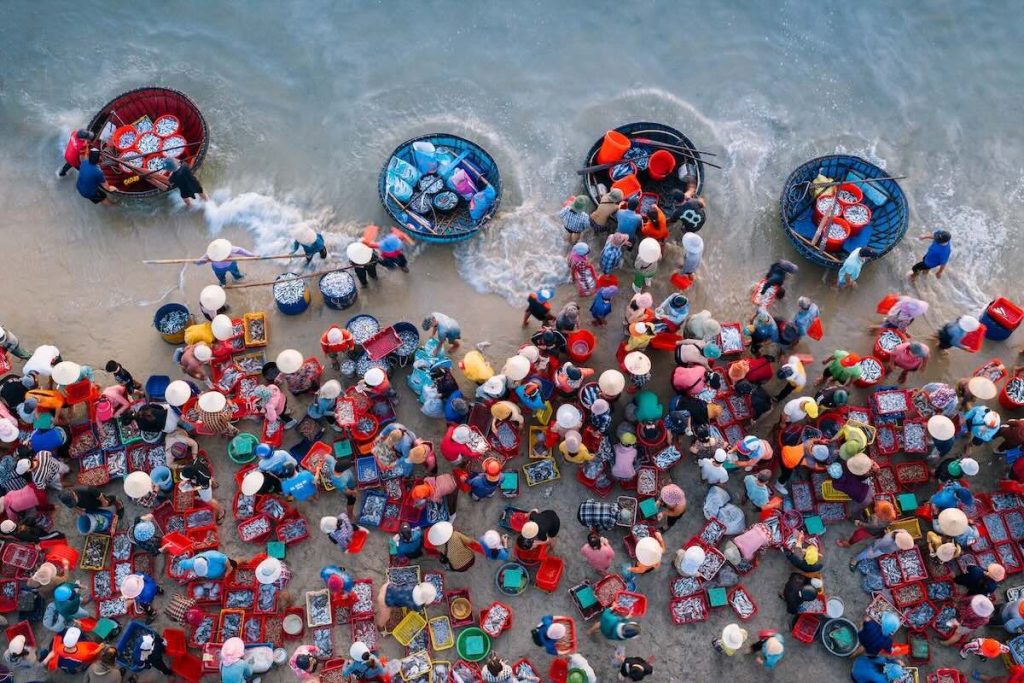
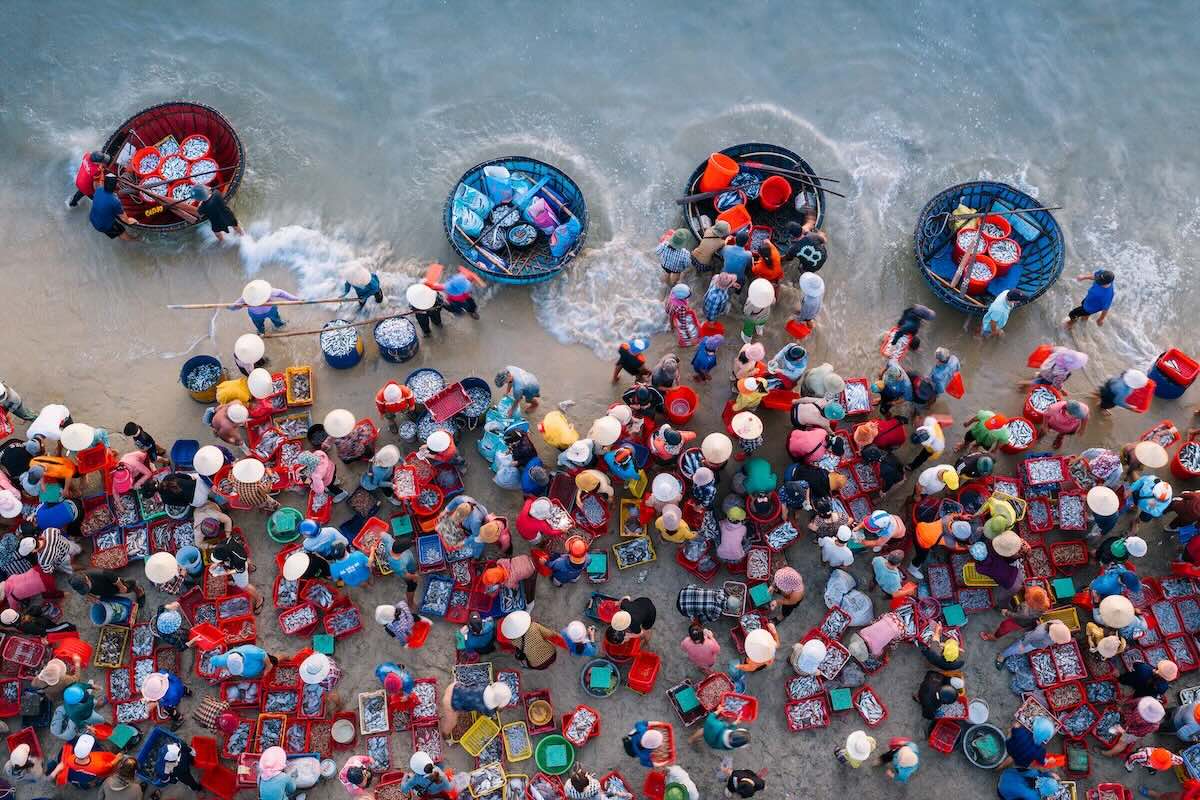
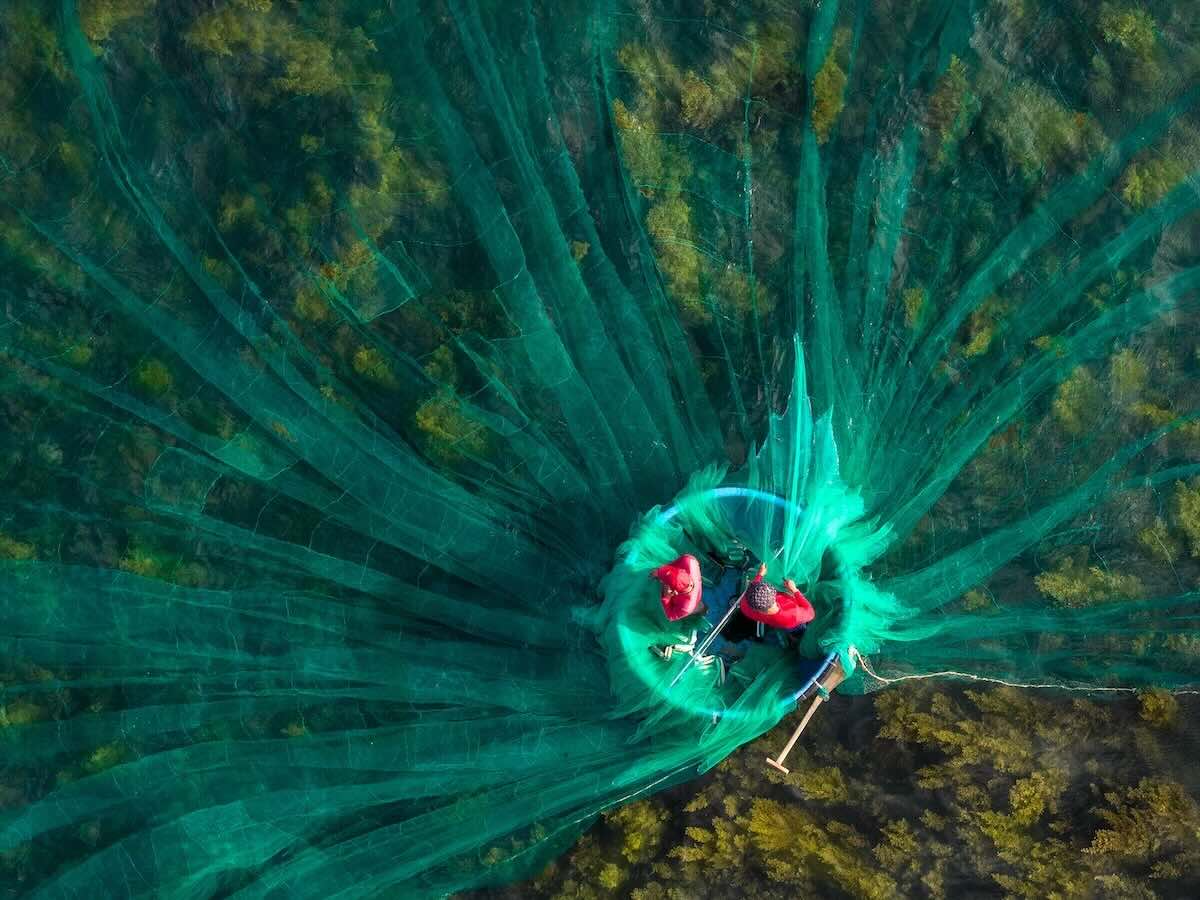
Third place: Natnattcha Chaturapitamorn. Fishermen in traditional round basket boats during their sargassum harvest. “In this coastal region of Vietnam, sargassum seaweed grows and regenerates naturally,” says Chaturapitamorn. “Throughout the harvesting process, preserving the balance of the surrounding ecosystem remains a top priority.” © Ocean Photographer of the Year 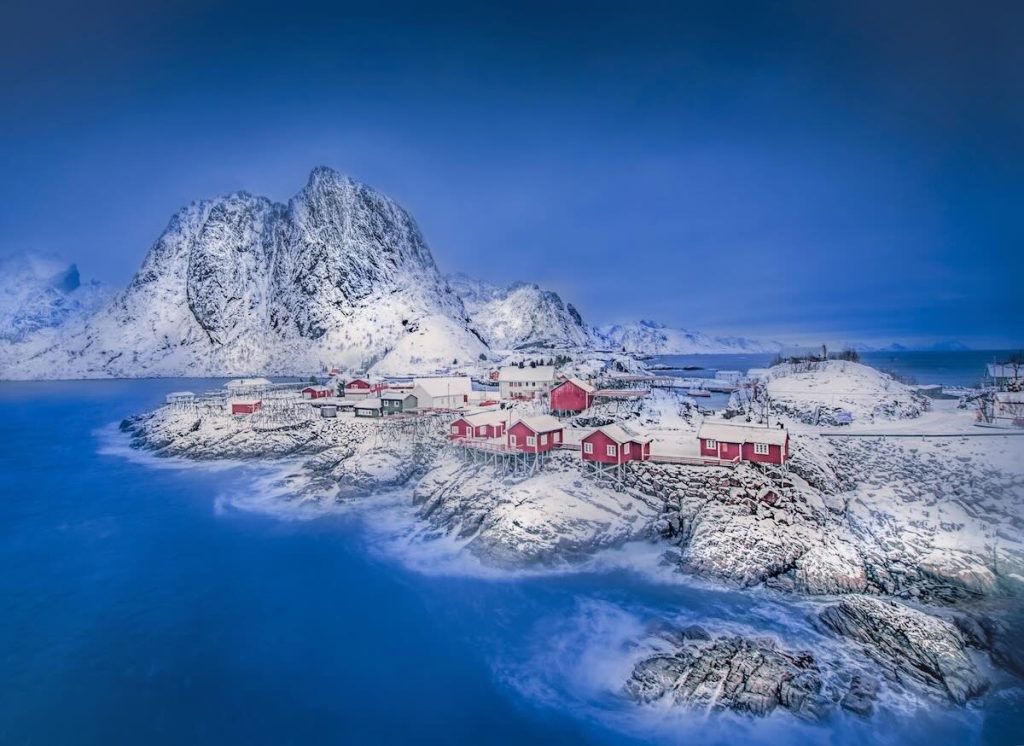
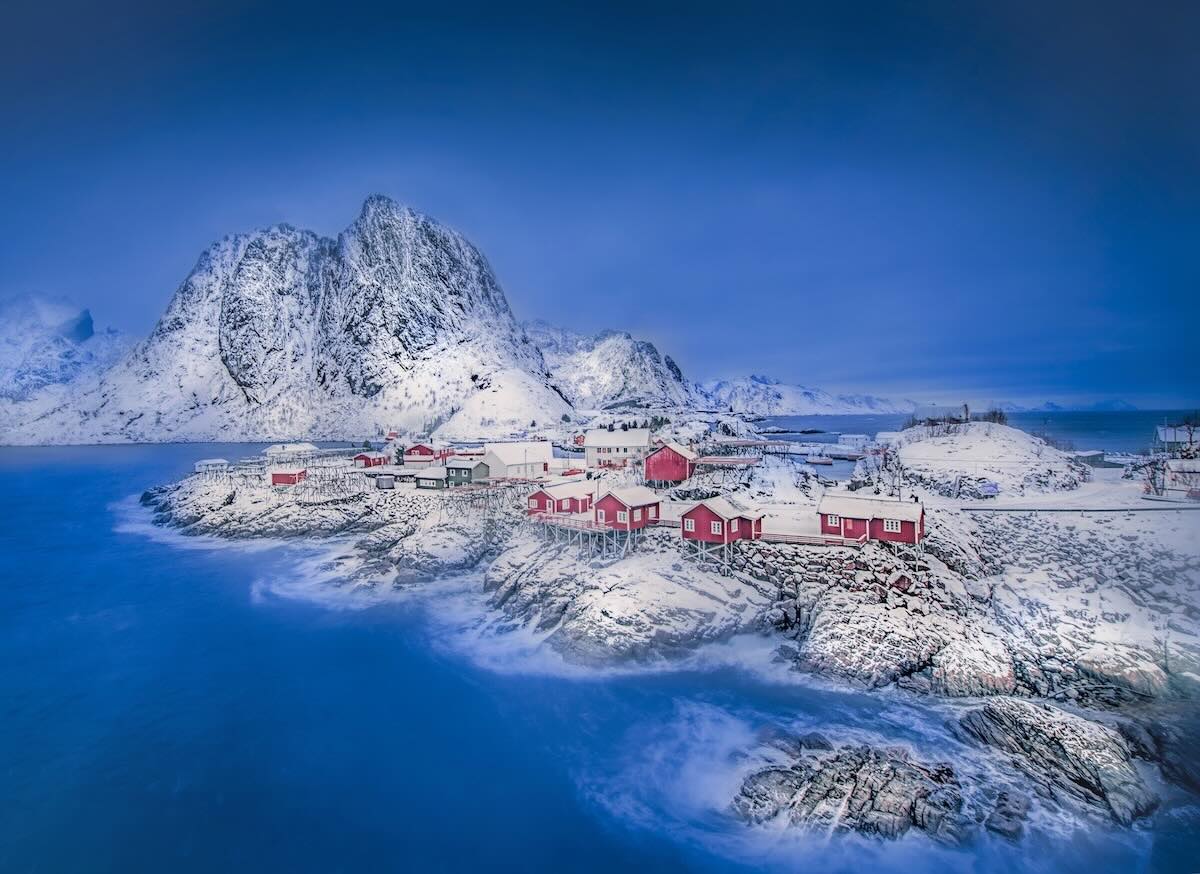
Jianping Li. In the middle of a Nordic winter, snow-clad mountains and islands frame the Reine fishing village. “The image captures the Arctic’s silent romance – a harmony of solitude and the oceanic rhythm,” says Li. © Ocean Photographer of the Year 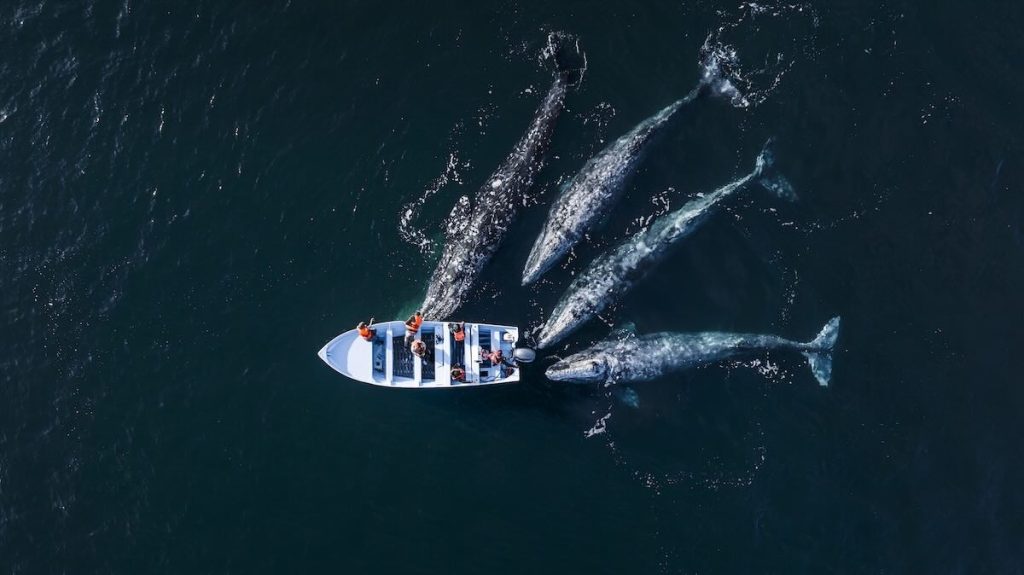
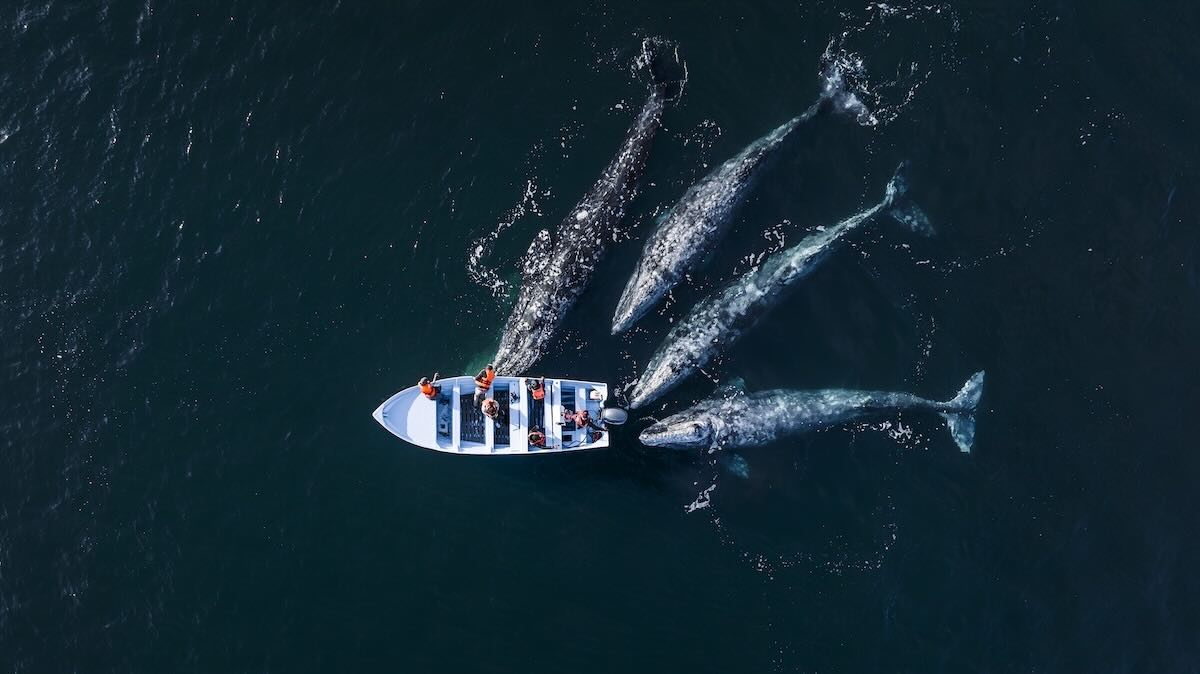
Kaushiik Subramaniam. Curious grey whales inspect a boat. “The behaviours exhibited by grey whales in their mating and calving lagoons in Baja California are unlike anything else seen around the world,” says Subramaniam. “They have a remarkable curiosity.” © Ocean Photographer of the Year 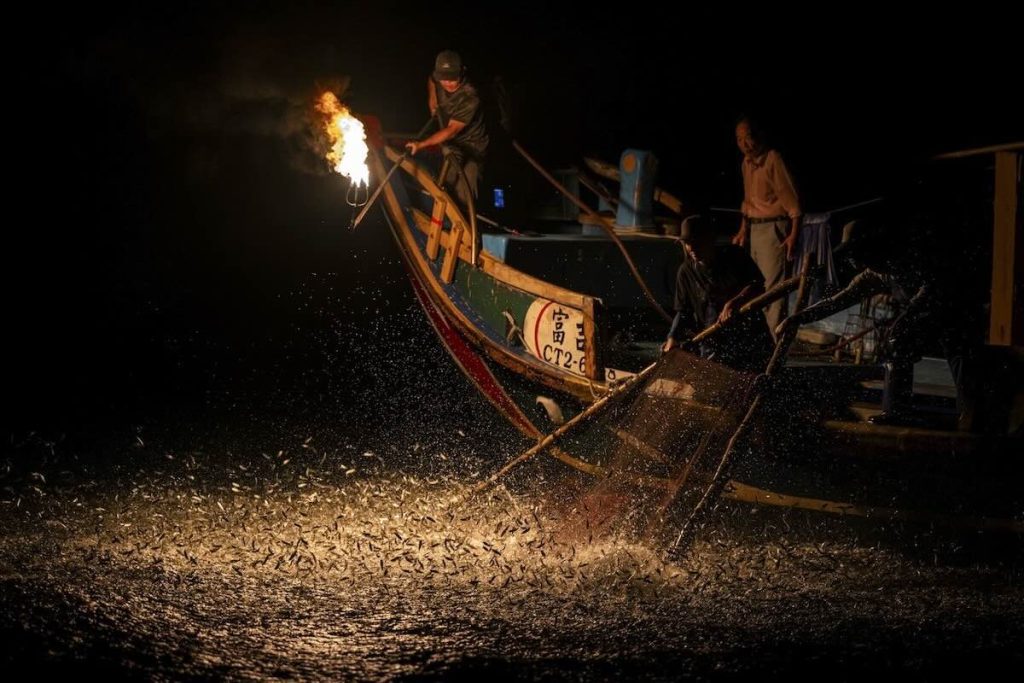
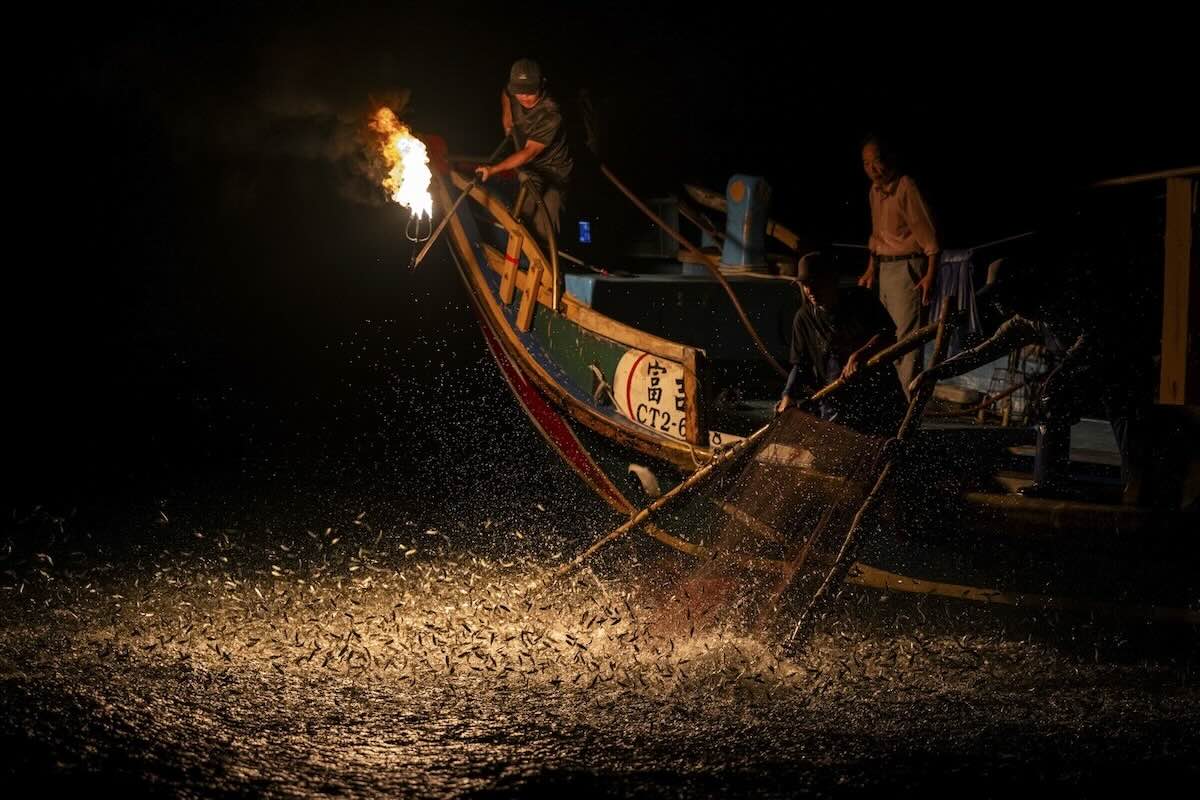
Sirachai Arunrugstichai. Fuji 268, one of Taiwan’s last fire fishing boats, ignites a fireball to startle sardines off New Taipei. “By 2023, it was the sole survivor of this national cultural heritage of Taiwan,” says Arunrugstichai. © Ocean Photographer of the Year 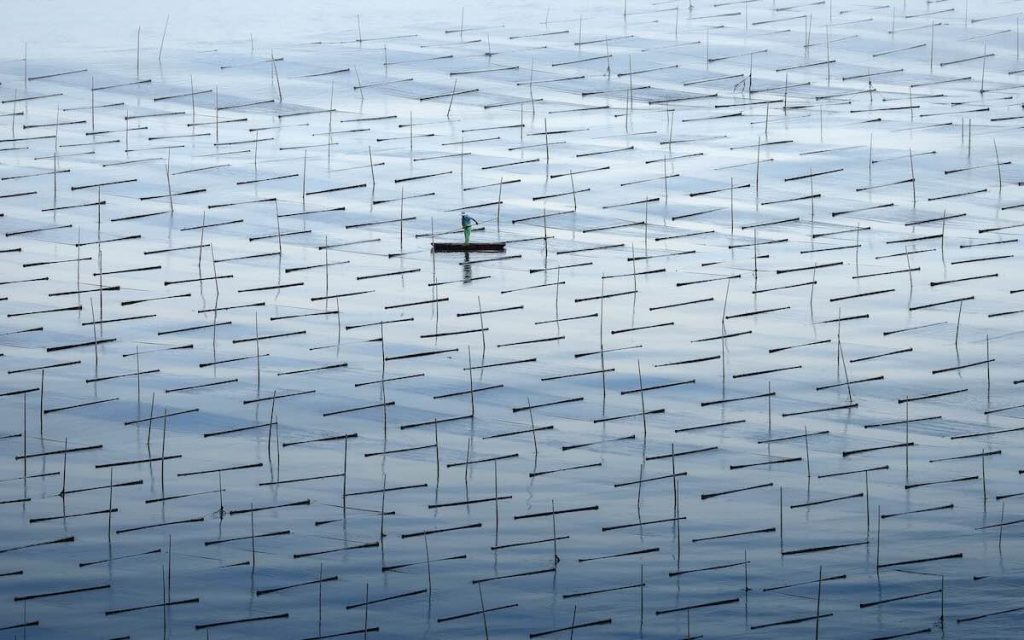
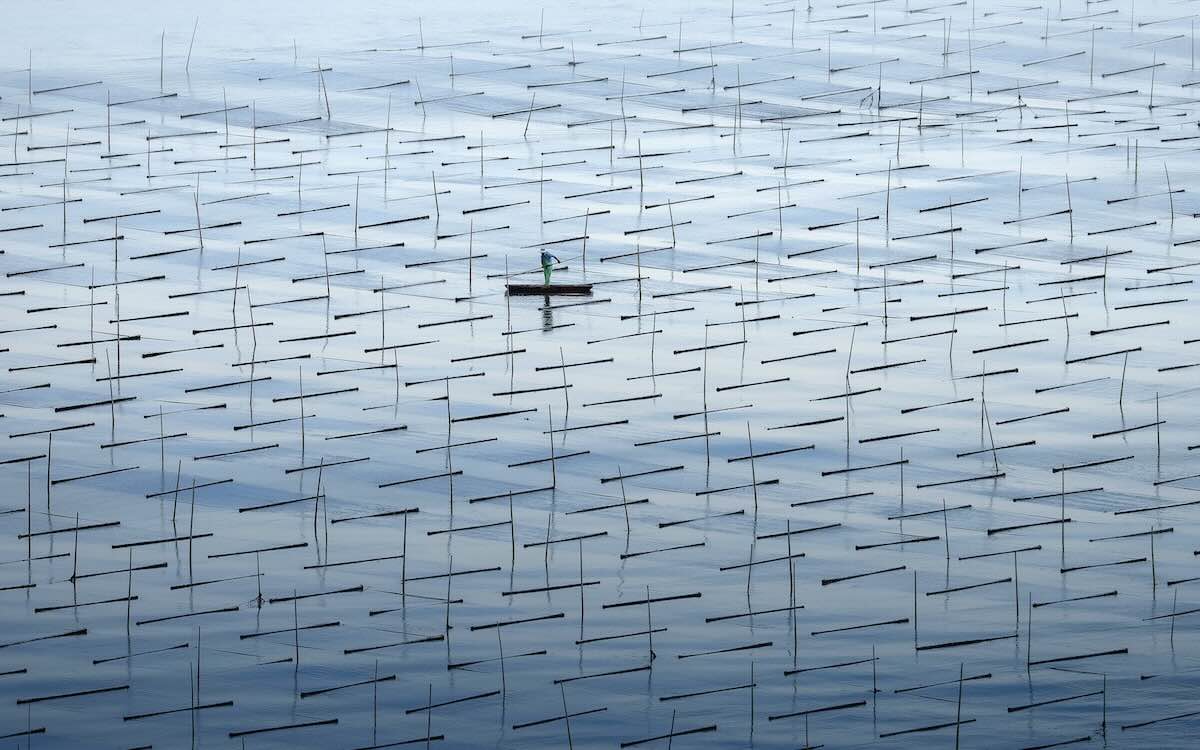
Shi Xiaowen. Laver cultivation poles intertwine with fishermen labouring at work. “Xiapu boasts an extensive coastline where local aquaculture thrives,” says Xiaowen. “This photo, shot on an overcast day, captures the laver farming scene in Xiapu’s coastal waters.” © Ocean Photographer of the Year 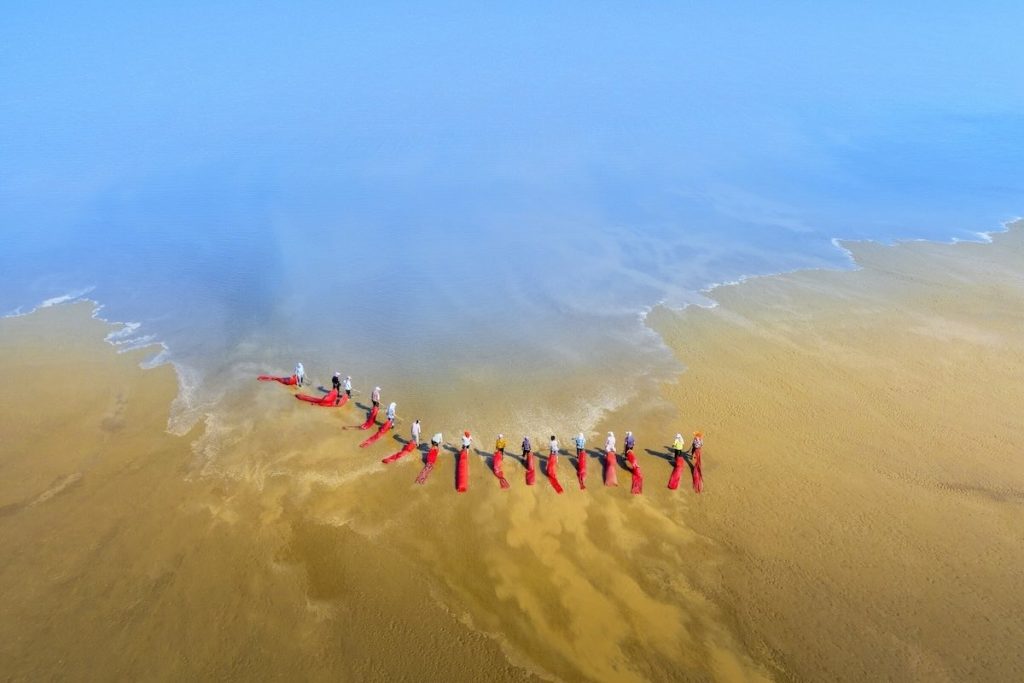
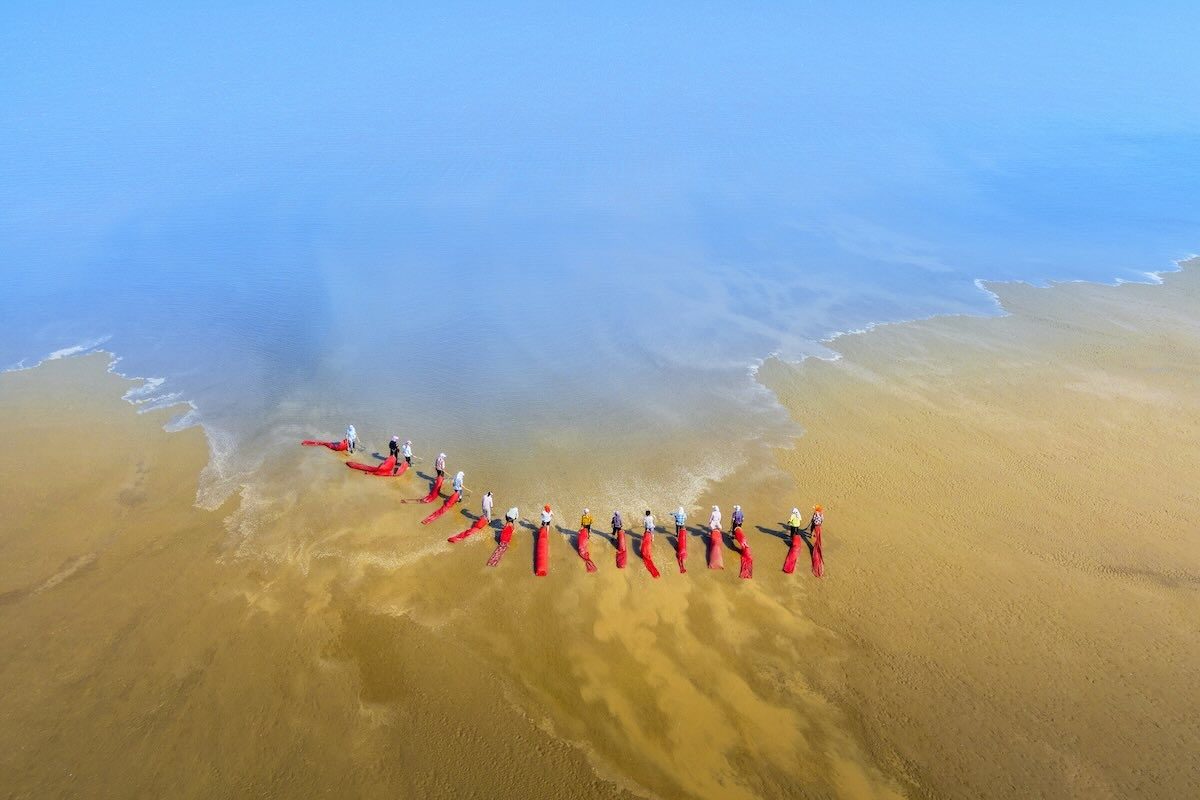
Jianping Li. A group of fishermen transform their labour into a striking performance. “Captured along the tidal flats where the blue sea meets golden sands, their procession, with red nets as props, elevates mundane work into poetry of coastal life,” says Li. © Ocean Photographer of the Year 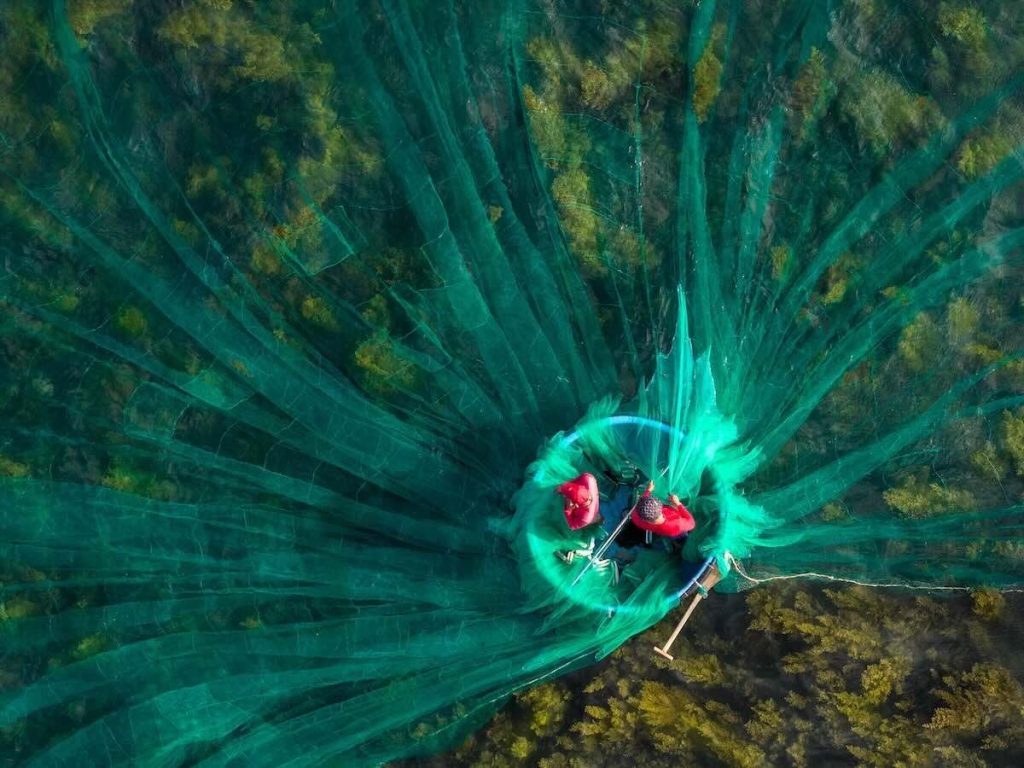
Natnattcha Chaturapitamorn. Fishermen in traditional round basket boats during their sargassum harvest. “In this coastal region of Vietnam, sargassum seaweed grows and regenerates naturally,” says Chaturapitamorn. “Throughout the harvesting process, preserving the balance of the surrounding ecosystem remains a top priority.” © Ocean Photographer of the Year 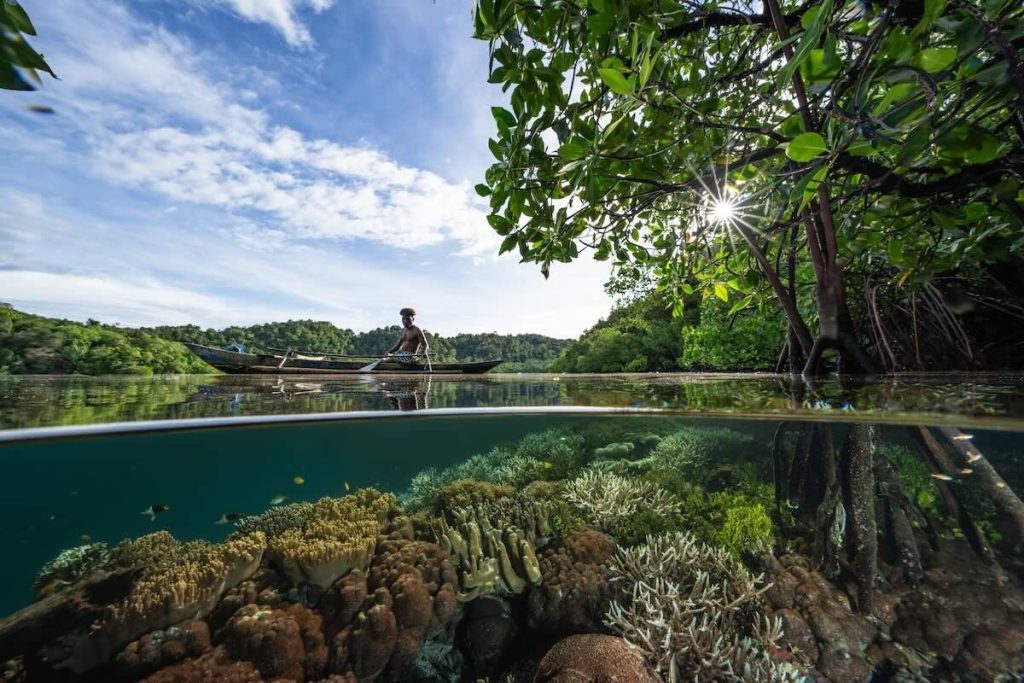
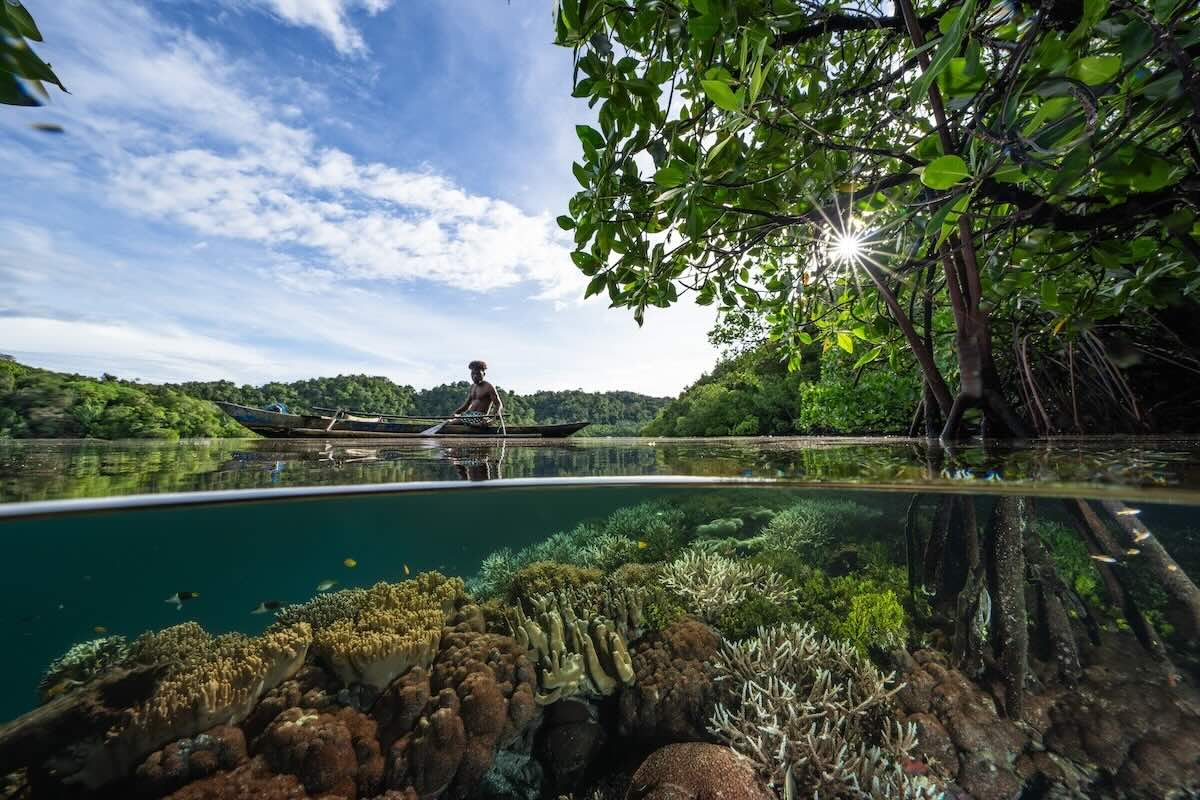
Wendy Mitchell. “In 2024/25, mass coral bleaching affected 84% of reefs globally,” says Mitchell. “Yet, some areas proved resilient, like this mangrove system. For Papuan communities, these reefs are part of their cultural identity and provide food and livelihood.” © Ocean Photographer of the Year 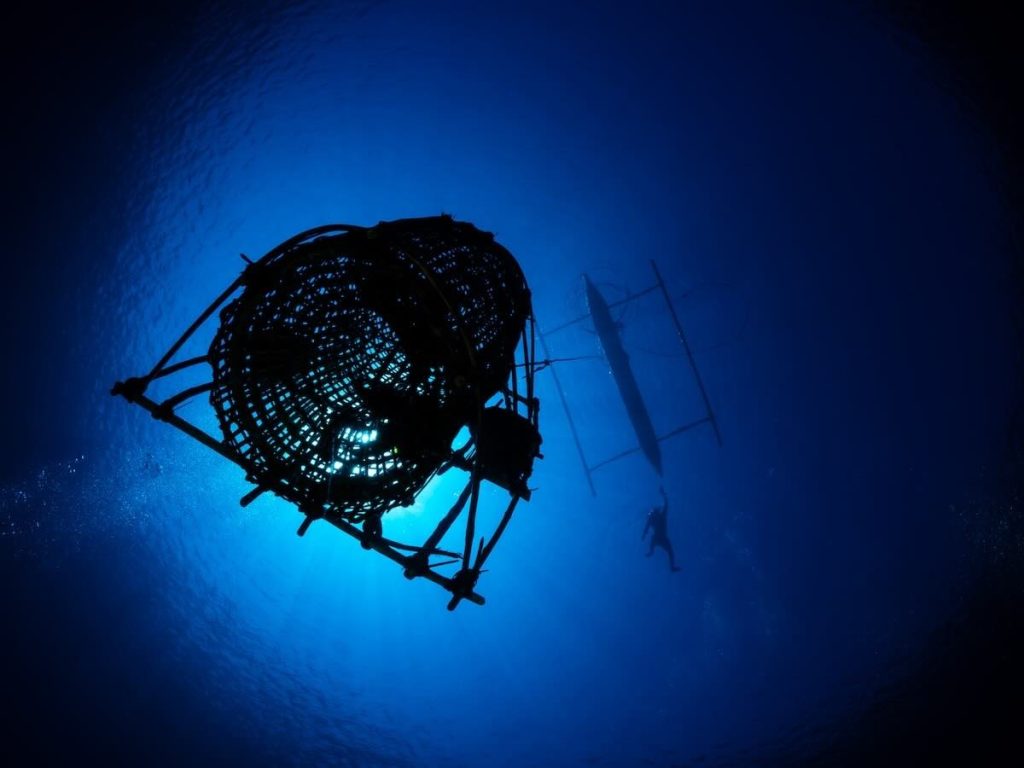
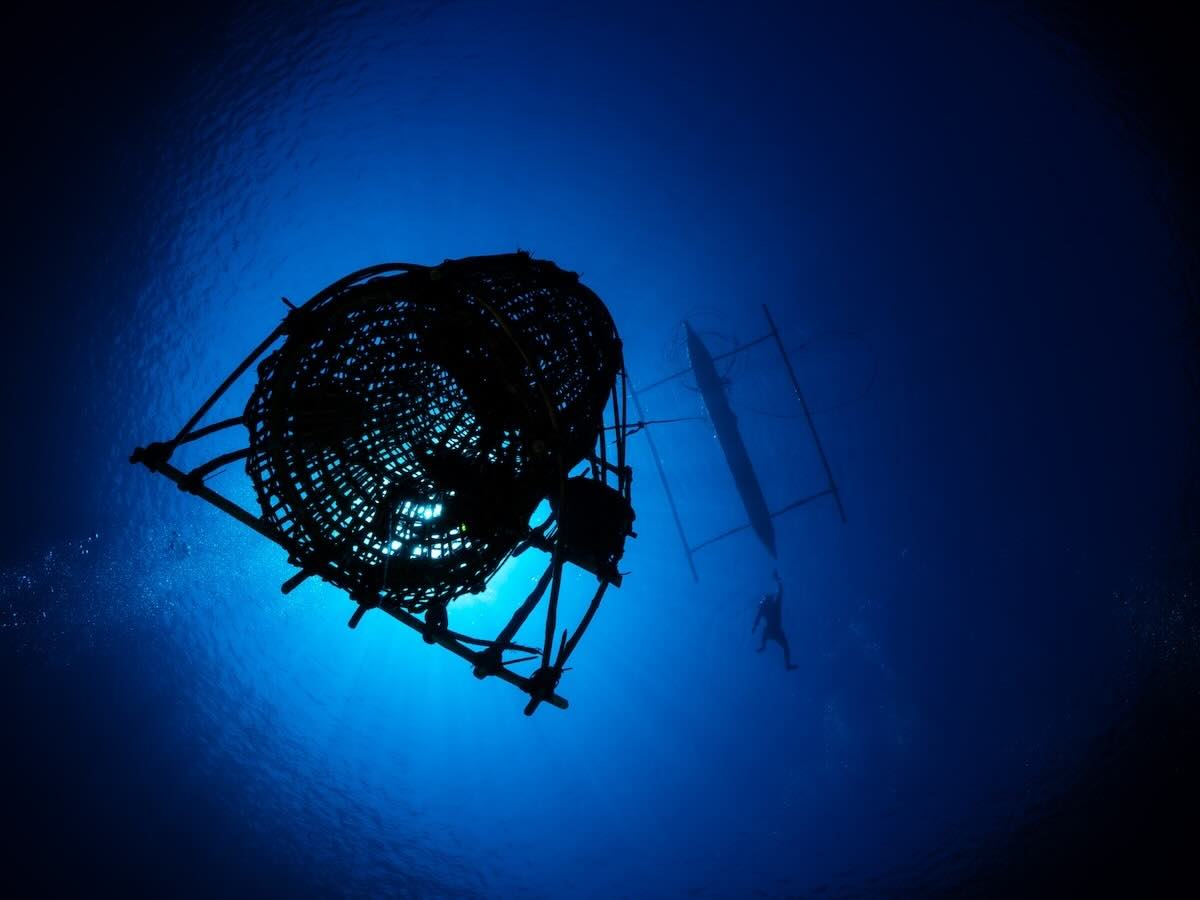
Max Holba. A handwoven bamboo basket, called ‘bubu’, descends into the depths of Alor’s waters [in Indonesia]. “The locals of Alor use this traditional technique as an efficient method to catch fish,” says Holba. © Ocean Photographer of the Year
There are also highlights of the teams of conservationists and marine mammal rescuers working to protect marine life.
Category: CONSERVATION / IMPACT
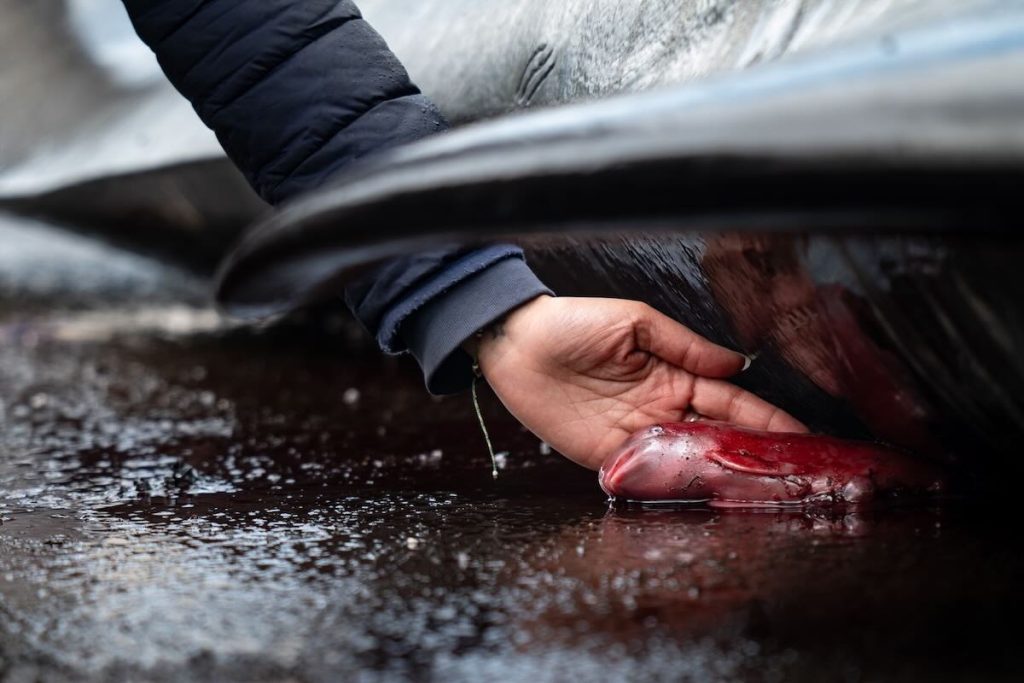
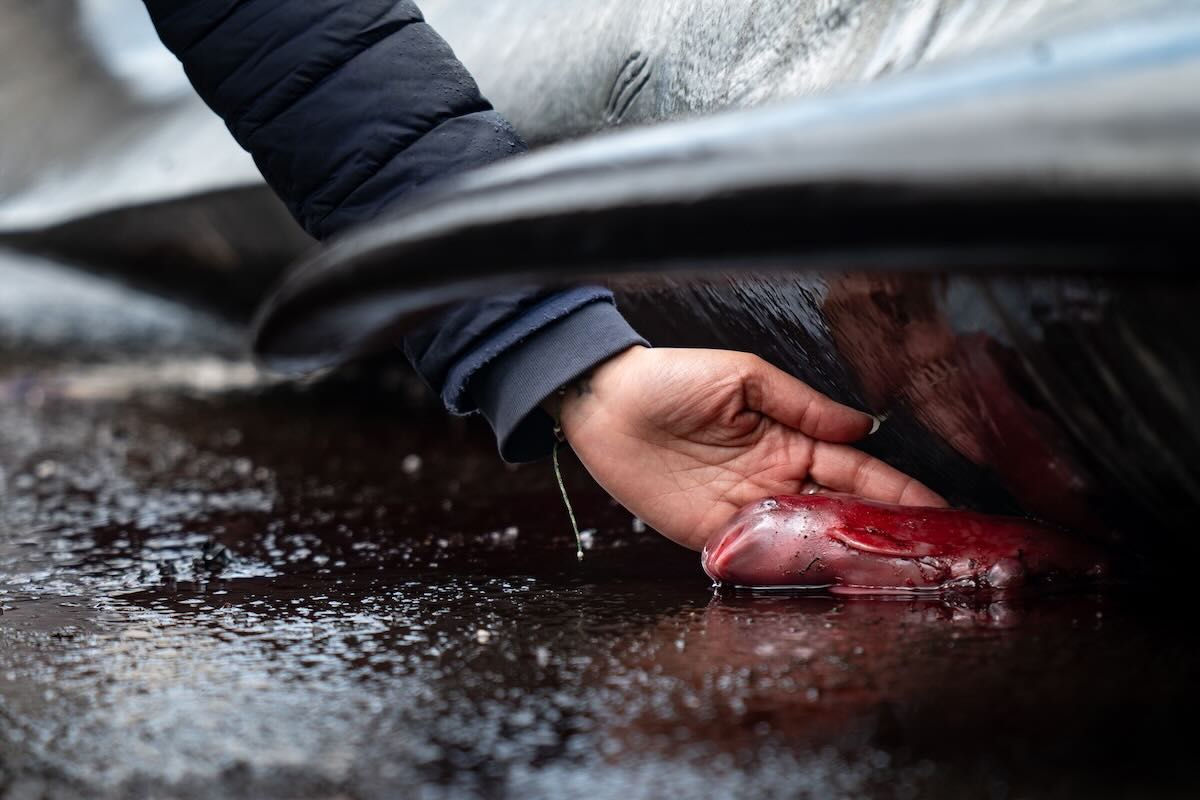
WINNER: Hugo Bret. A long-finned pilot whale foetus lies lifeless under its mother’s corpse in the Faroe Islands. “Each year, more than 1,000 cetaceans are killed during grindadráp, the slaughter of entire whale groups, including juveniles and pregnant females,” says Bret. © Ocean Photographer of the Year 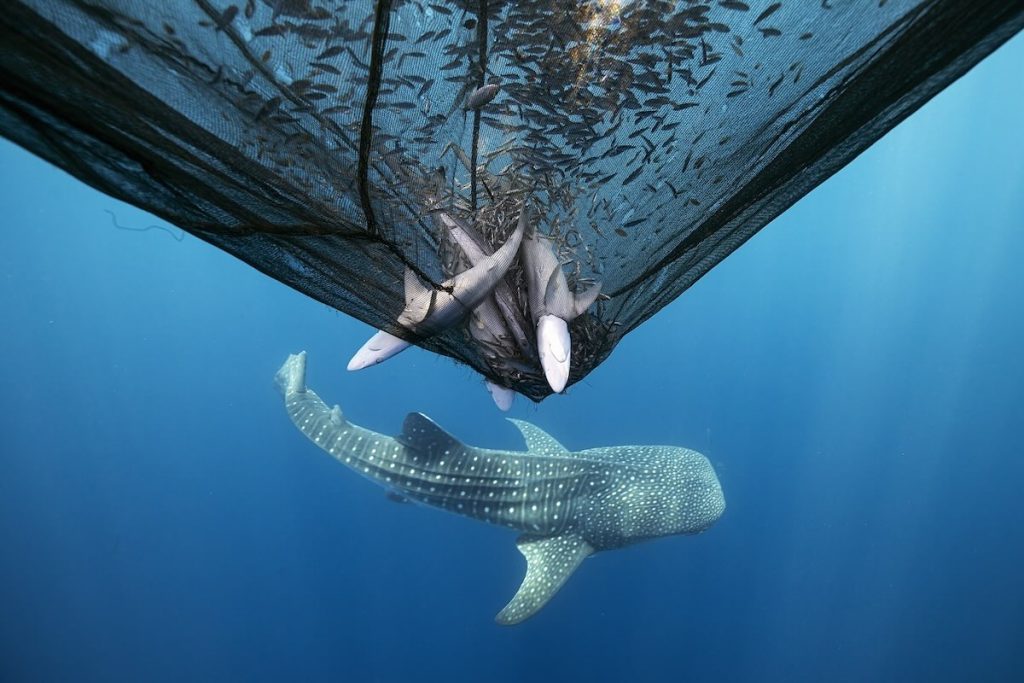
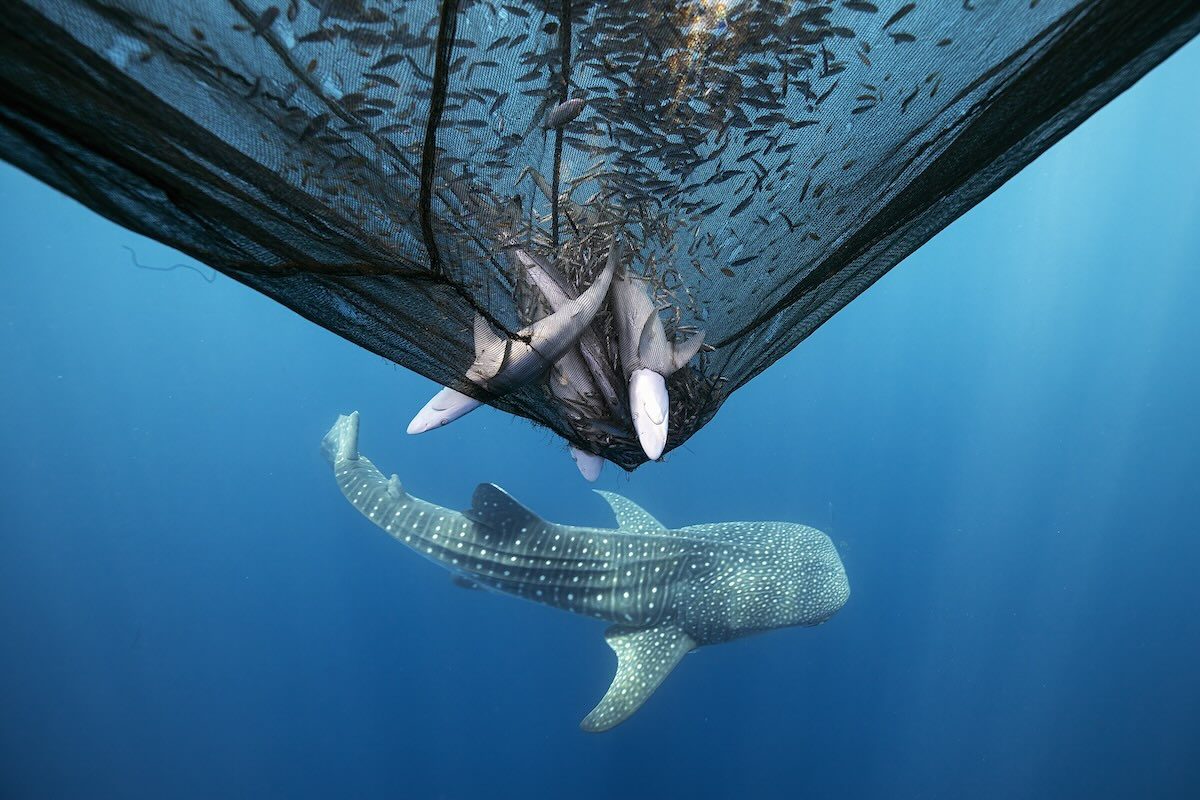
Second place: Daniel Flormann. Dead sharks in an anchovy fishing net. “More than 100 million sharks are killed annually – many as accidental bycatch,” says Flormann. “The deceased sharks in the net and the whale shark’s injured caudal fin both tell stories of human impact.” © Ocean Photographer of the Year 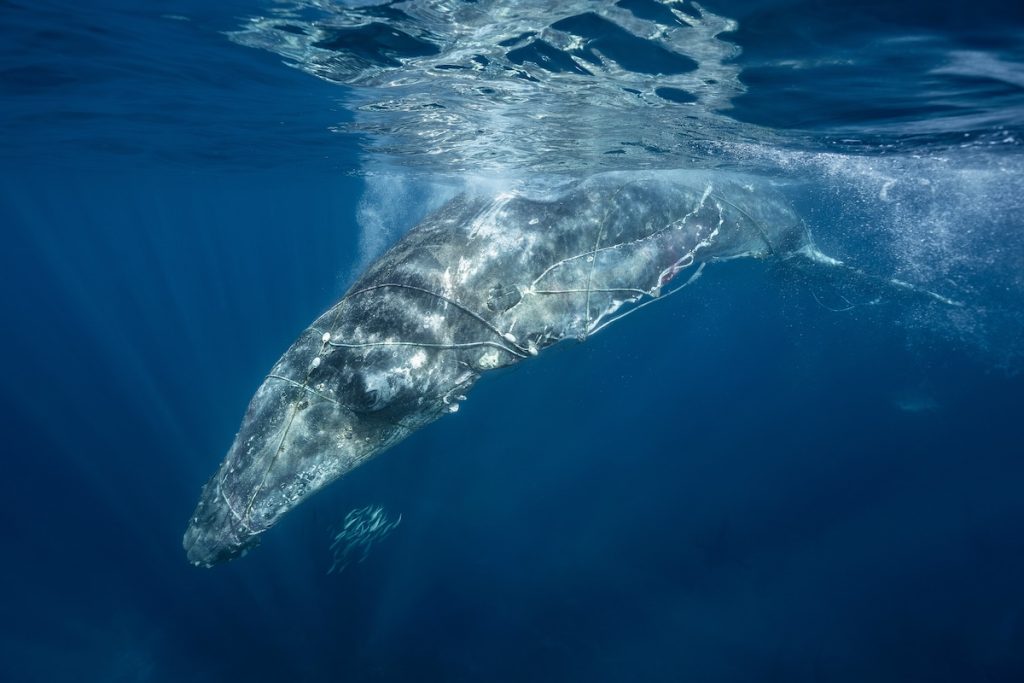
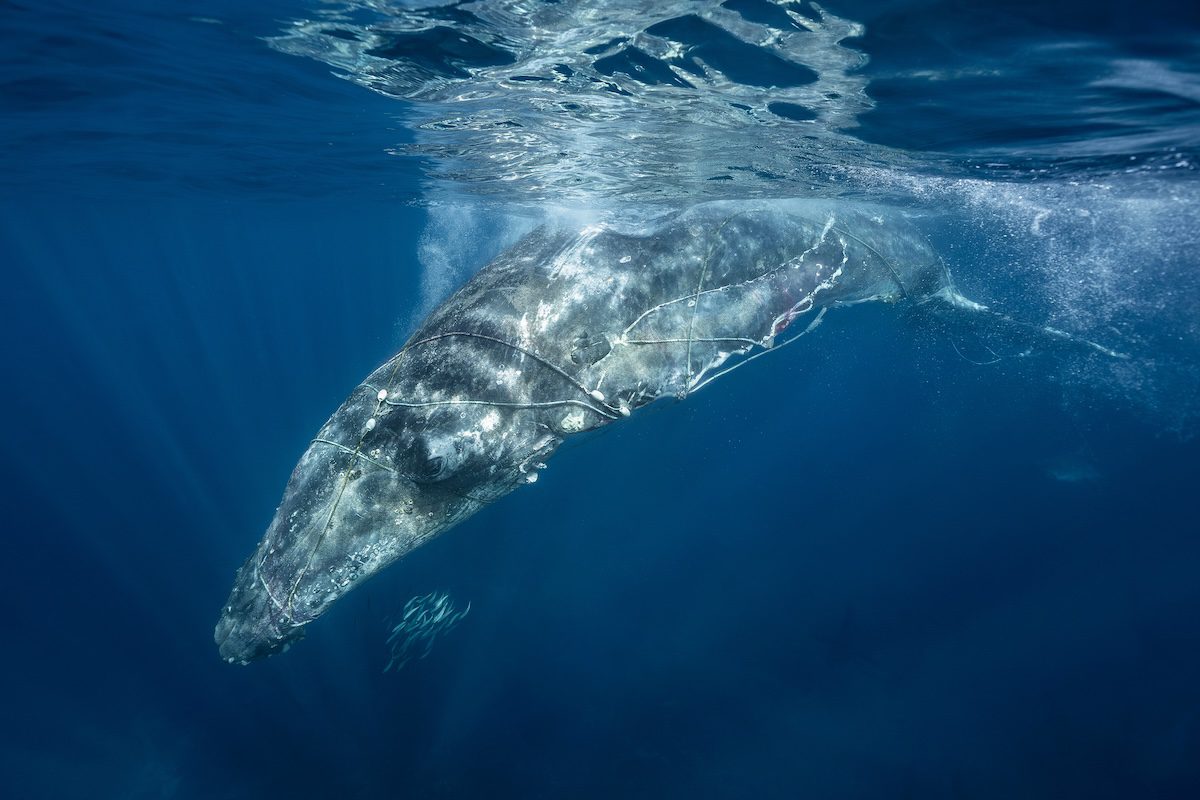
Third place: Claudio Moreno. An entangled humpback whale off Ningaloo Reef. “This image represents one of the most profound moments of my life,” says Moreno Madrid. “Hopelessly entangled in fishing nets, I tried to document the situation. I hope this image turns tragedy into awareness.” © Ocean Photographer of the Year 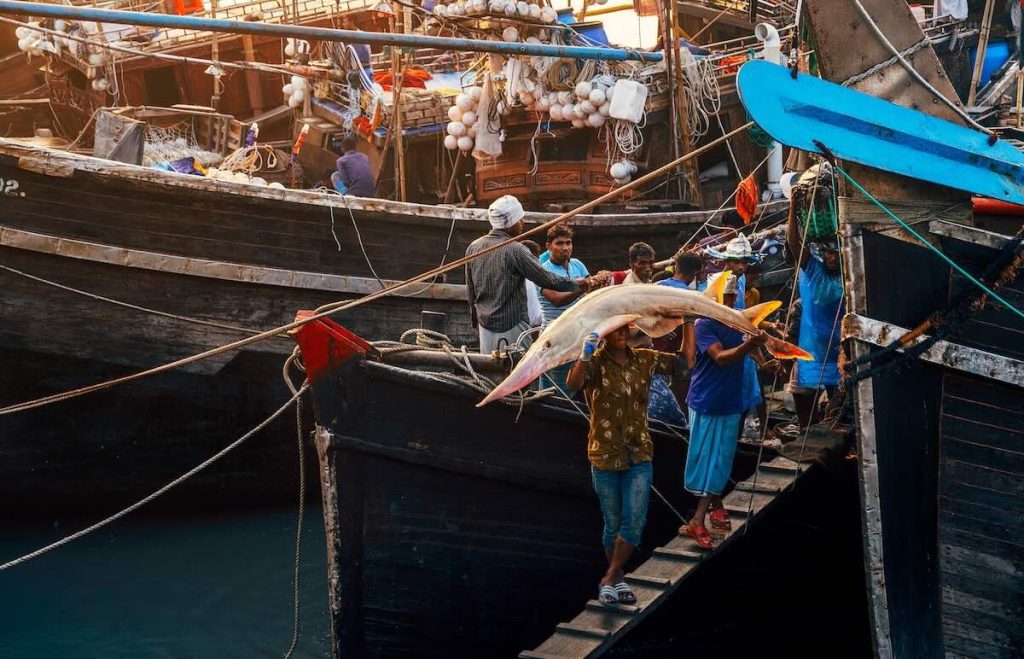
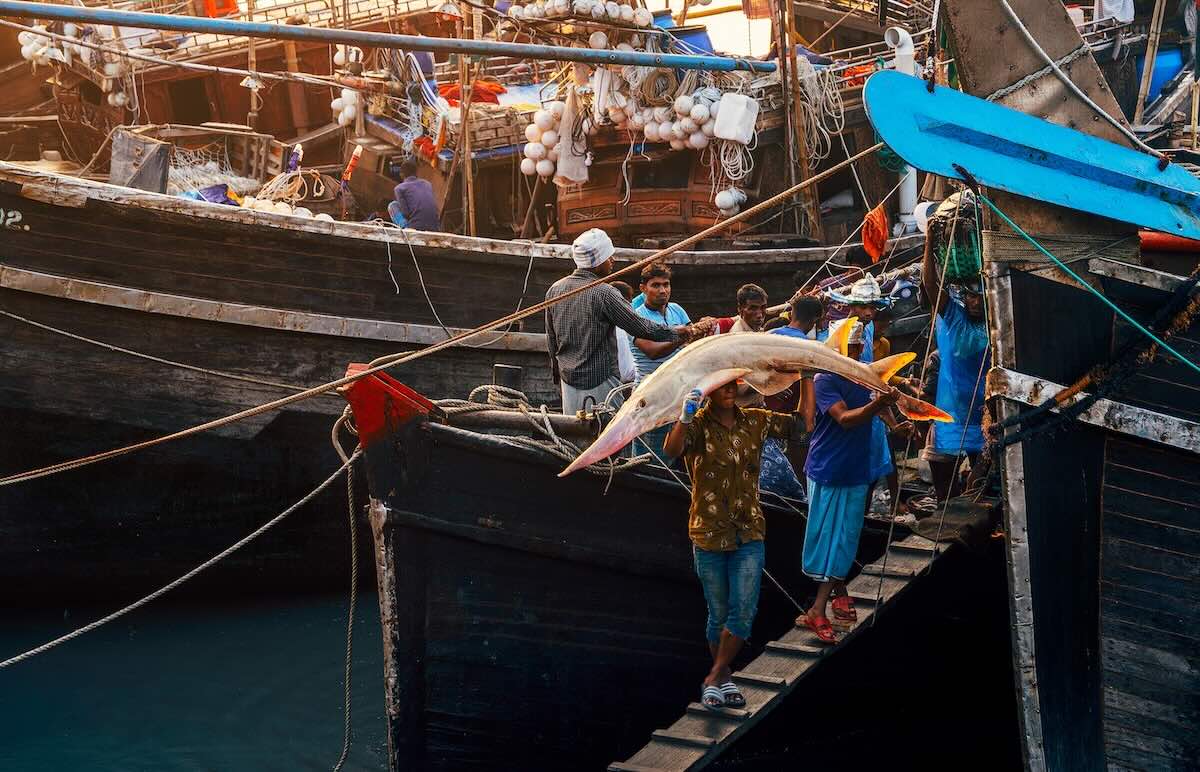
Natnattcha Chaturapitamorn. Fishermen unload their catch. “At the heart of the action, a man carries an enormous guitarfish,” says Chaturapitamorn. “The presence of this endangered species serves as a reminder of the urgent need to protect marine biodiversity.” © Ocean Photographer of the Year 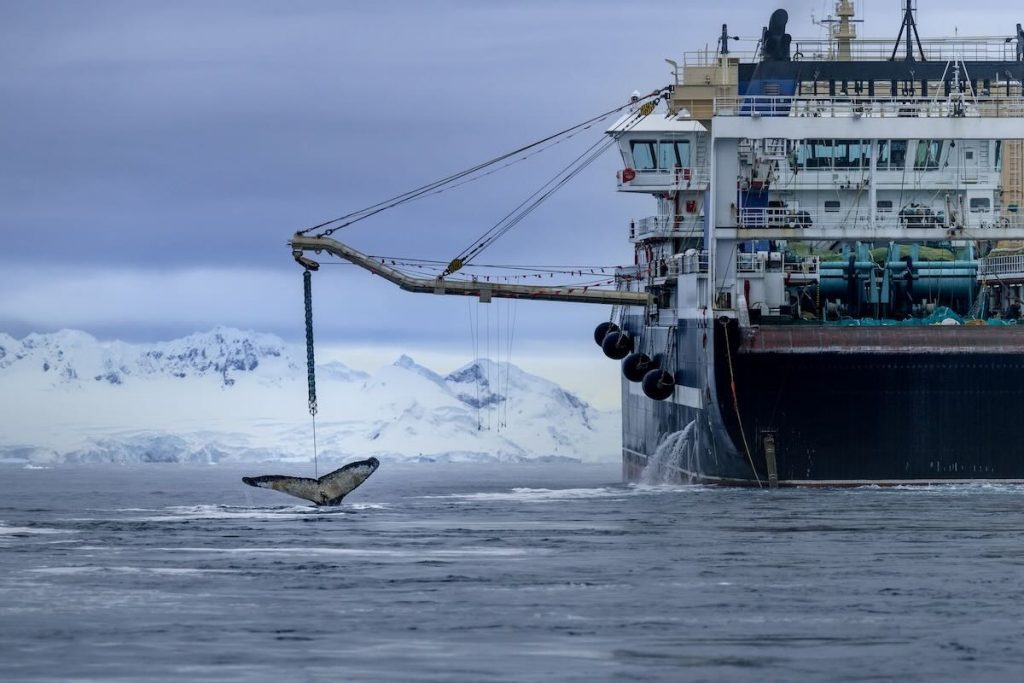
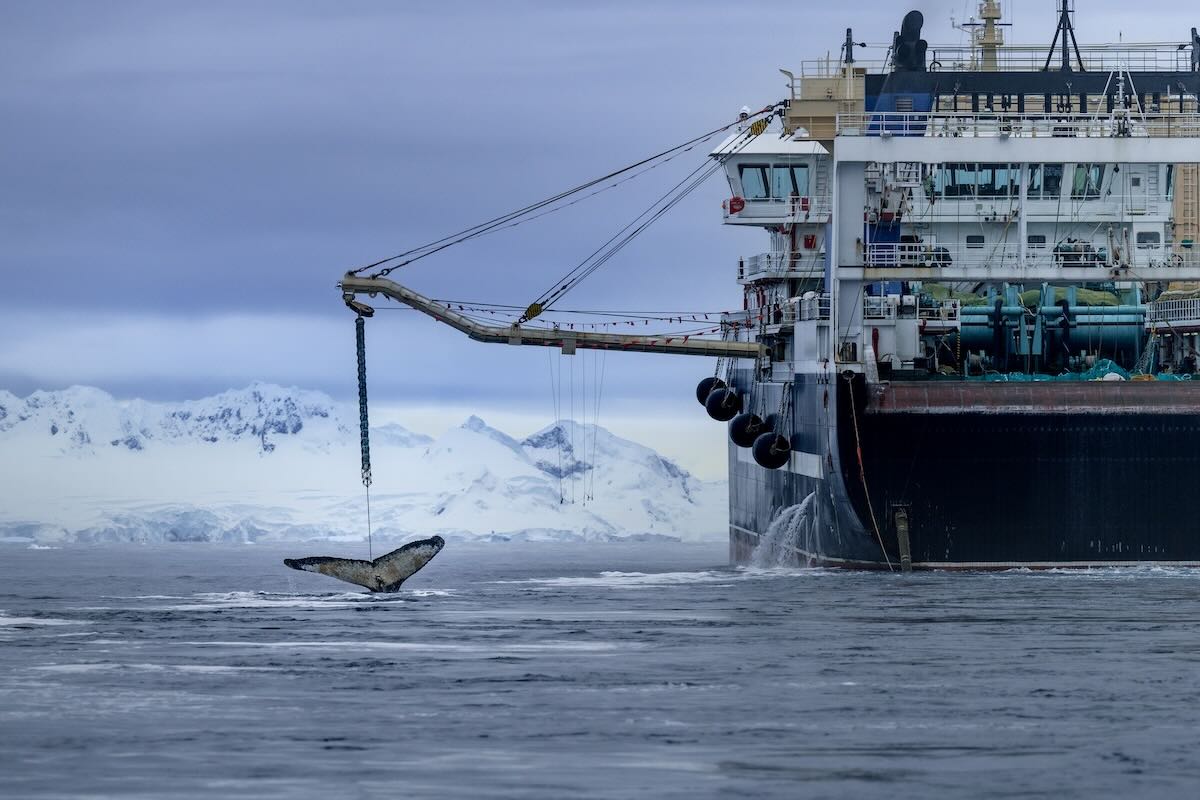
Youenn Kerdavid. A whale follows a krill trawler – one of the fastest-growing threats to Antarctic wildlife. “Over the past 20 years, krill fishing has quadrupled,” says Kerdavid. “A single trawler can catch 500 tonnes of krill daily, enough to feed 150 whales.” 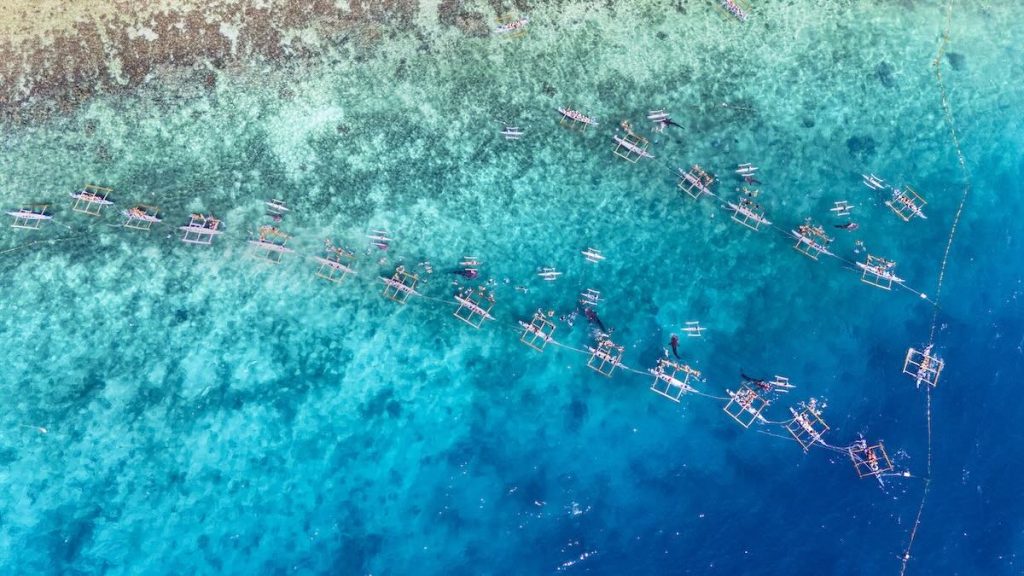
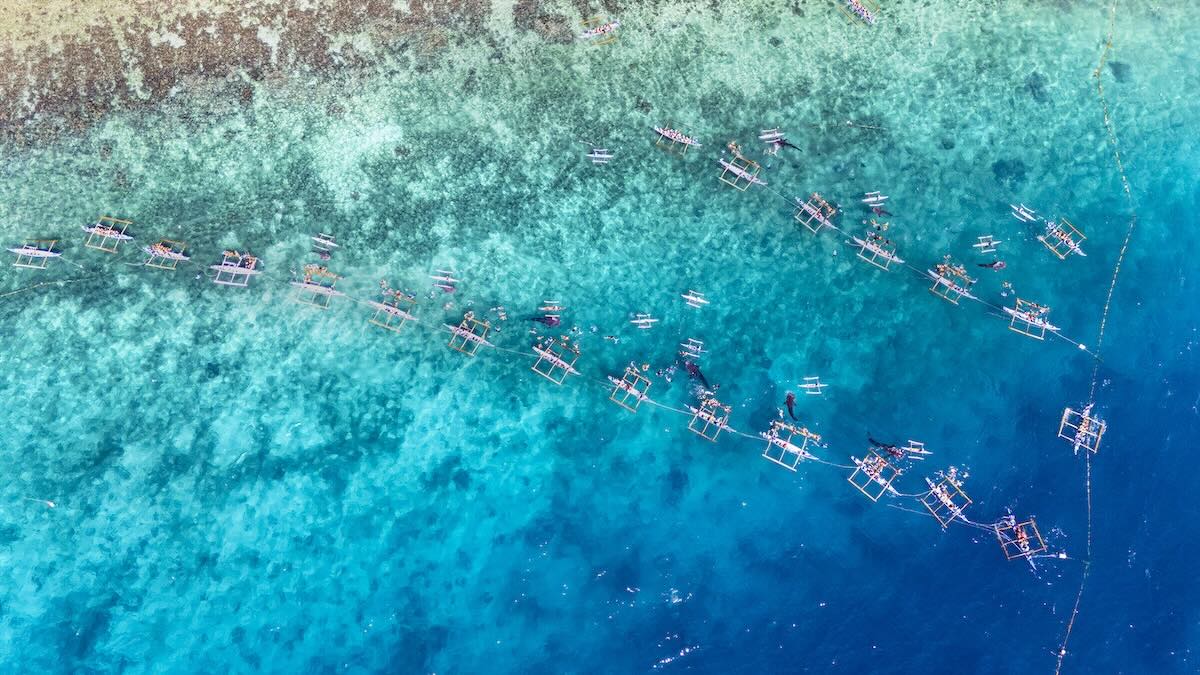
Noam Kortler. The negative side of whale shark tourism. “In this image you can see the industry behind the tourism,” says Kortler. “Whale sharks approach the boats to be fed. These interactions have become a circus rather than a celebration of nature.” © Ocean Photographer of the Year 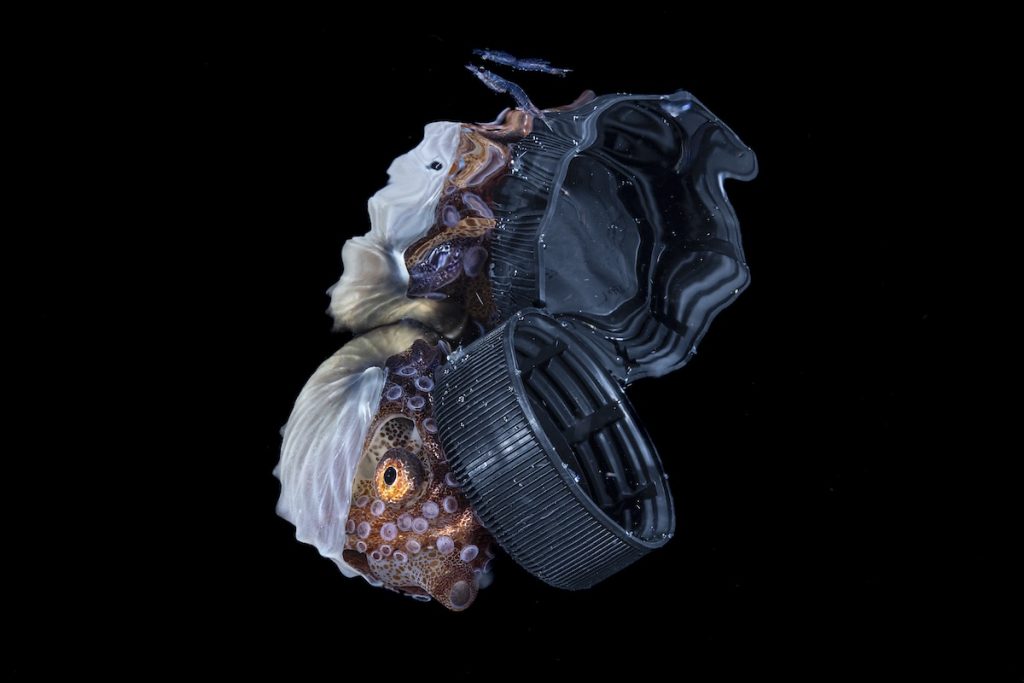
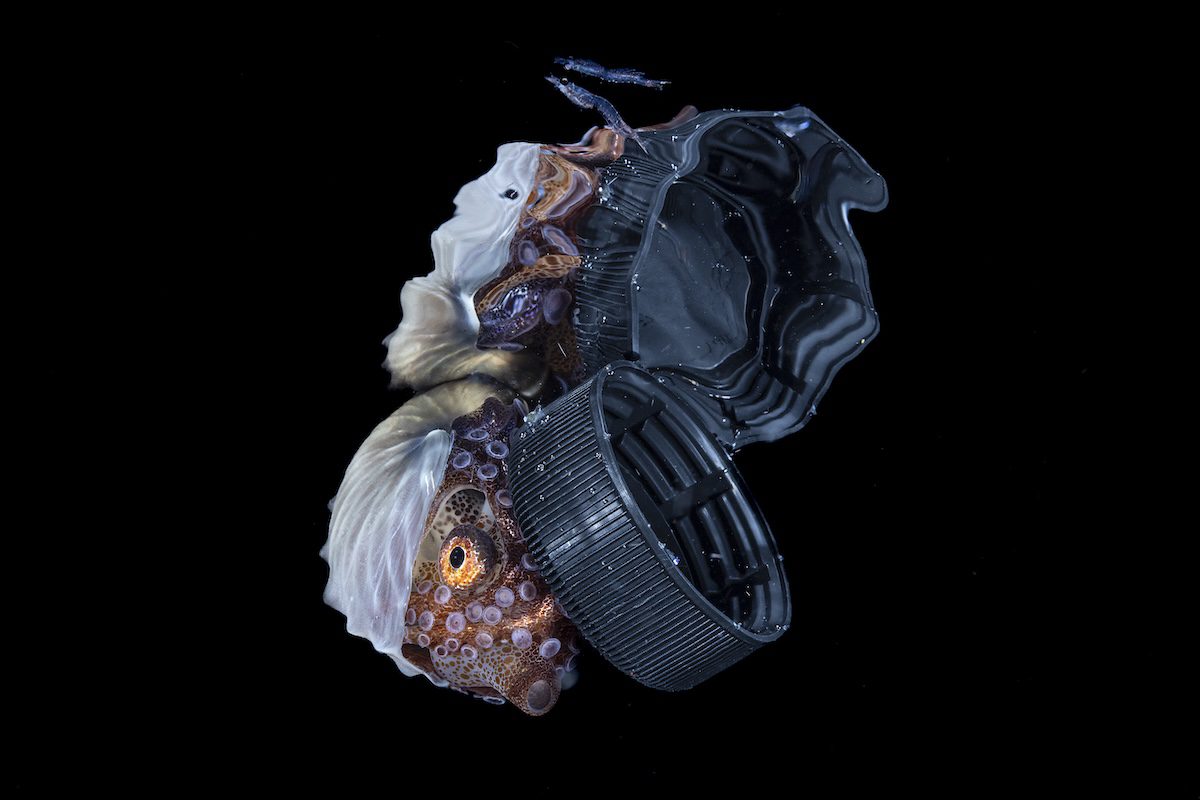
Giancarlo Mazarese. A paper nautilus clings to a bottle cap. “In the wild, females of this species seek out floating organisms like jellyfish to hitch a ride,” explains Mazarese. “This image reflects the silent impact of pollution.” © Ocean Photographer of the Year 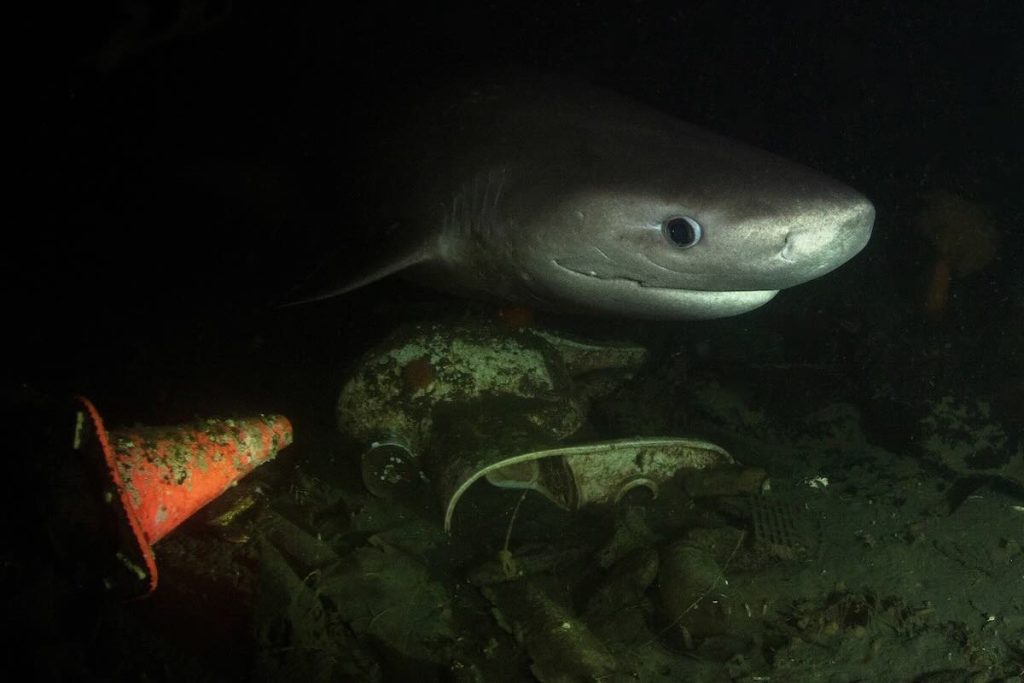
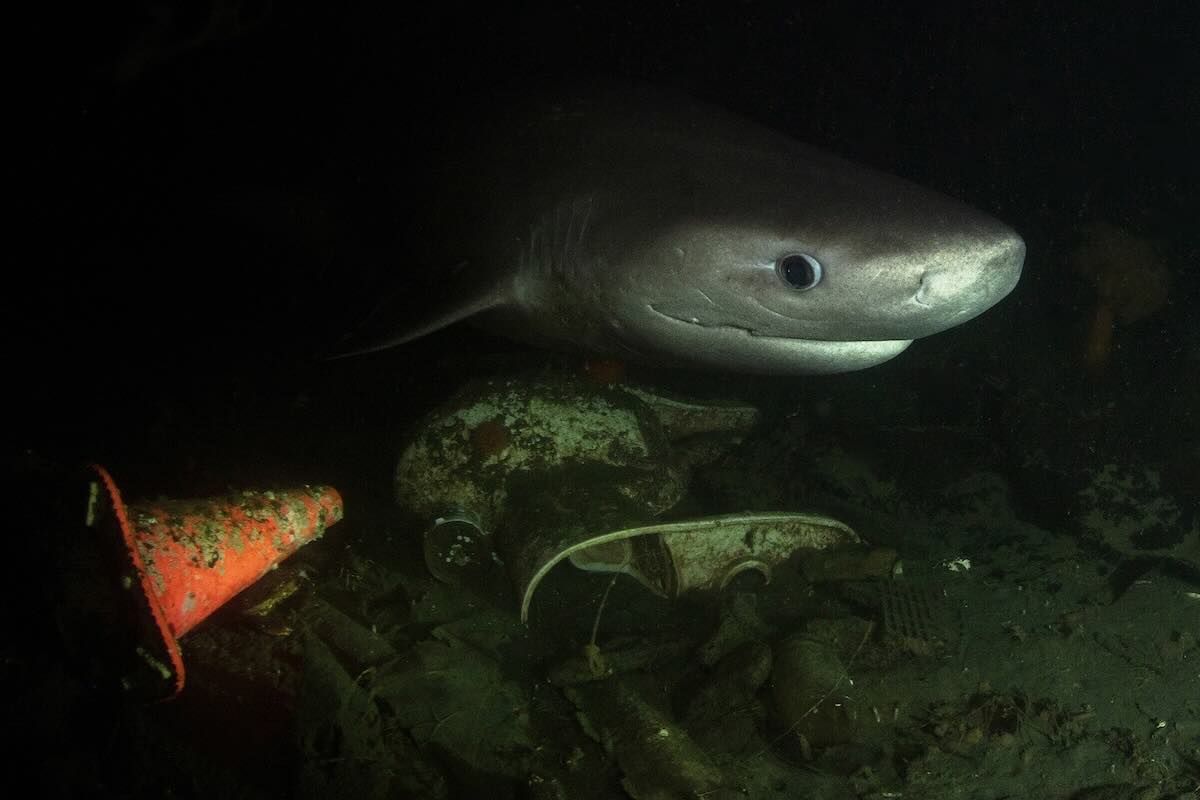
Jesse Miller. A sixgill shark swims past a discarded traffic cone and toilet. “This image is a juxtaposition between nature’s beauty and humanity’s destructive nature,” says Miller. © Ocean Photographer of the Year 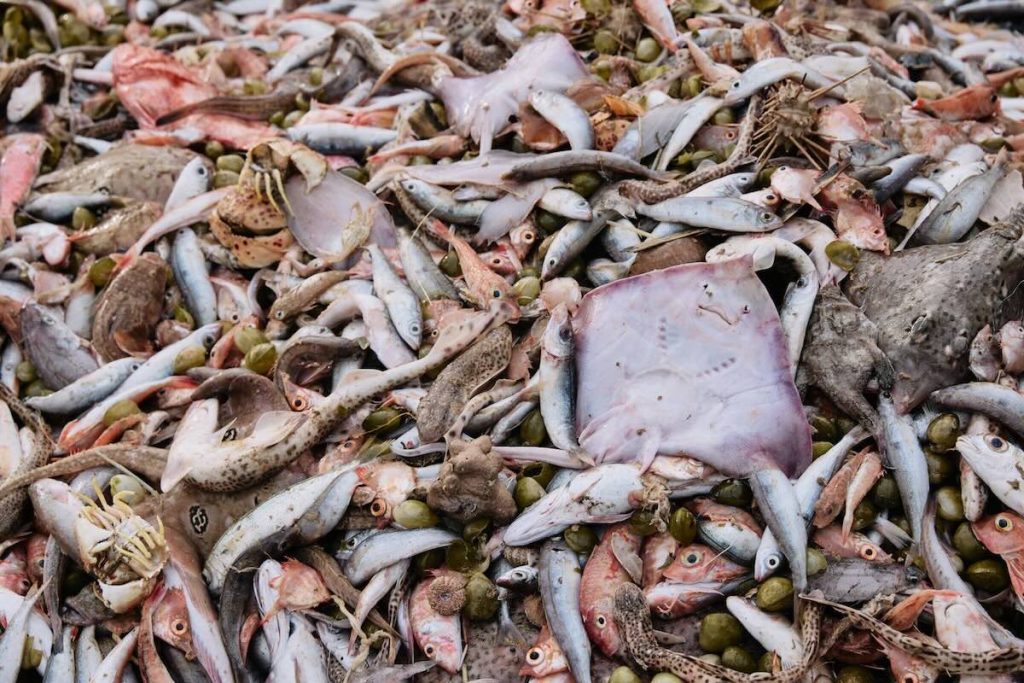
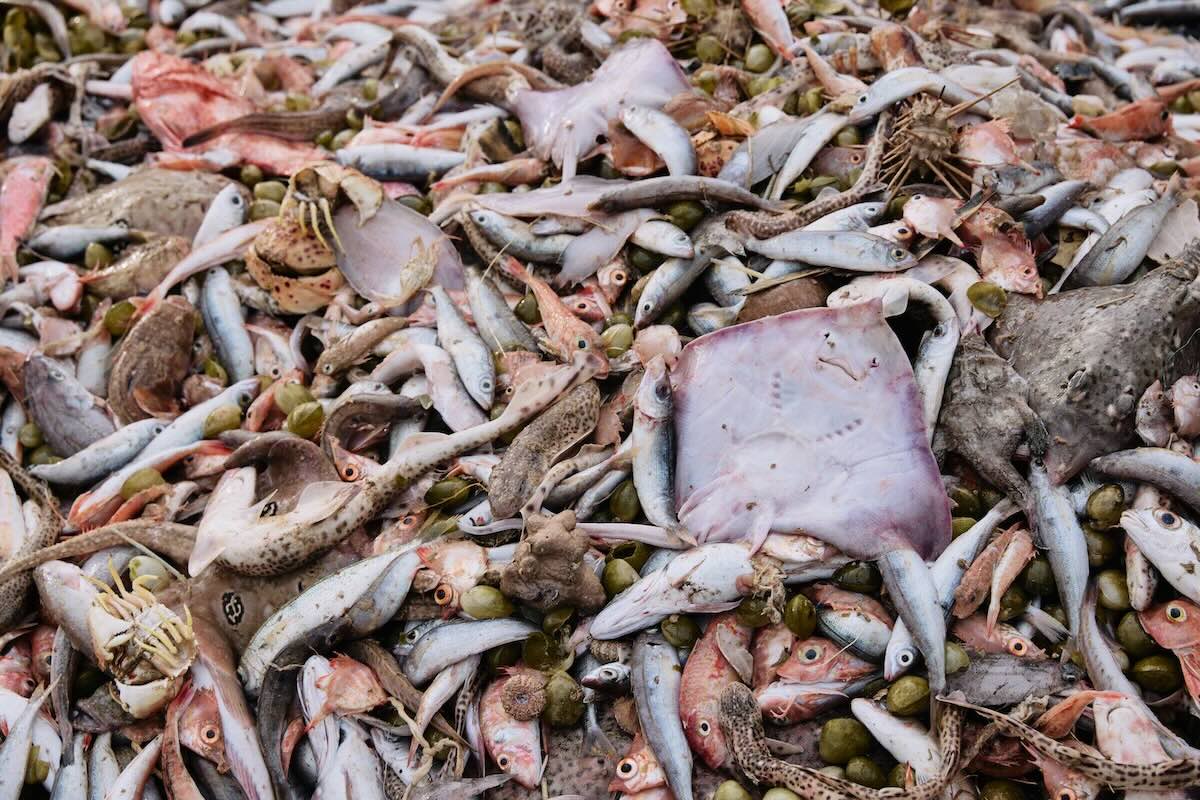
Julia Ochs. Rarely seen bycatch caught on a bottom trawler. “Bottom trawling sees a 100-metre net being dragged along the seafloor,” says Ochs. “On that day, most animals were bycatch and later discarded. Seeing this strengthened my desire to expose the practice.” © Ocean Photographer of the Year 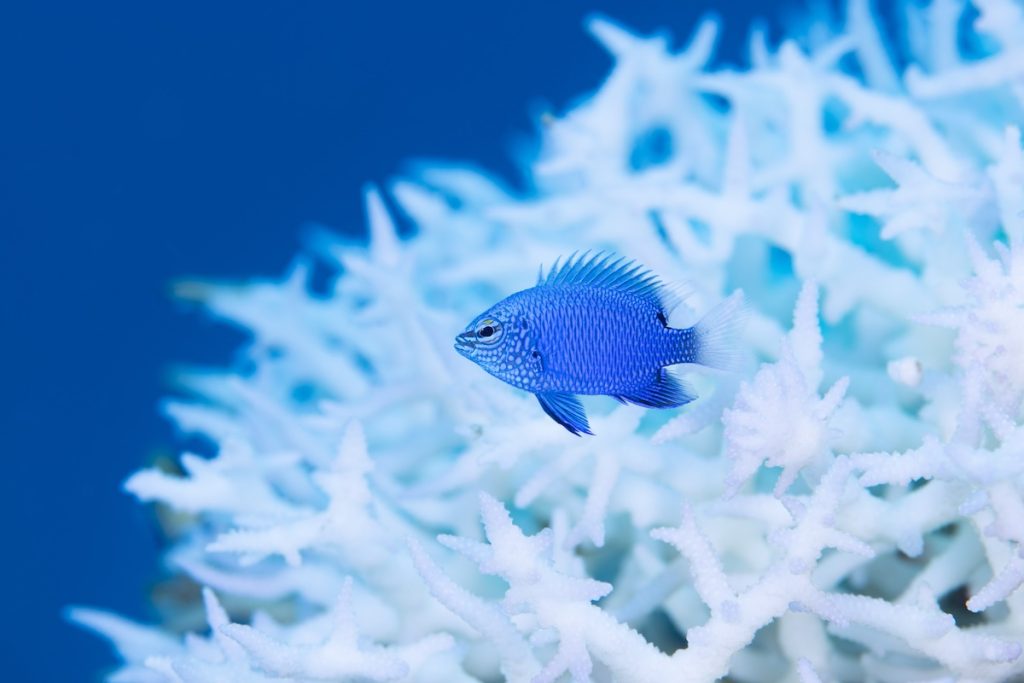
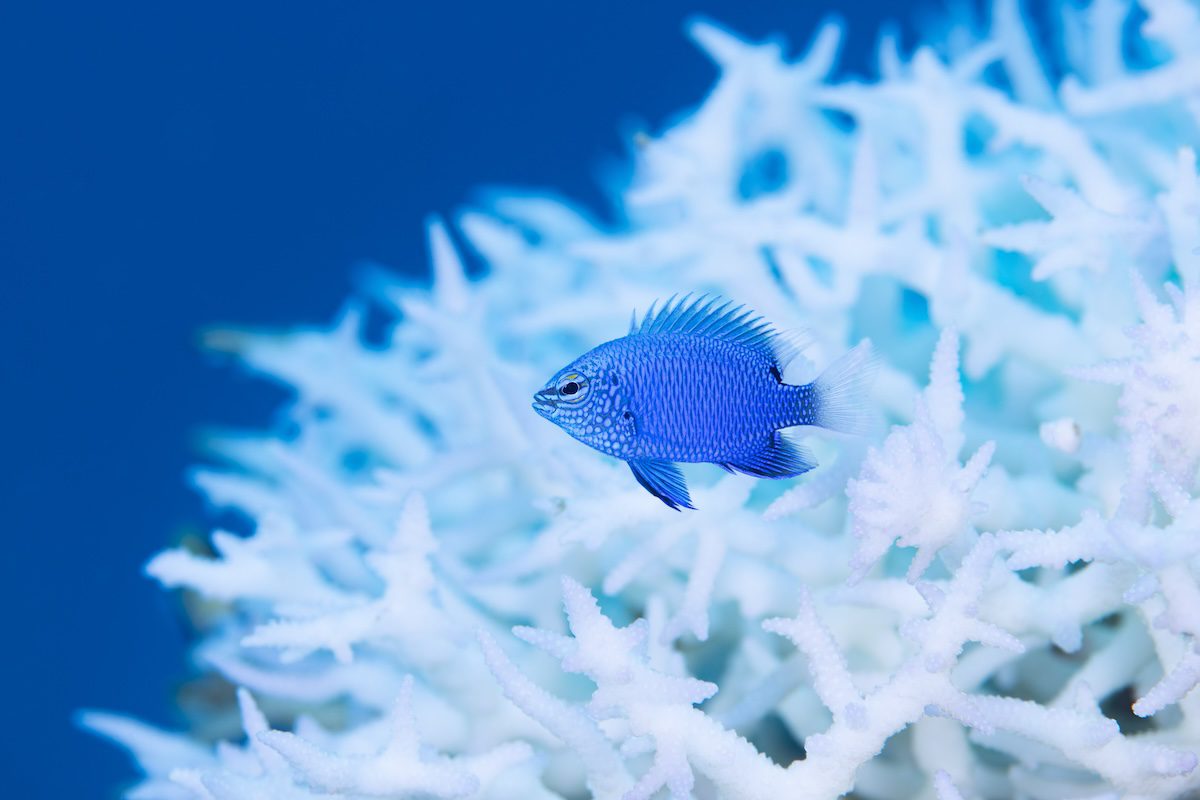
Richard Smith. A Melanesian endemic blue devil damselfish stands in stark contrast to a bleached reef. “After 25 years, I returned to Milne Bay, remembering its incredible corals,” says Smith. “Tragically, our first dive revealed the worst coral bleaching I’d ever witnessed.” © Ocean Photographer of the Year 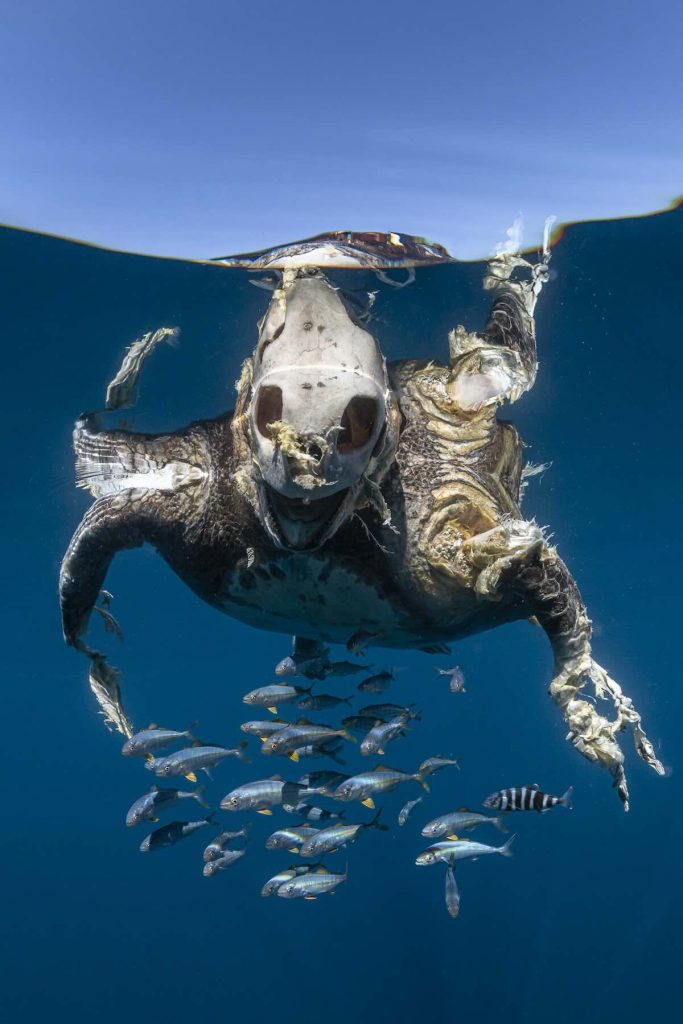
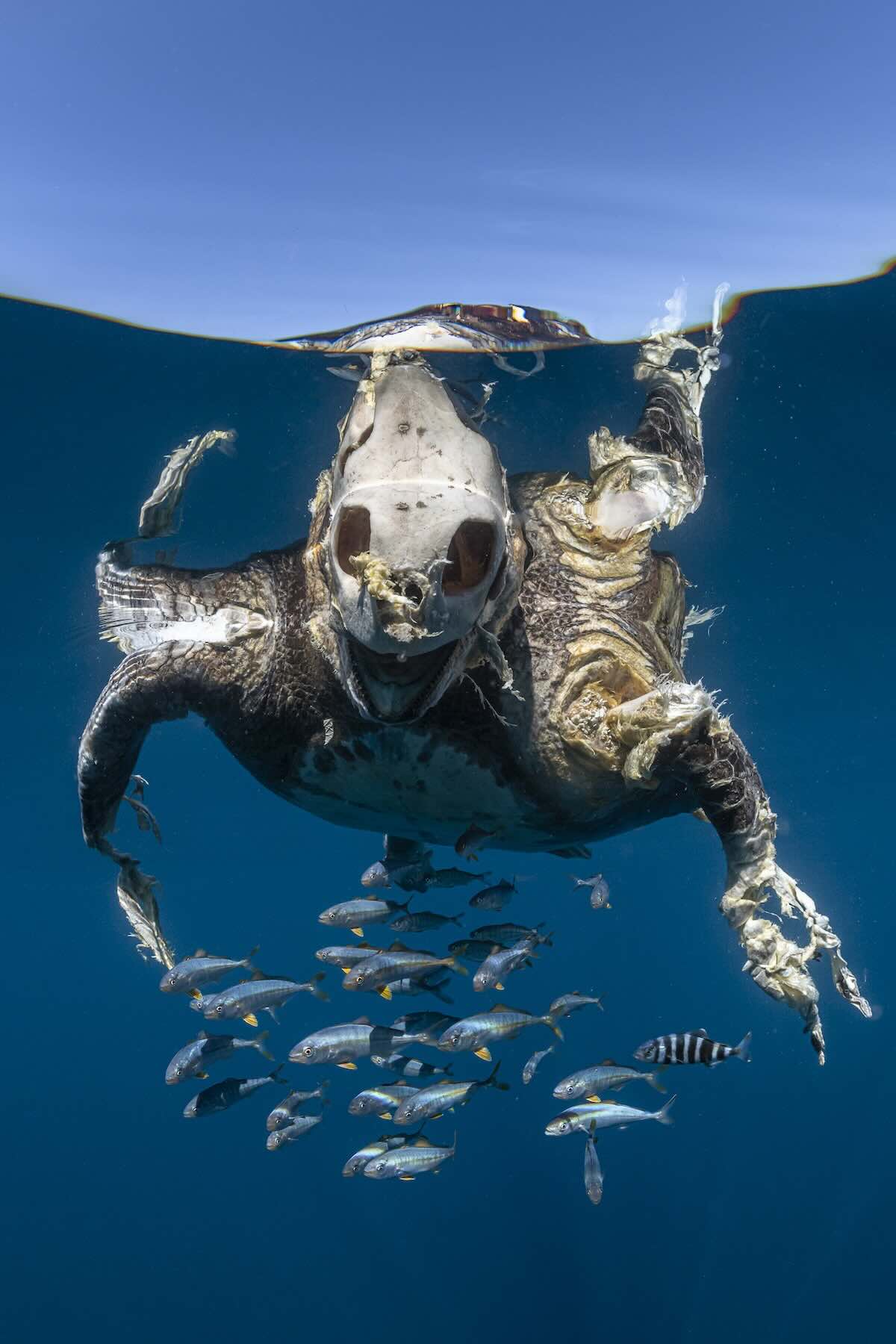
Henley Spiers. A partly decomposed green turtle, killed by a boat strike. “An unnatural death for an endangered species. says Spiers. “I hope that this image acts as a reminder of the human burden placed on turtles and the ocean.” © Ocean Photographer of the Year 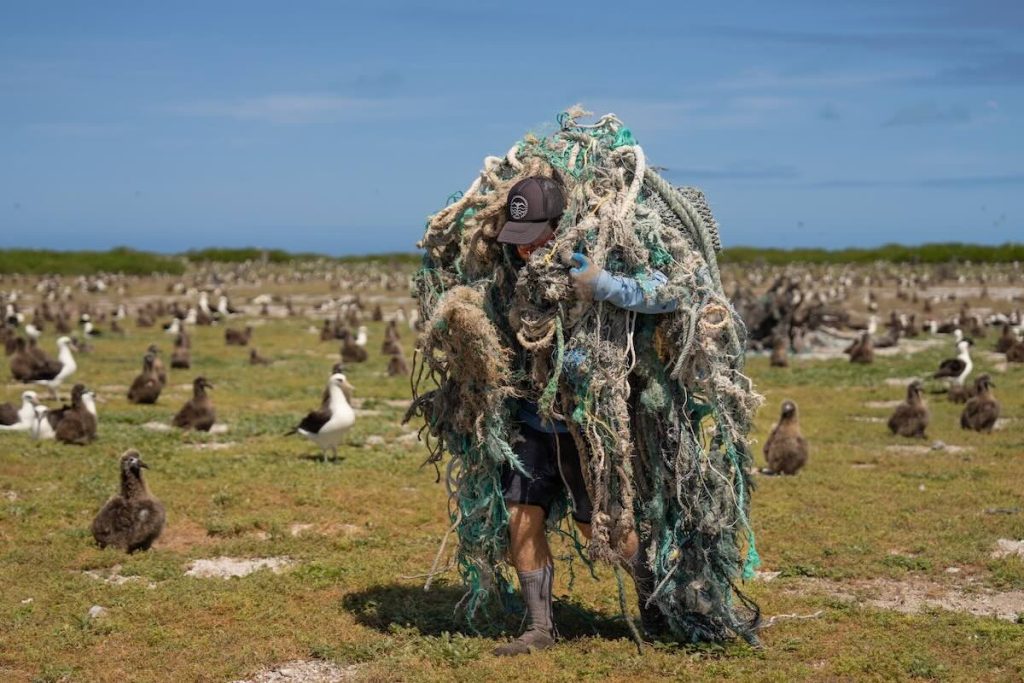
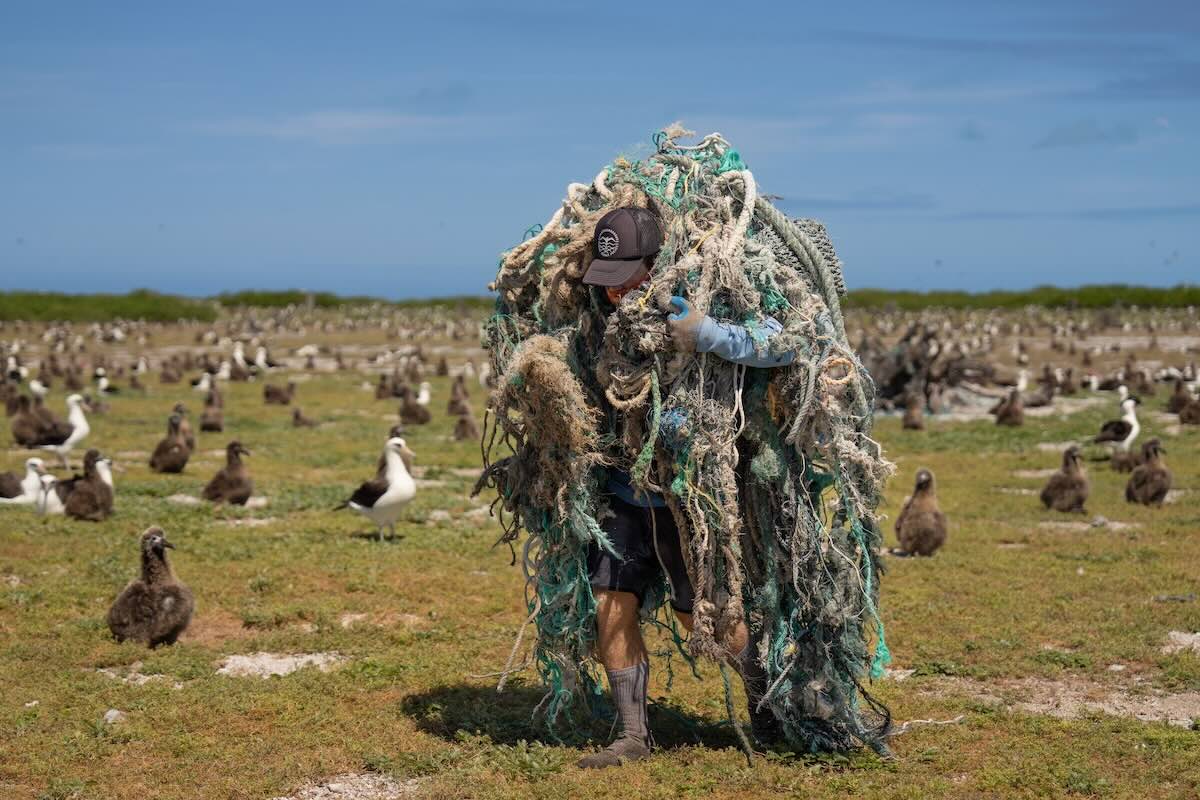
Andrew Sullivan-Haskins. Inside the world’s largest albatross colony, a technician from the Papahānaumokuākea Marine Debris Project carries a ghost net. “During their mission, the team removed more than 70,000 pounds of marine debris,” says Sullivan-Haskins. “This is action-based conservation at its finest.” © Ocean Photographer of the Year
Category: CONSERVATION / HOPE
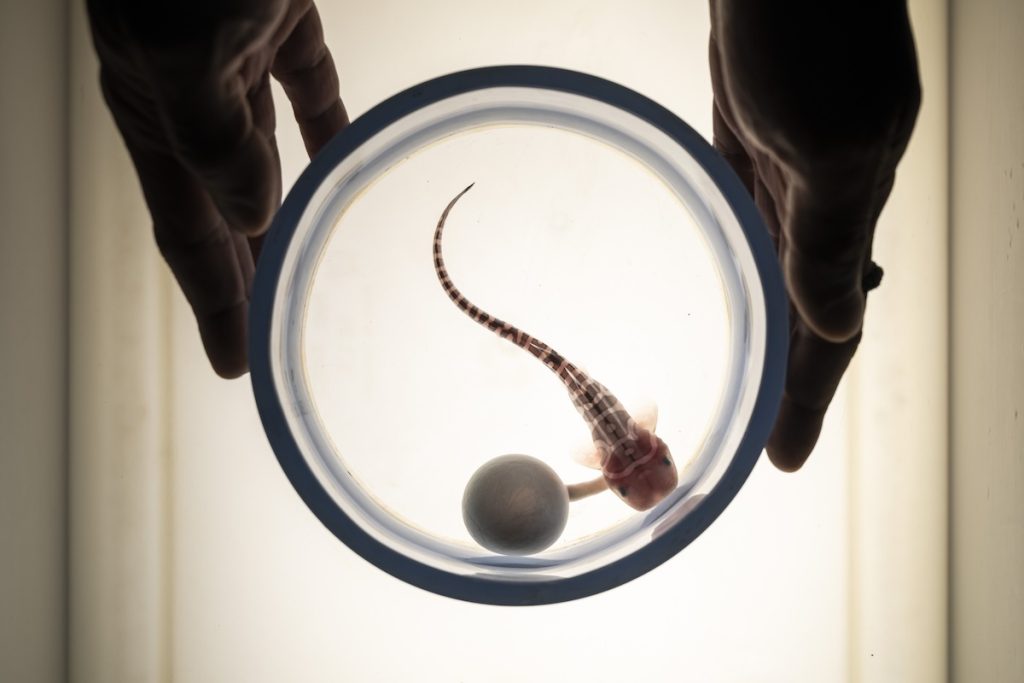
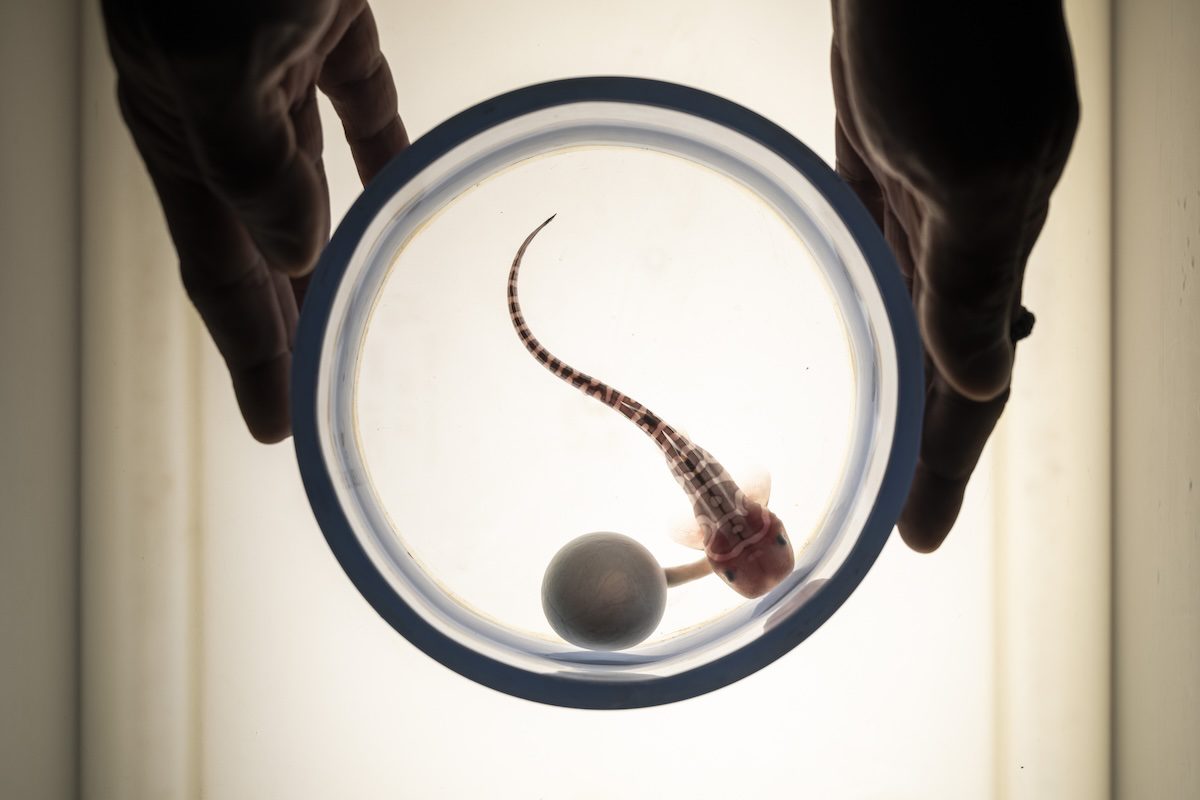
WINNER: Sirachai Arunrugstichai. An aquarist holds an early-stage embryo of an Indo-Pacific leopard shark, its egg case removed for a rearing experiment at Aquaria Phuket. “Since 2023, the aquarium’s breeding programme has produced over 40 pups of this Endangered species,” says Arunrugstichai. © Ocean Photographer of the Year 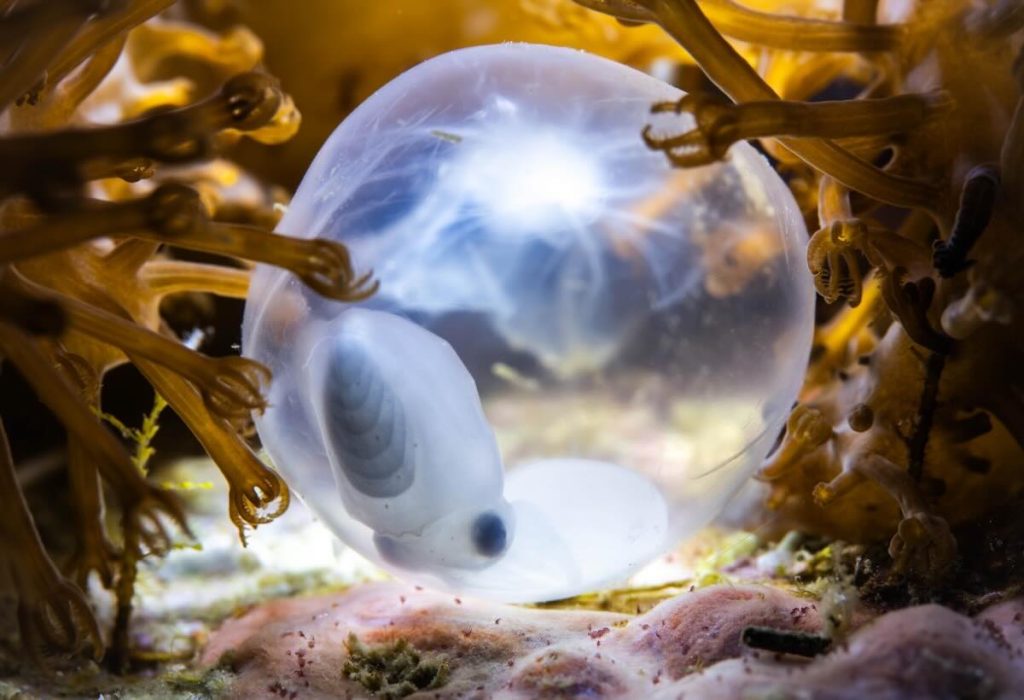
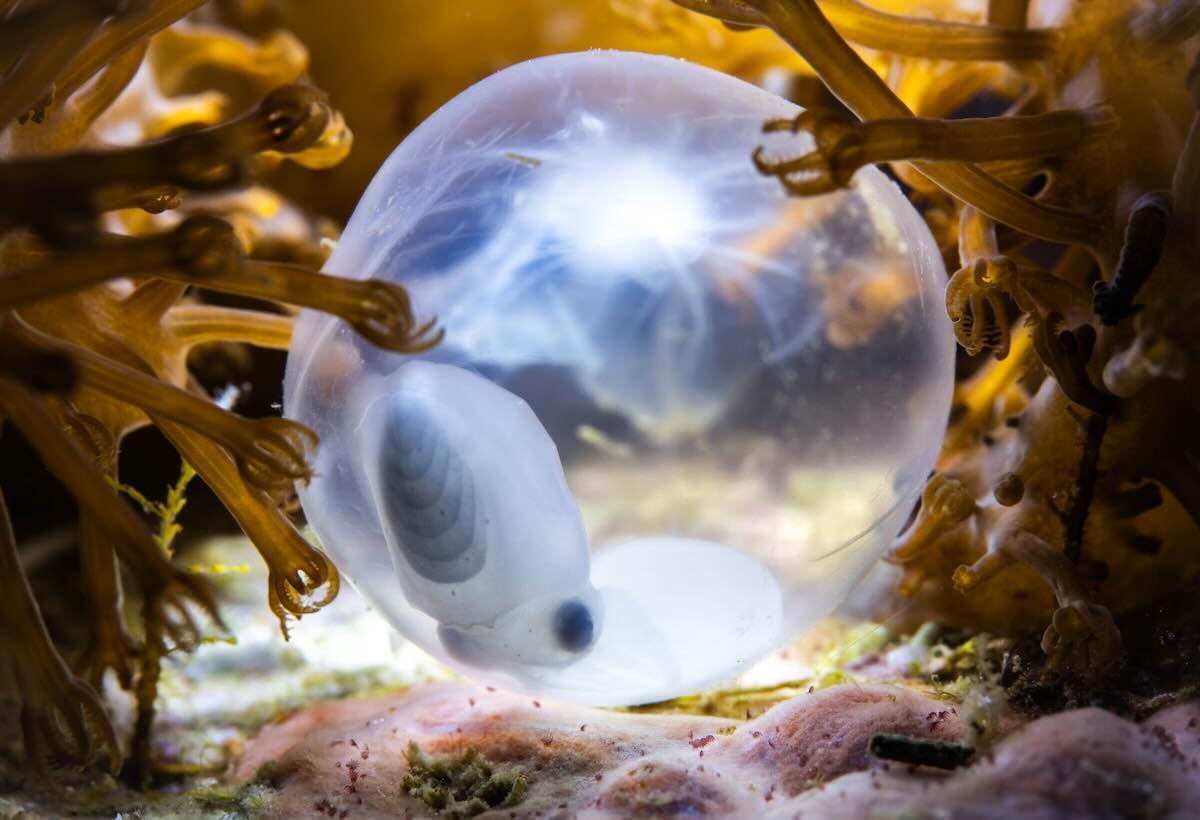
Second place. László Földi. A translucent squid egg, measuring only two or three centimetres in diameter, reveals its inhabitant. “This image was taken on an early morning dive at Gato Island,” says Földi. “I have always been amazed by the variety of underwater life found here.” © Ocean Photographer of the Year 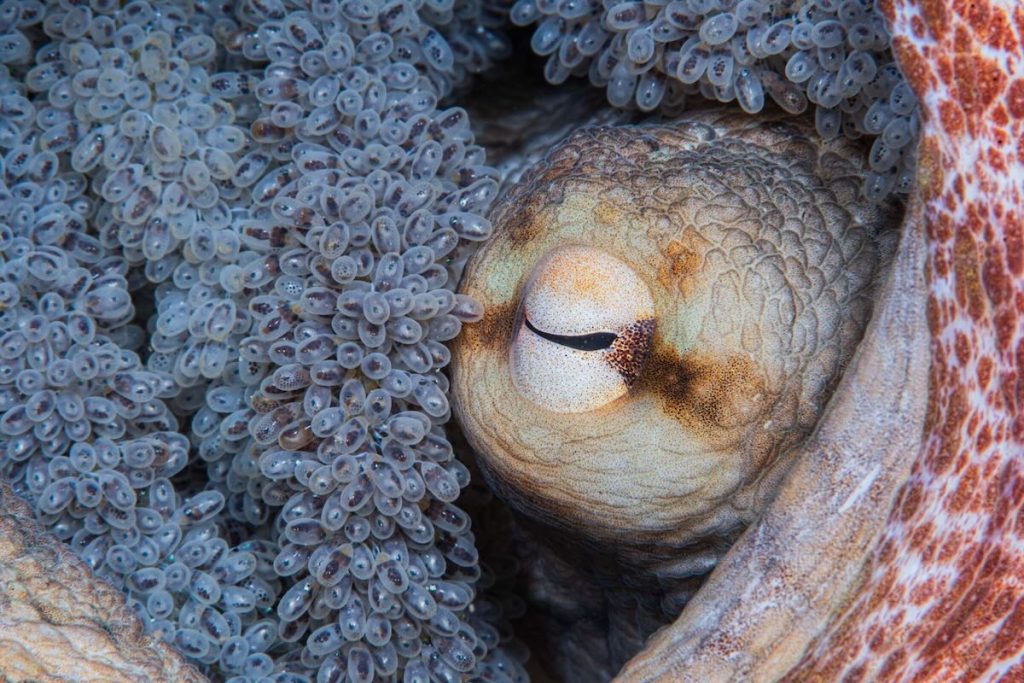
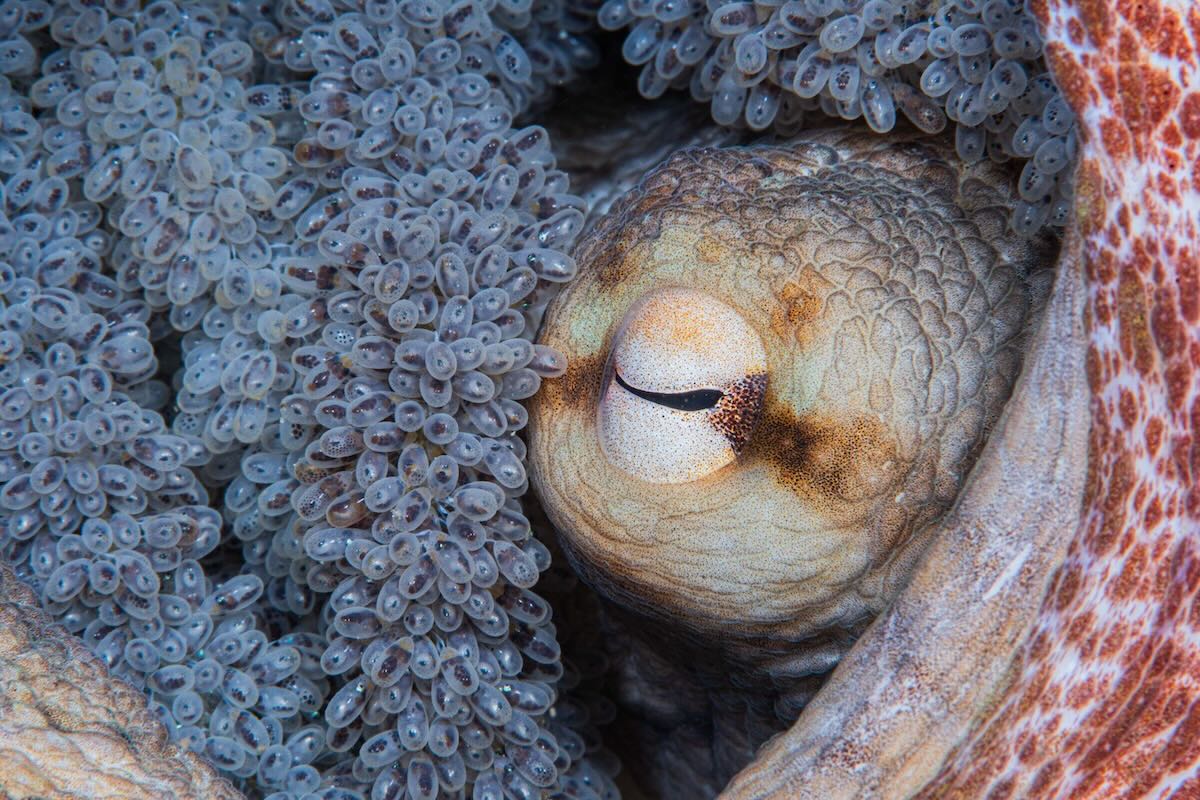
Third place: Théo Maynier. An octopus guards its eggs. “In Martinique, the octopus is becoming increasingly rare due to human overconsumption,” says Maynier. “Marine reserves have been created to offer a refuge. In this context, this encounter stands as a sign of hope.” © Ocean Photographer of the Year 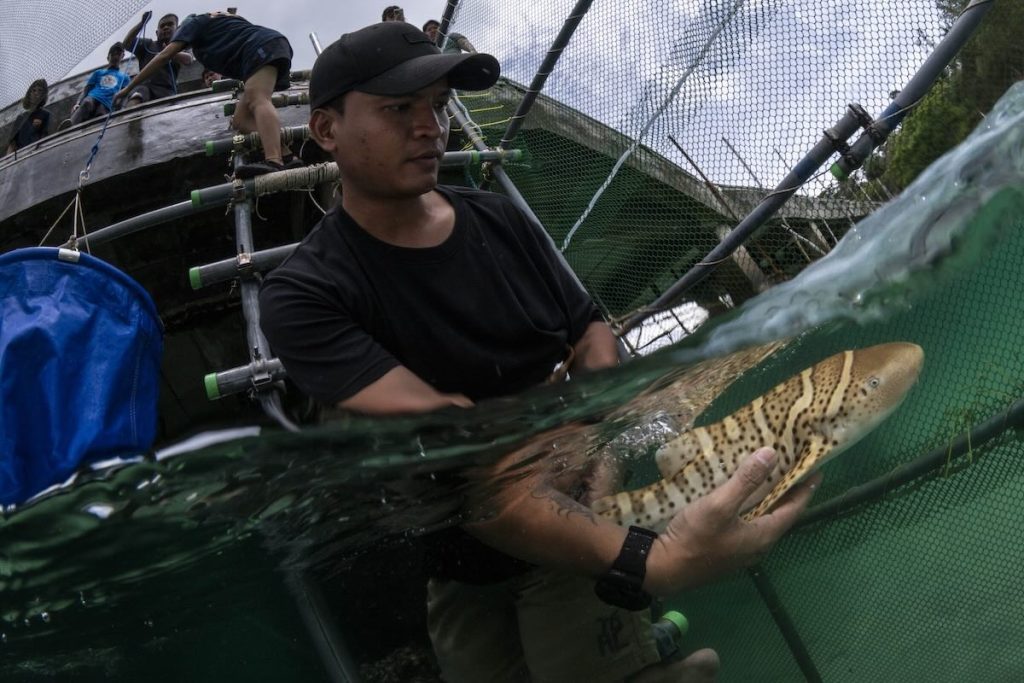
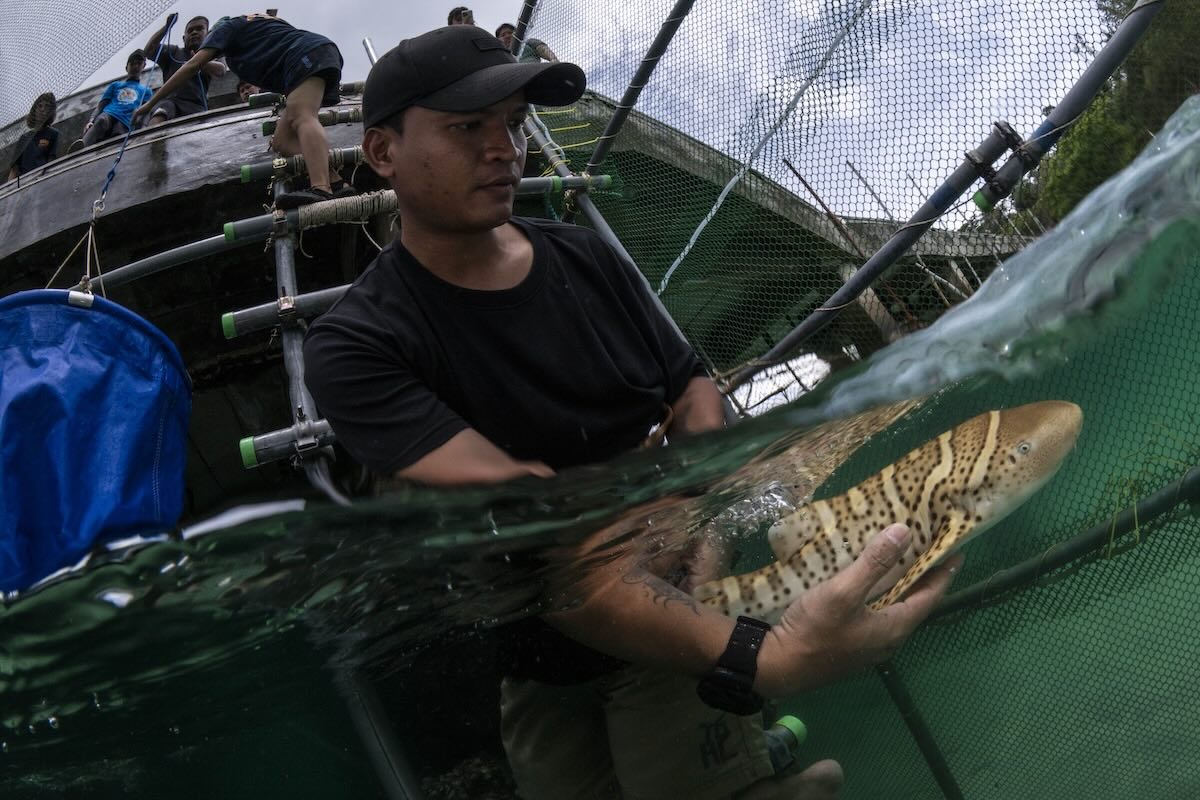
Sirachai Arunrugstichai. Pongsathorn Bauer, a Thai aquarist, releases an Indo-Pacific leopard shark into a sea pen on Phuket. “Since 2023, Aquaria Phuket’s breeding programme has produced more than 40 pups of this Endangered species, listed on the IUCN Red List,” says Arunrugstichai. © Ocean Photographer of the Year 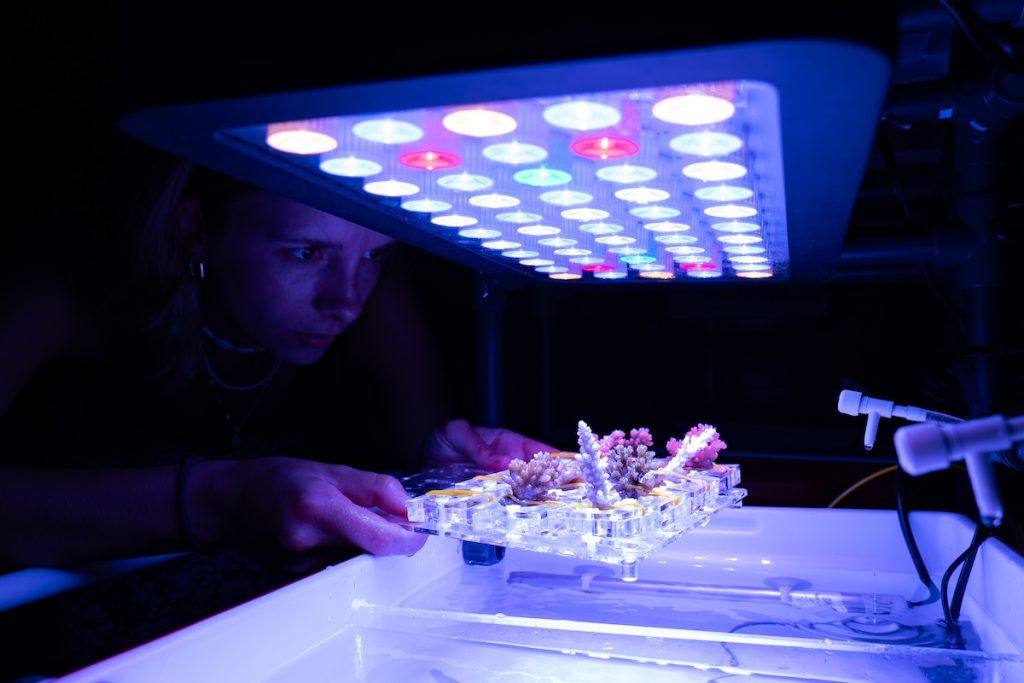
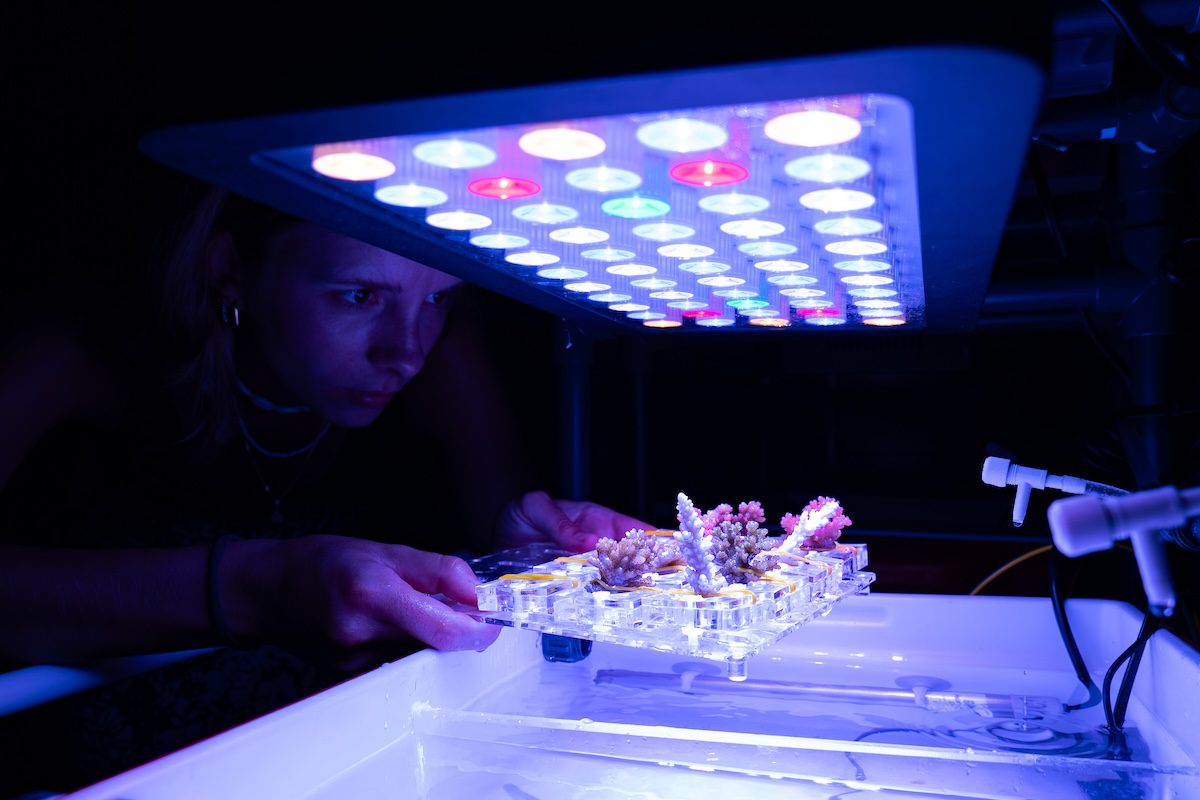
Hugo Bret. Coral fragments are lowered into a tank for a heat-stress experiment to determine the resilience of four local coral species to temperature increases. Bret says: “I tried to capture the importance of scientific research to mitigate biodiversity erosion.” © Ocean Photographer of the Year 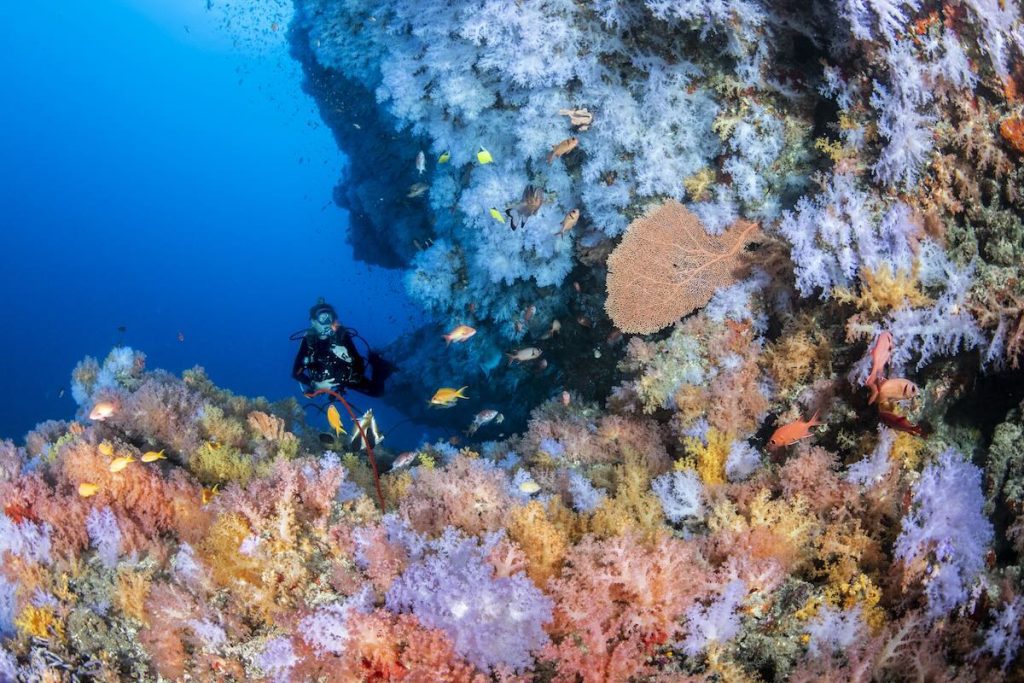
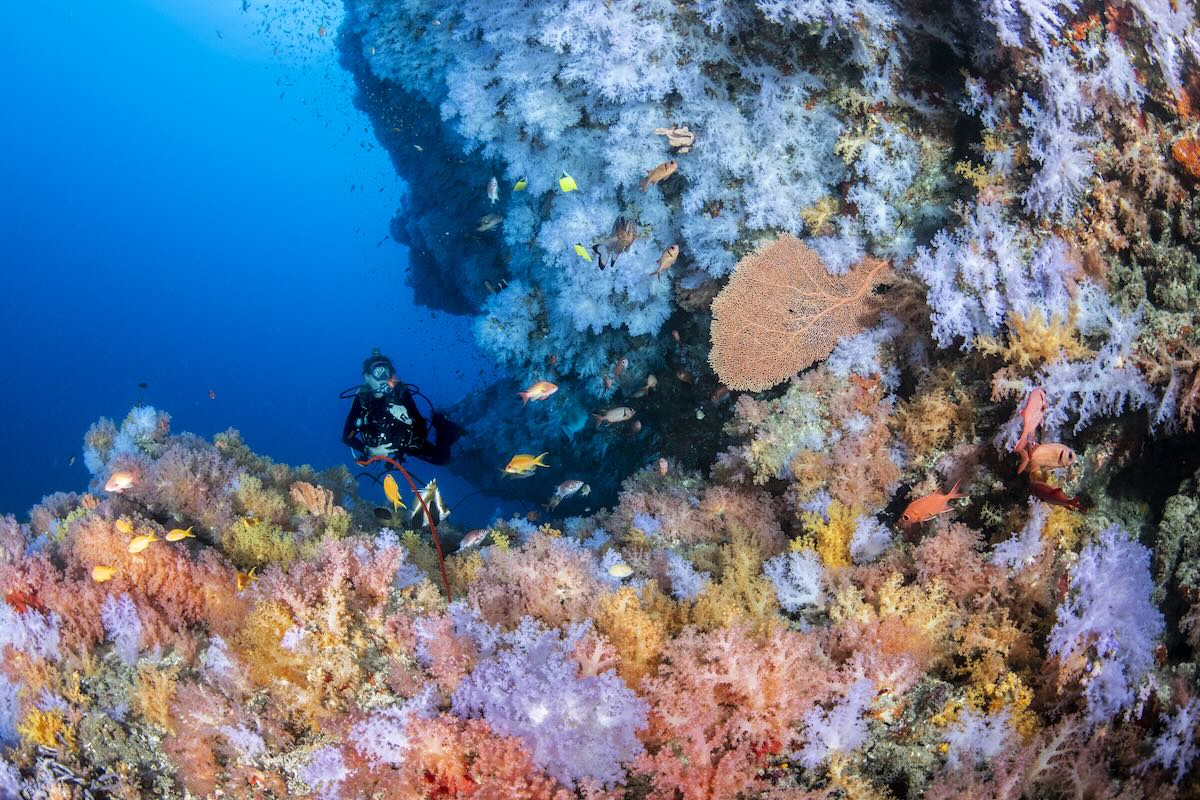
Catherine Holmes. A colourful soft coral reef in the Maldives. “Also known as Blue Caves, this site has been thriving for years. Having dived it over 20 years ago, it now seems more colourful and prolific than ever before,” says Holmes. © Ocean Photographer of the Year 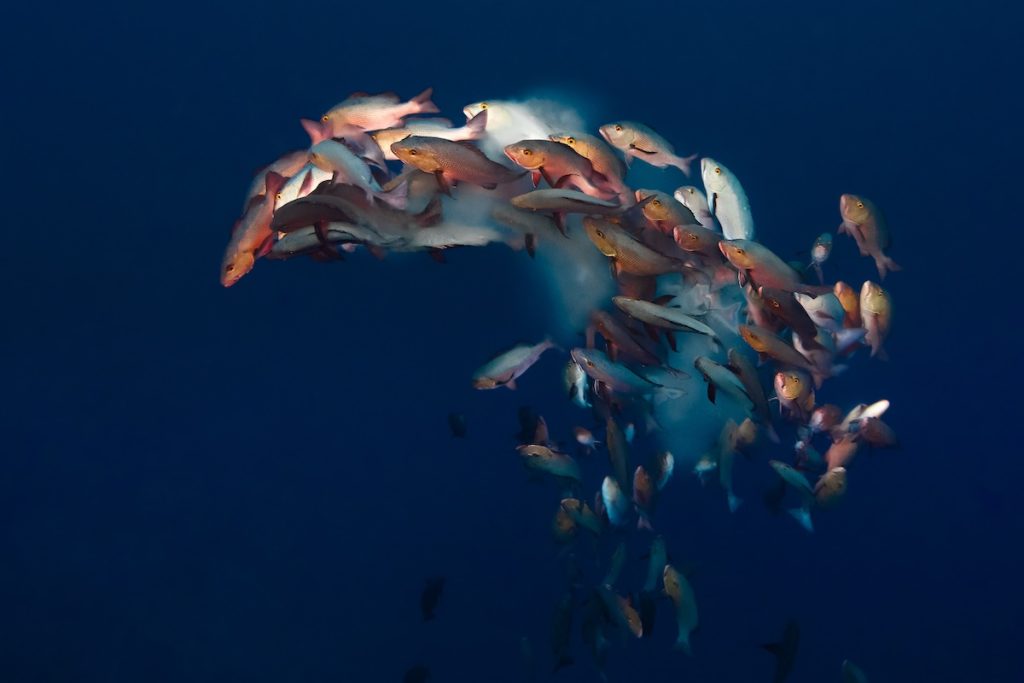
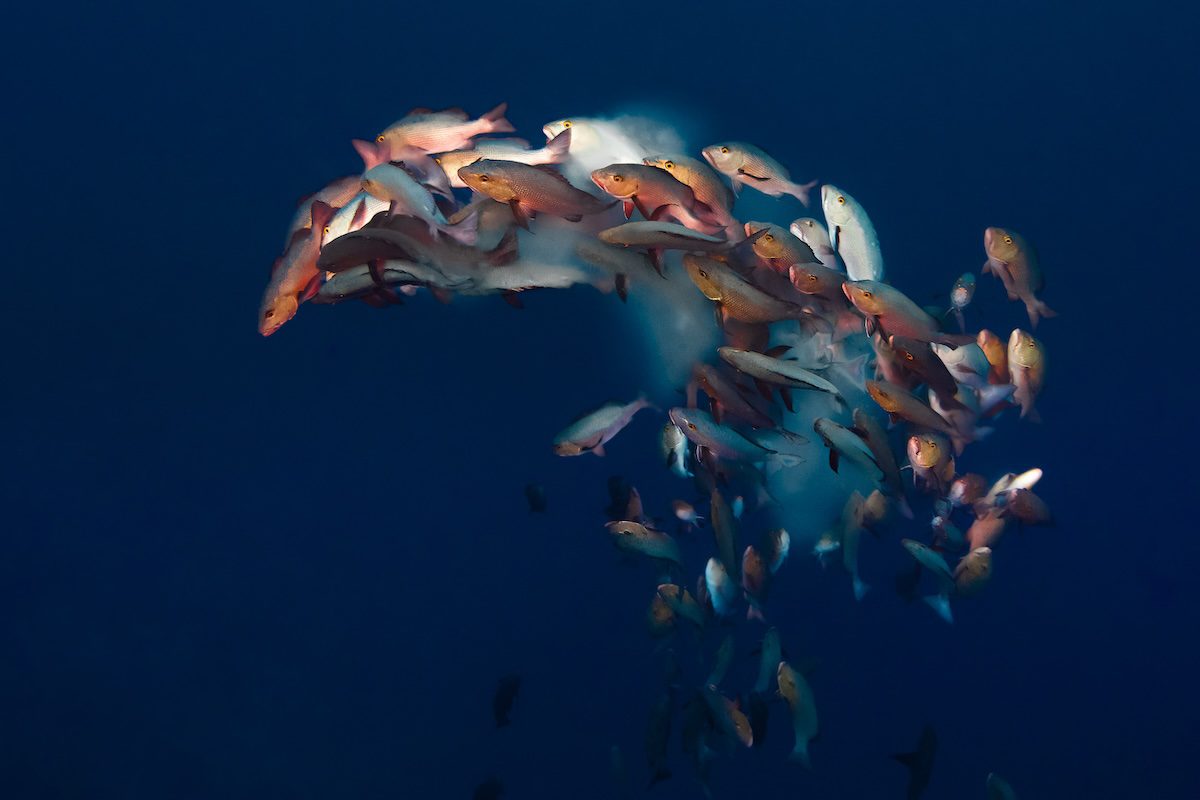
Simon Lorenz. Snappers spawn off the coast of Palau. “The snapper spawning aggregations are monthly events in Palau,” says Lorenz. “Around 30,000 snappers come together to spawn around the full and new moons in strong currents.” © Ocean Photographer of the Year 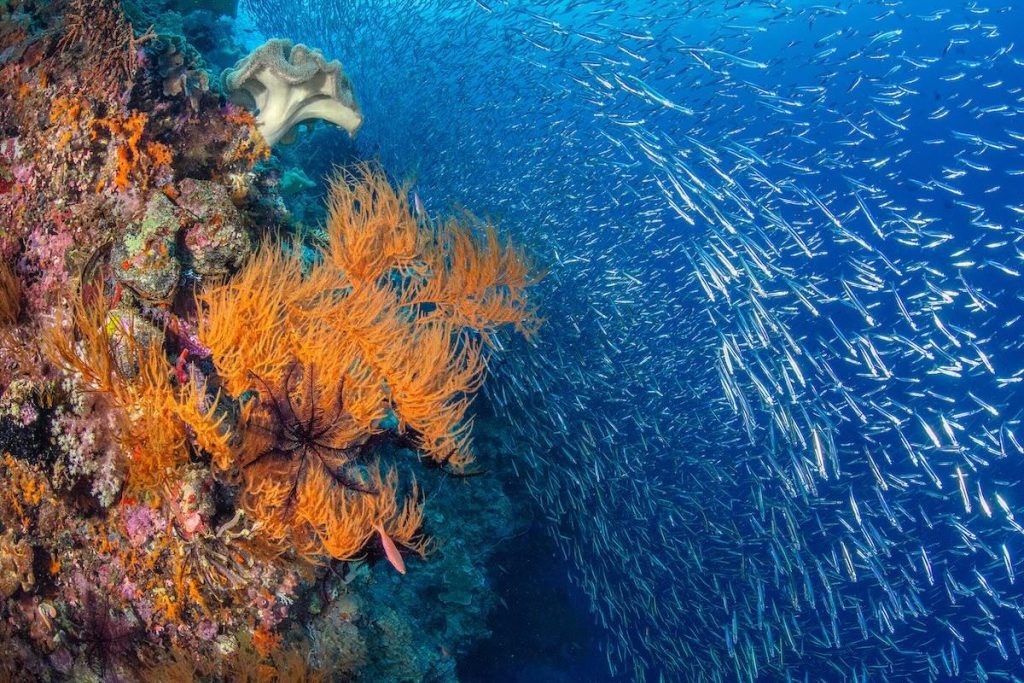
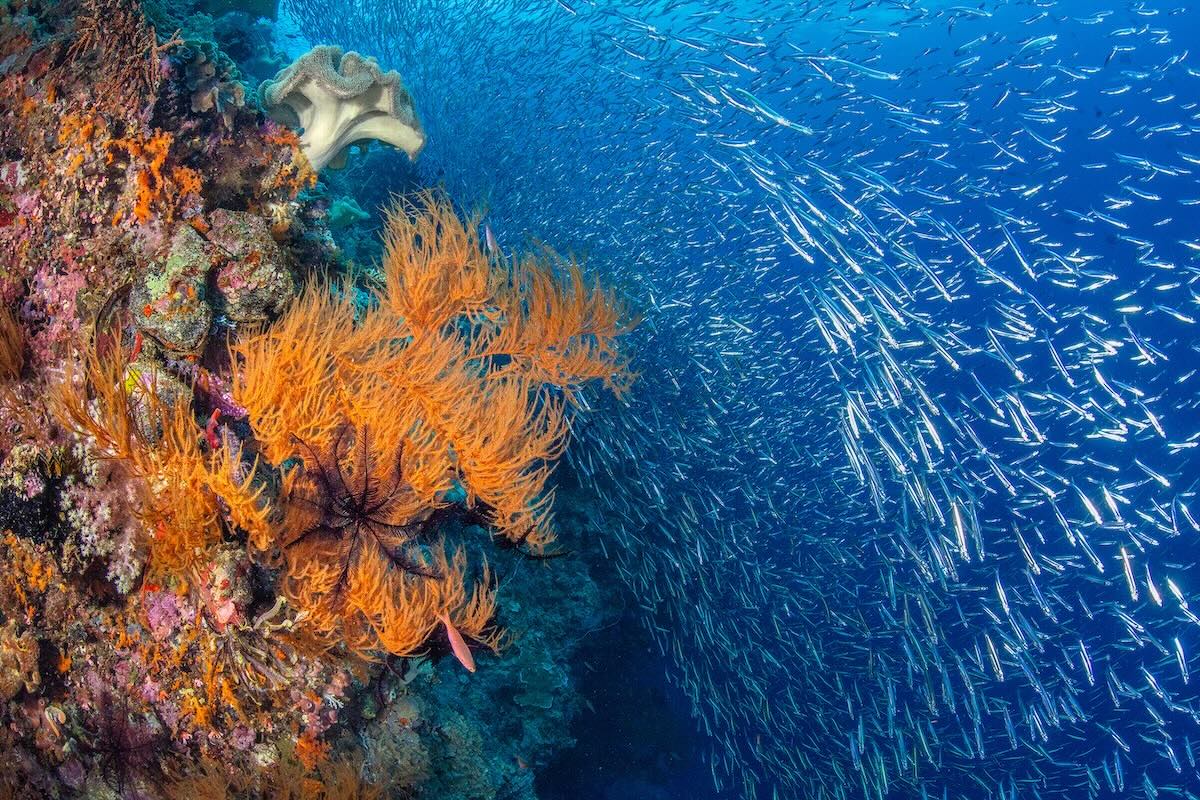
Jenny Stock. A healthy reef in Raja Ampat. “My dive at Puri Pinnacle was a heart-pounding experience,” says Stock. “Seconds after descending to the reef I saw millions of ethereal, glittering anchovies race over me, their bodies shimmering in the sun.” © Ocean Photographer of the Year 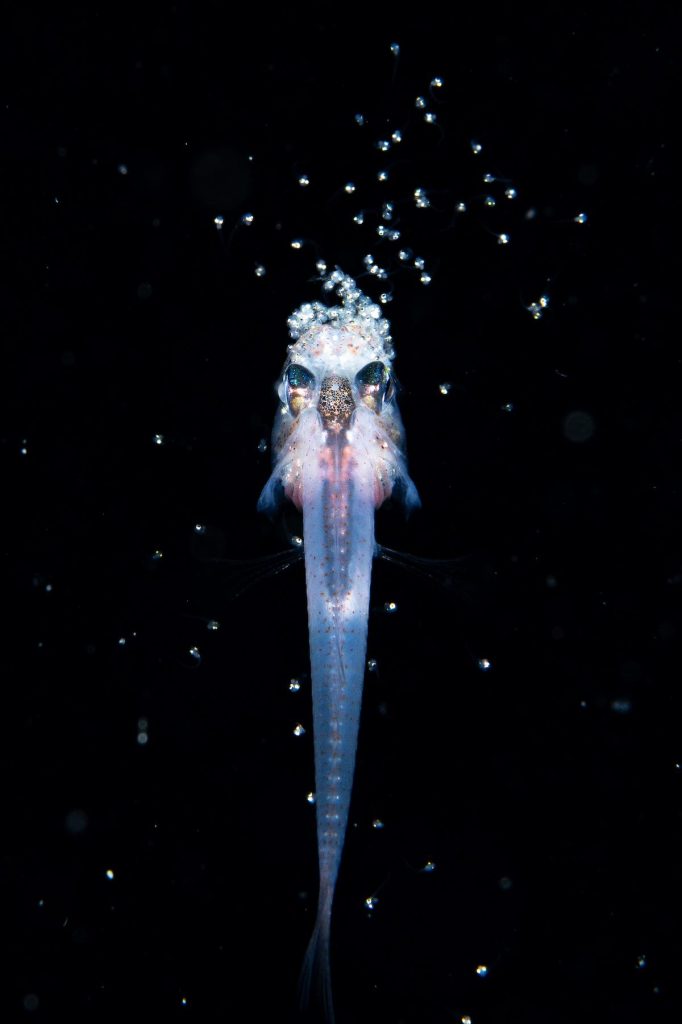
Sho Otani. A cardinal fish spawns at night. “Capturing the event seemed impossible,” says Otani. “On this day, I carefully approached the fish, positioned myself directly above it, and managed to capture the scene. It was like a volcano bursting with life.” © Ocean Photographer of the Year 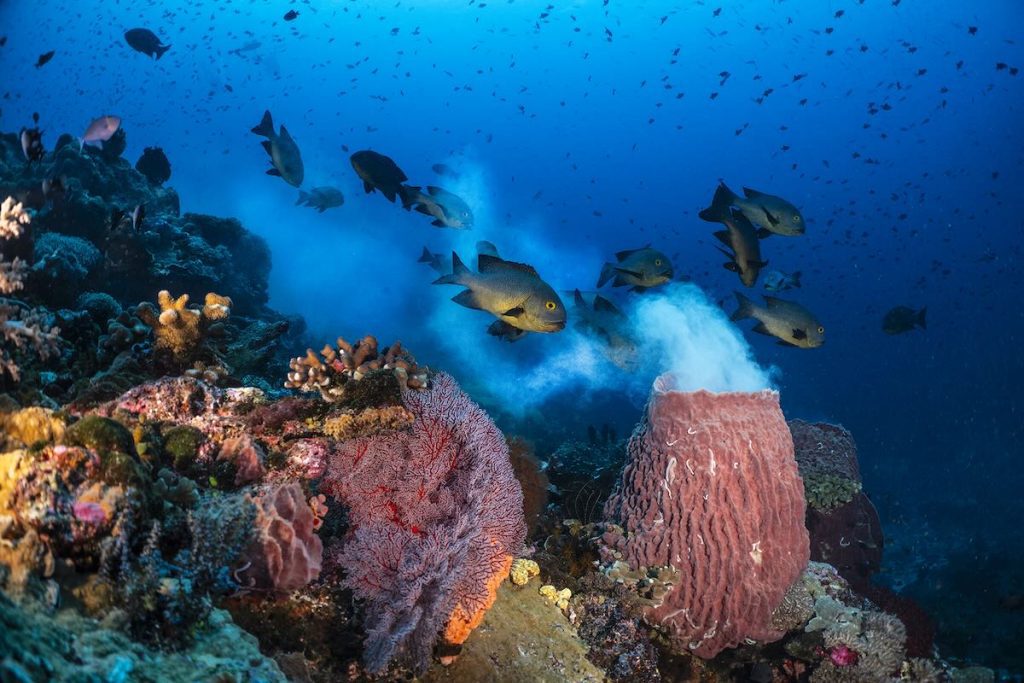
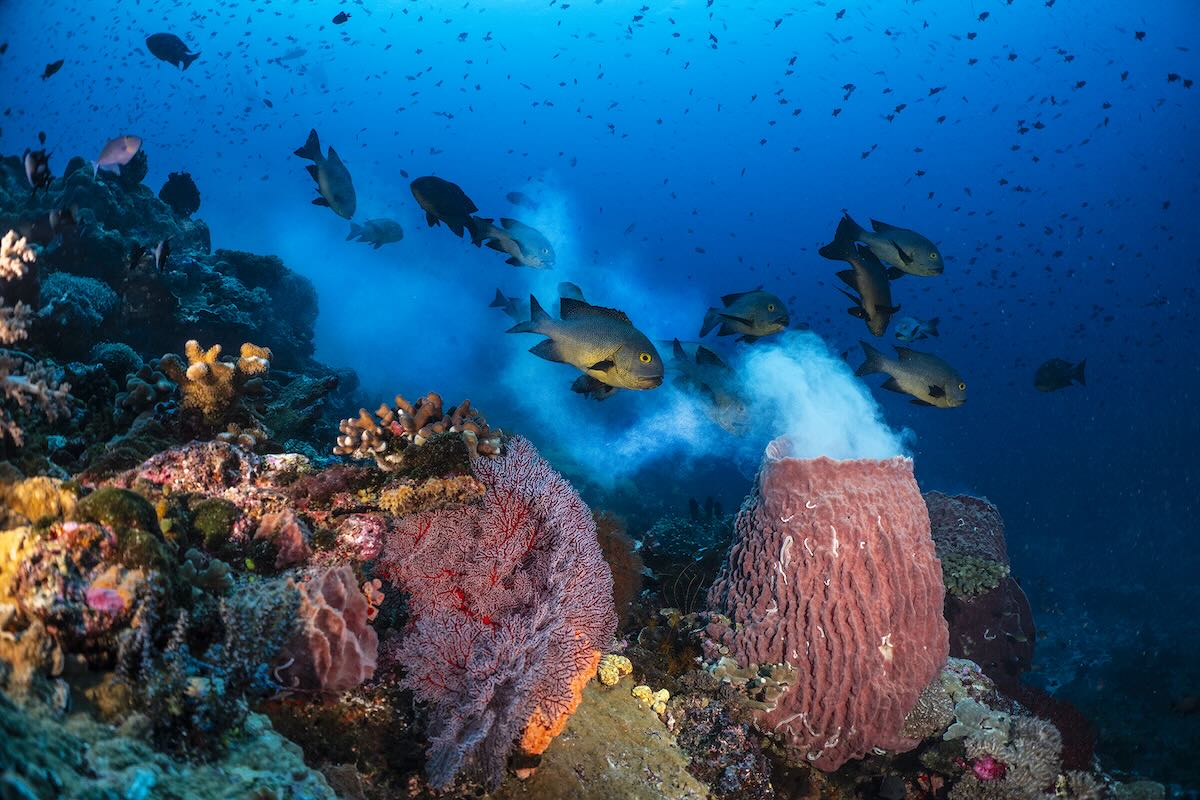
Aaron Sanders. White spawn billows from a giant barrel sponge, attracting midnight snappers – a rare event that breathes new life into the reef. “I had to wait for the snappers to grow comfortable with me to frame this feast,” says Sanders. © Ocean Photographer of the Year 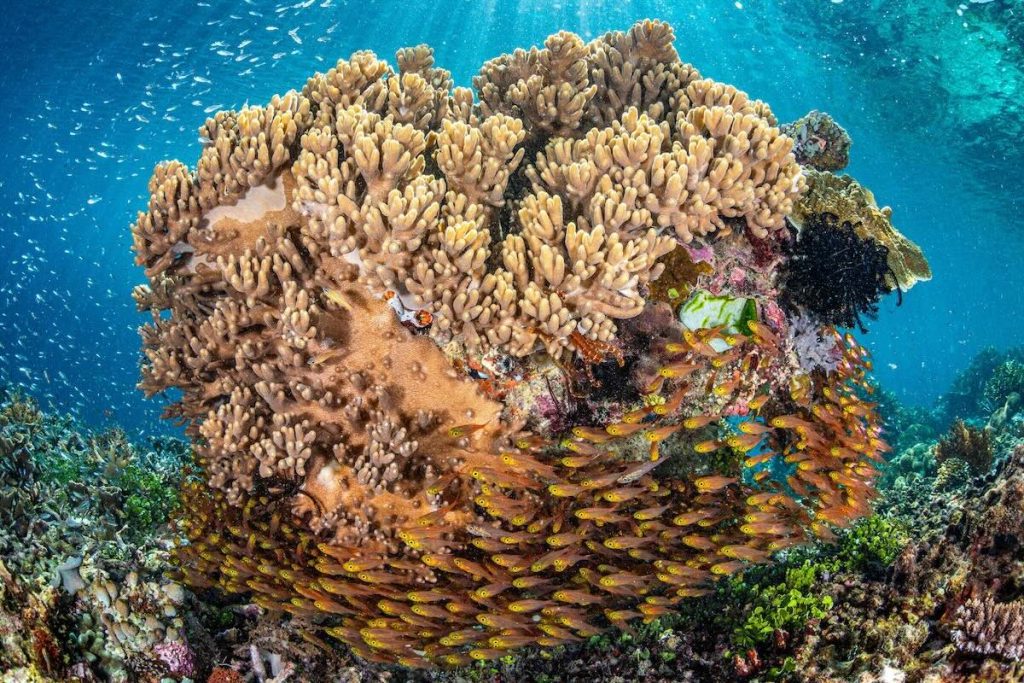
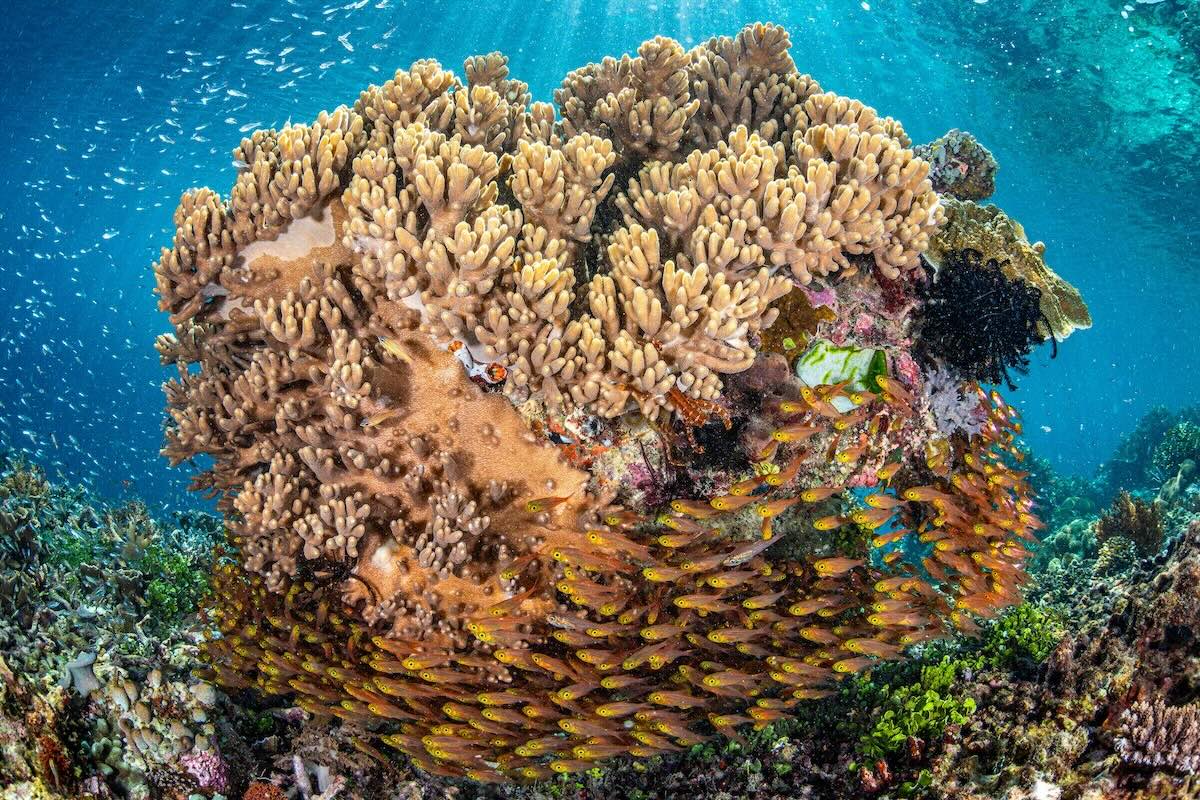
Kim Hyeon Min. Countless juvenile fish swirl around a dome-shaped coral. “The vibrant coral, untouched by bleaching, was teeming with encrusting organisms, forming a complex ecosystem,” says Hyeon Min. “This image is a reminder of what we still have and need to protect.” © Ocean Photographer of the Year 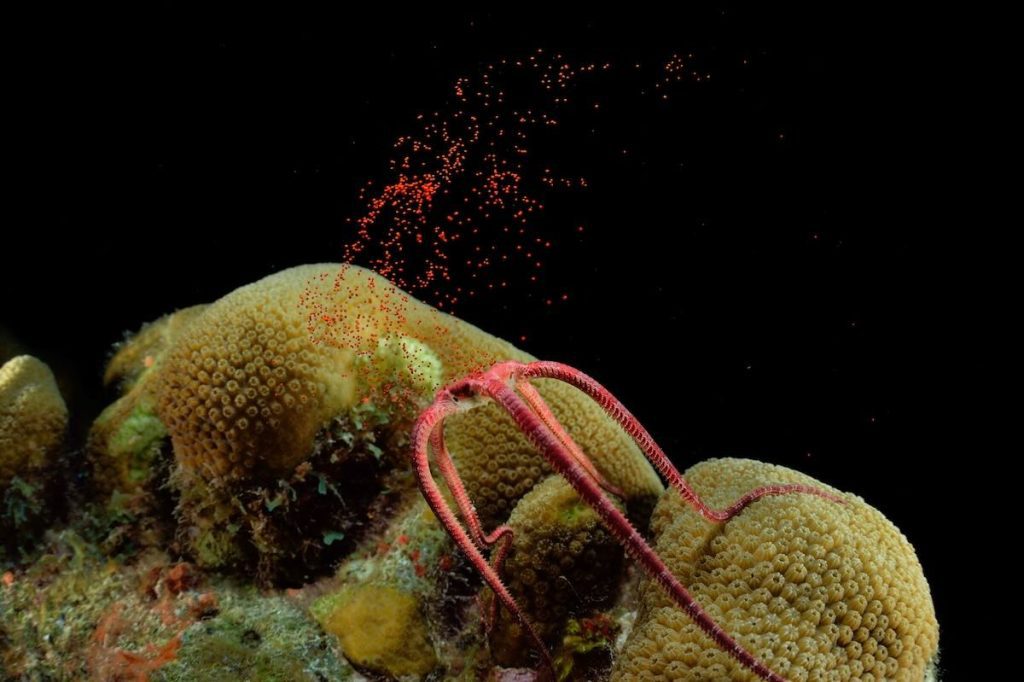
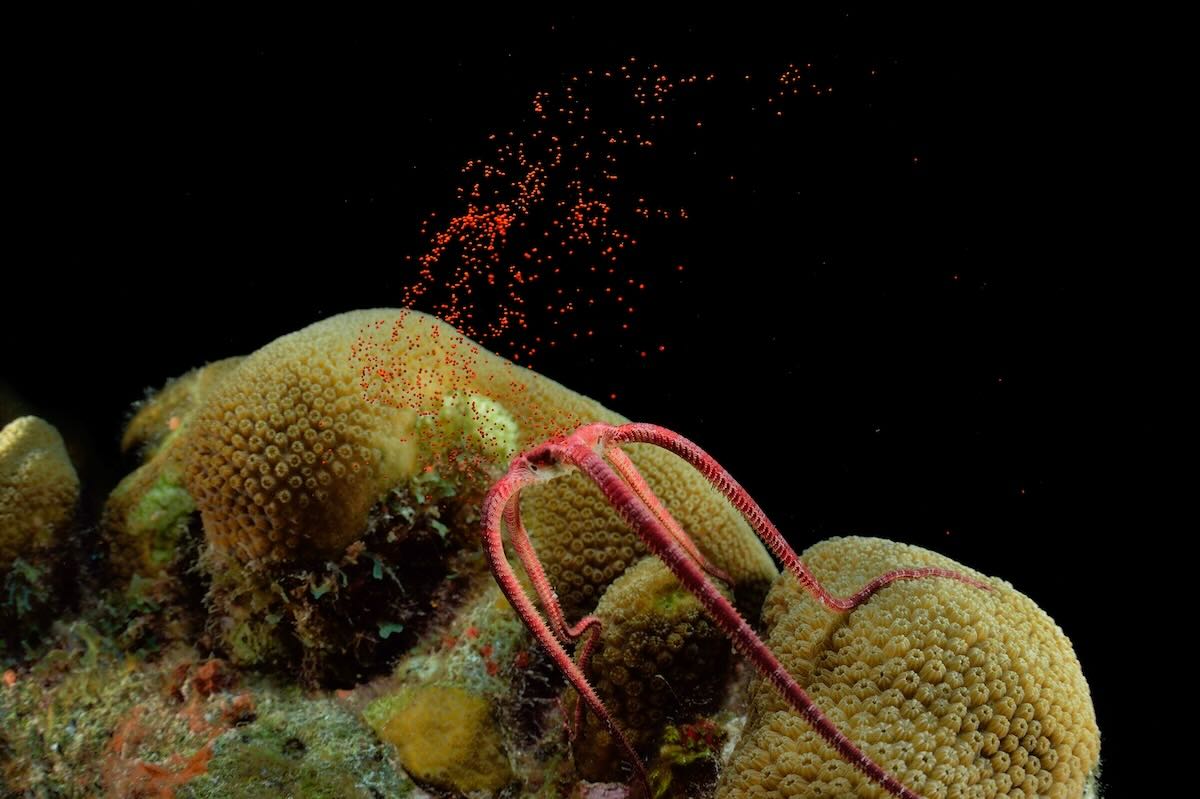
Solvin Zankl. A female brittle star rears up and releases its eggs, a few nights after the full moon. “The process is synchronised with the moon so that the eggs are fertilised by sperm from males in the open water,” says Zankl. © Ocean Photographer of the Year © Ocean Photographer of the Year
Category: FINE ART
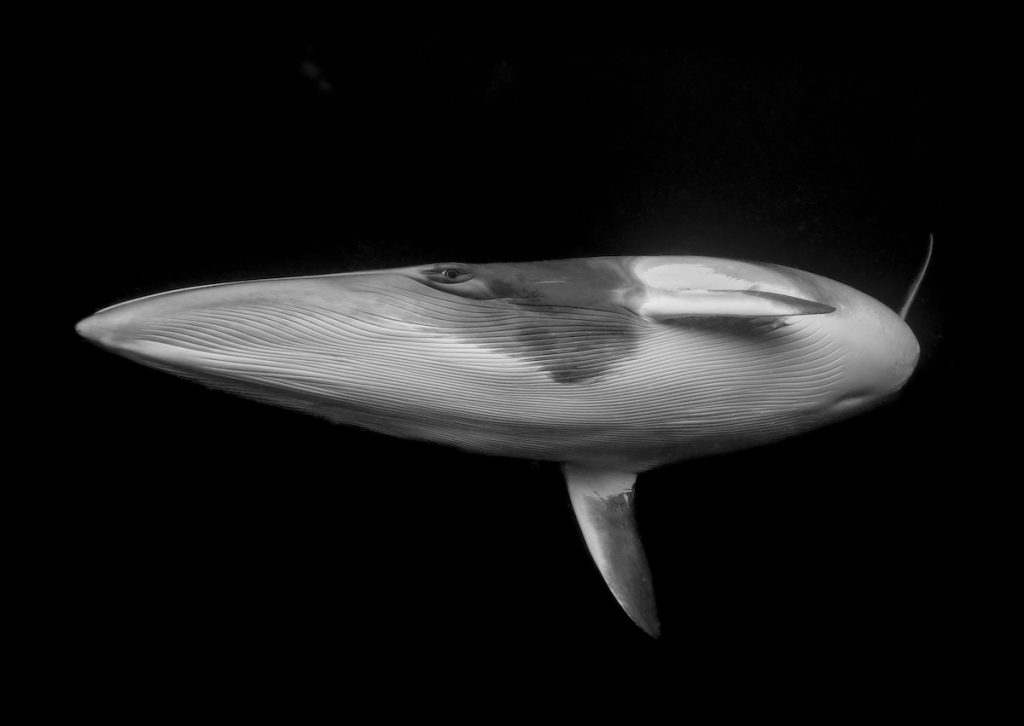
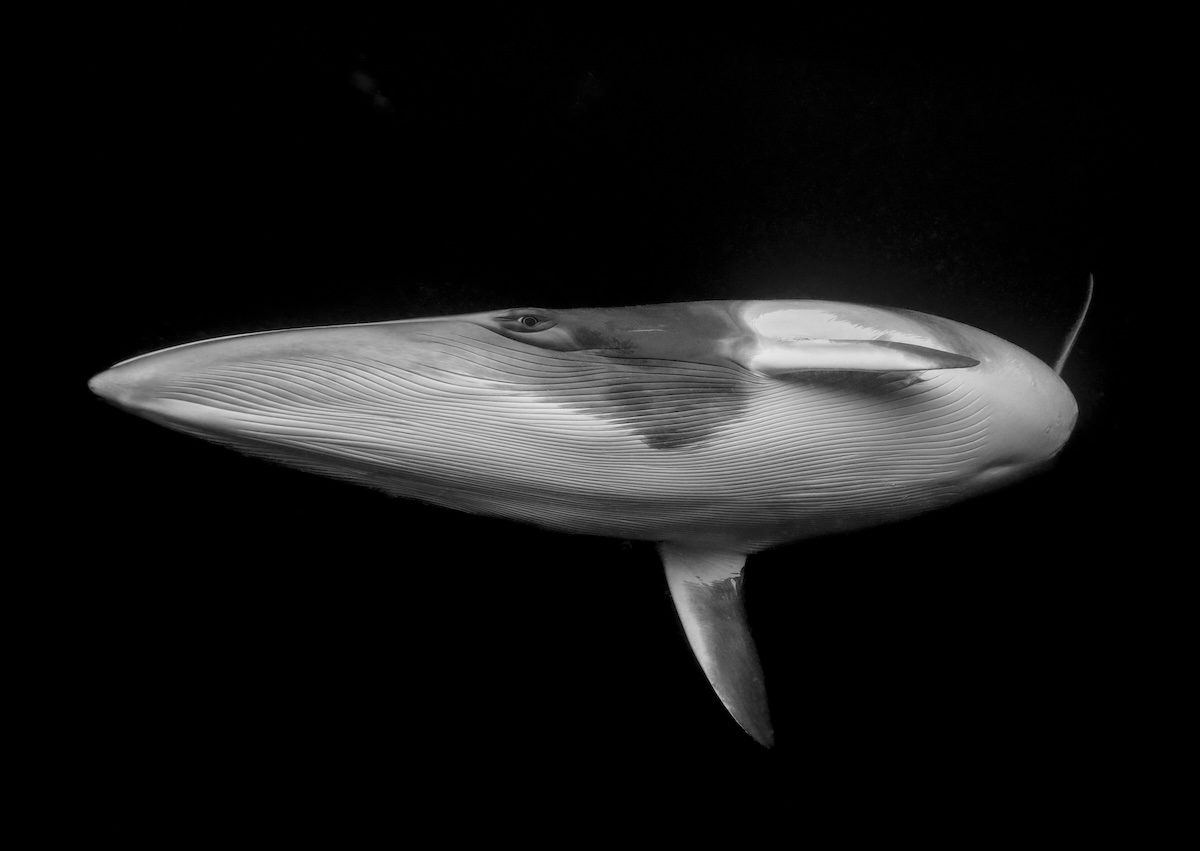
WINNER: Marcia Riederer A dwarf minke whale curiously eyes the photographer. “These whales are known to visit the northern Great Barrier Reef during the winter, making it the only known predictable aggregation of the species in the world,” says Riederer. © Ocean Photographer of the Year 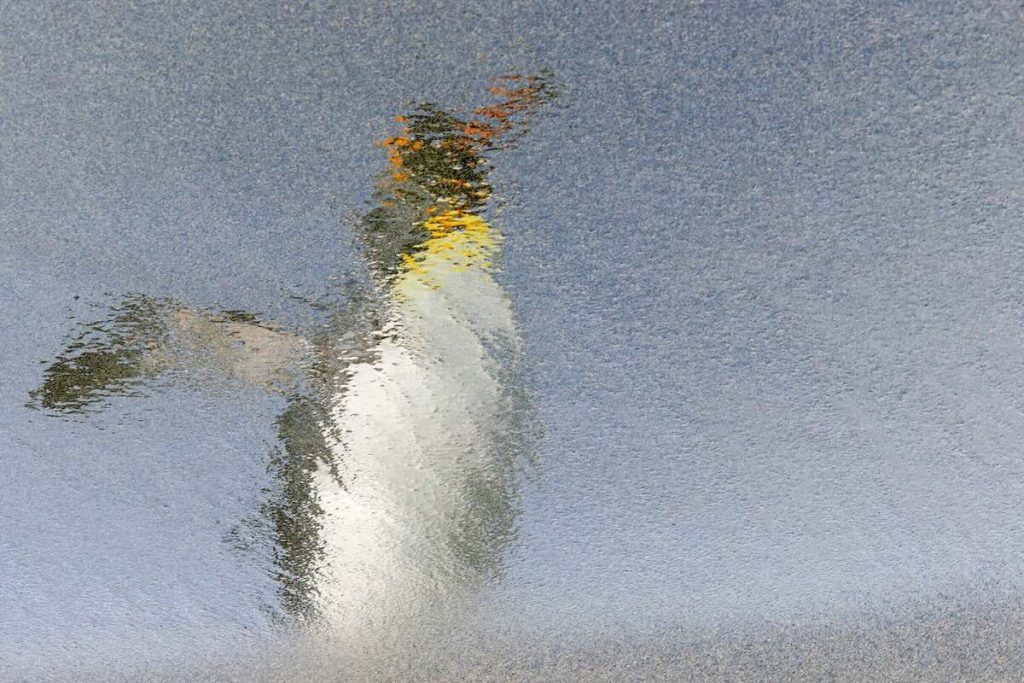
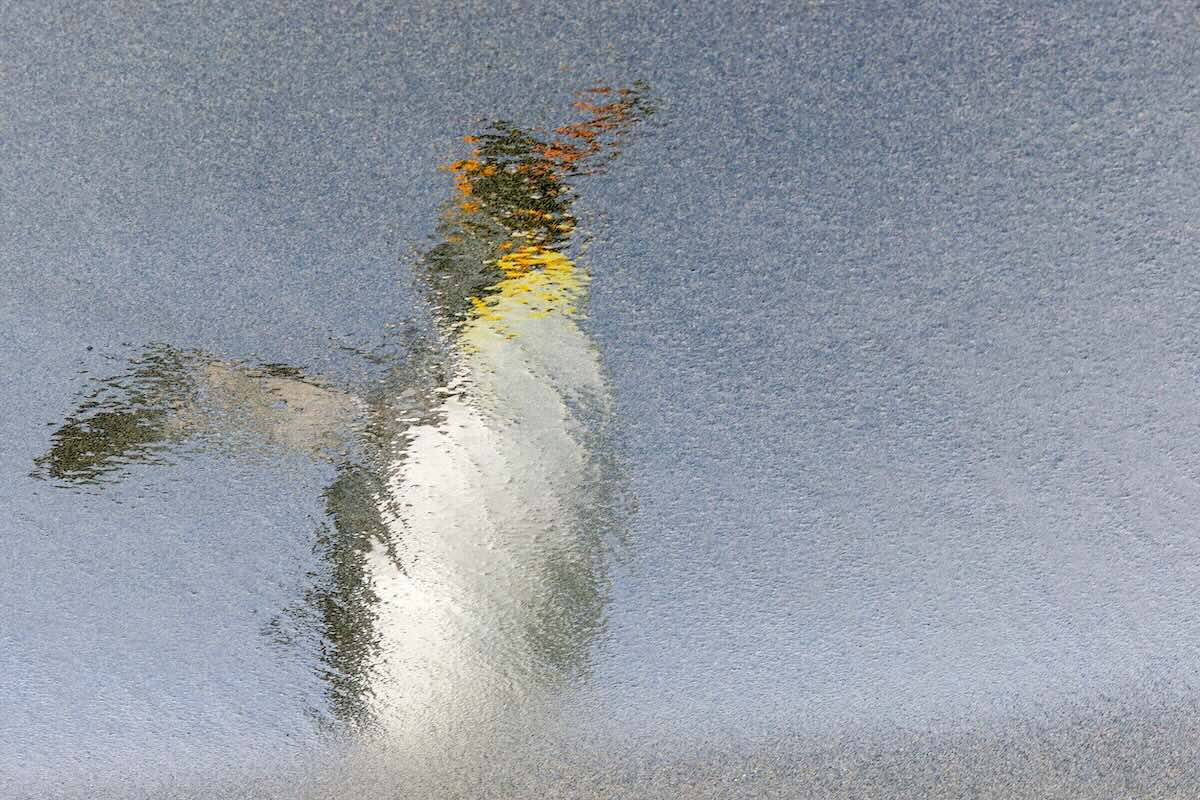
Second place: Rafael Armada. Reflections in the sand. “On my final morning on the island [South Georgia Island], I noticed how waves left behind ephemeral mirrors on the black sand,” says Armada. “When a penguin stood still and created a perfect reflection, I raised my camera instinctively.” © Ocean Photographer of the Year 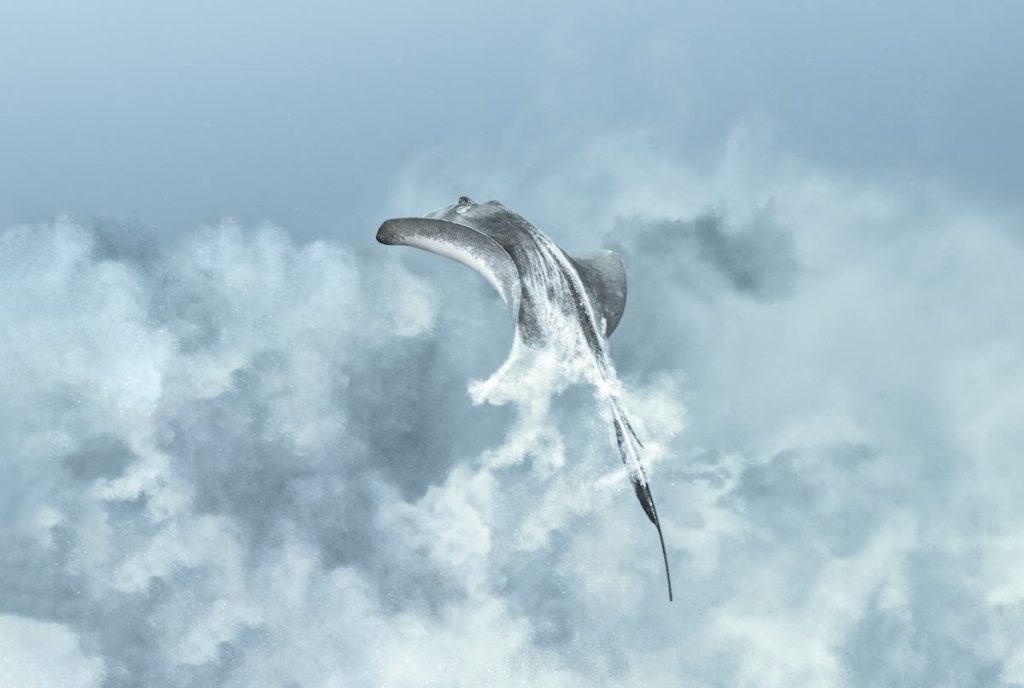
Third place: Ysabela Coll. With a powerful sweep of its pectoral fins, a stingray vanishes into the blue, leaving behind a swirling cloud of sand. “This dramatic burst isn’t just beautiful – it’s a survival tactic,” says Coll. © Ocean Photographer of the Year 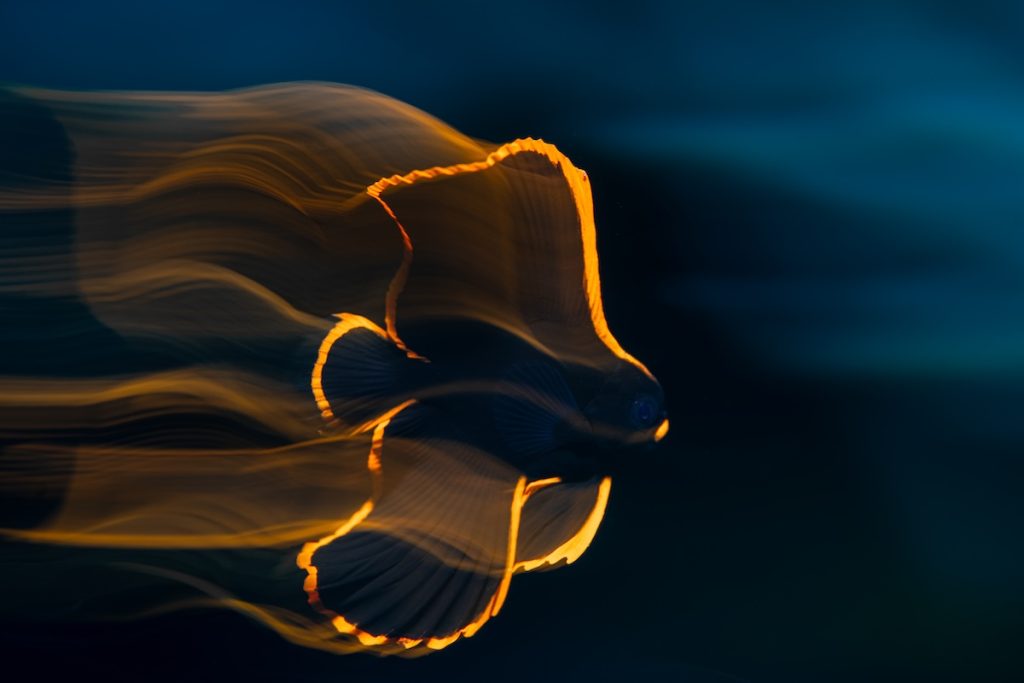
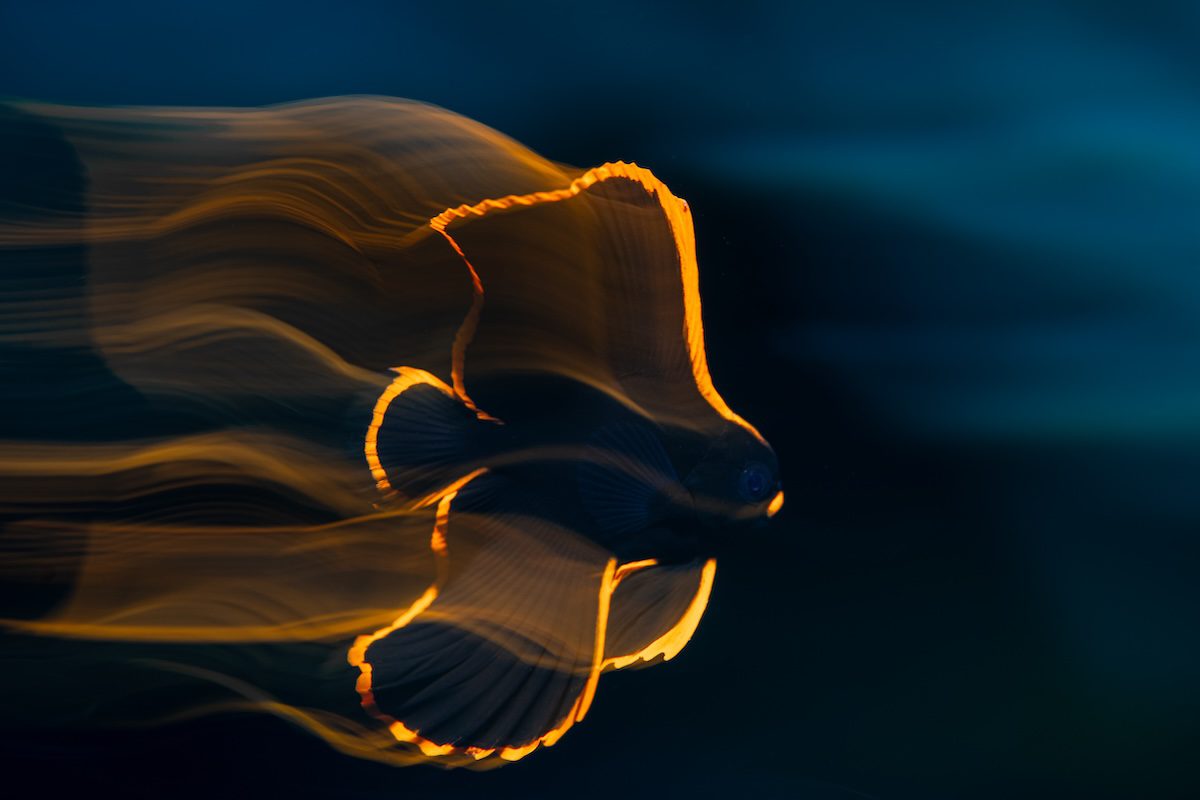
Luis Arpa Toribio. A juvenile pinnate batfish captured using a slow shutter speed, snooted light, and deliberate camera panning to create motion. “Juveniles are known for their striking black bodies outlined in vibrant orange – a colouration lost within months,” says Arpa Toribio.© Ocean Photographer of the Year 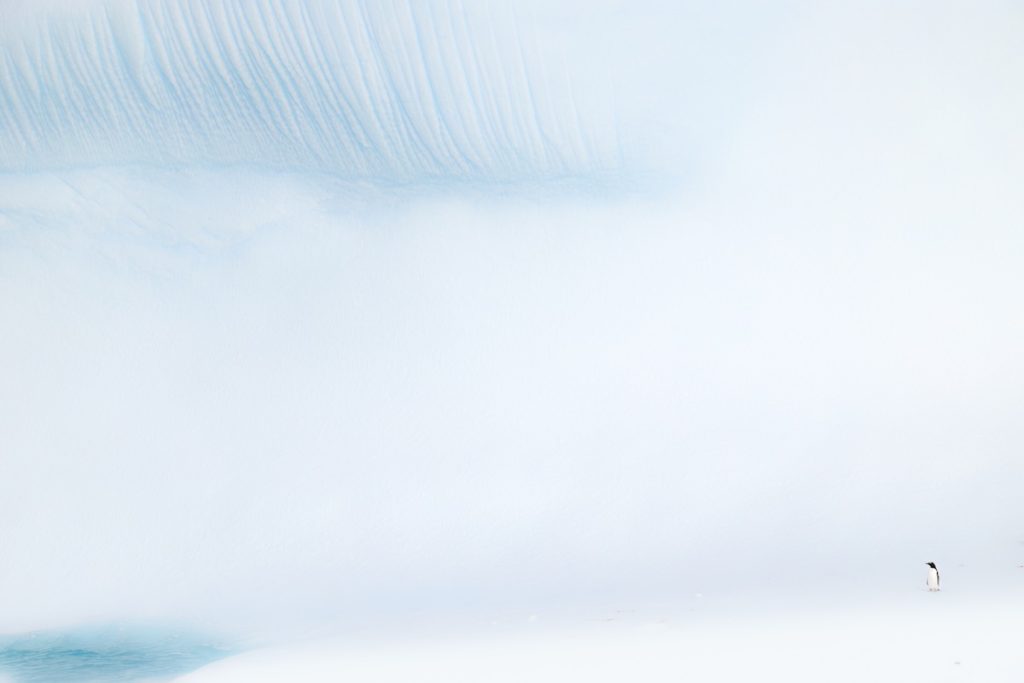
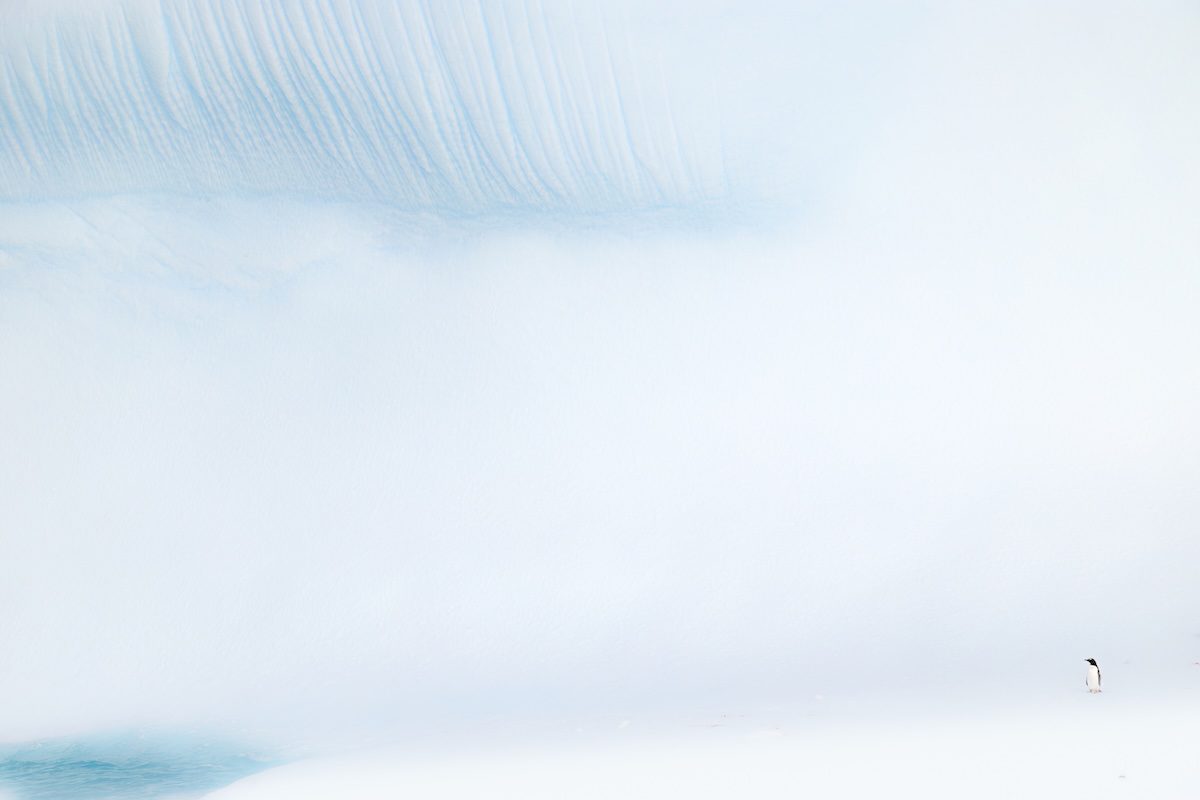
Romain Barats: A penguin stands in front of an iceberg. “I’ve always been a fan of minimalist photography,” says Barats. “Here, I framed a penguin in the corner of the image to highlight the vastness of the ice.” © Ocean Photographer of the Year 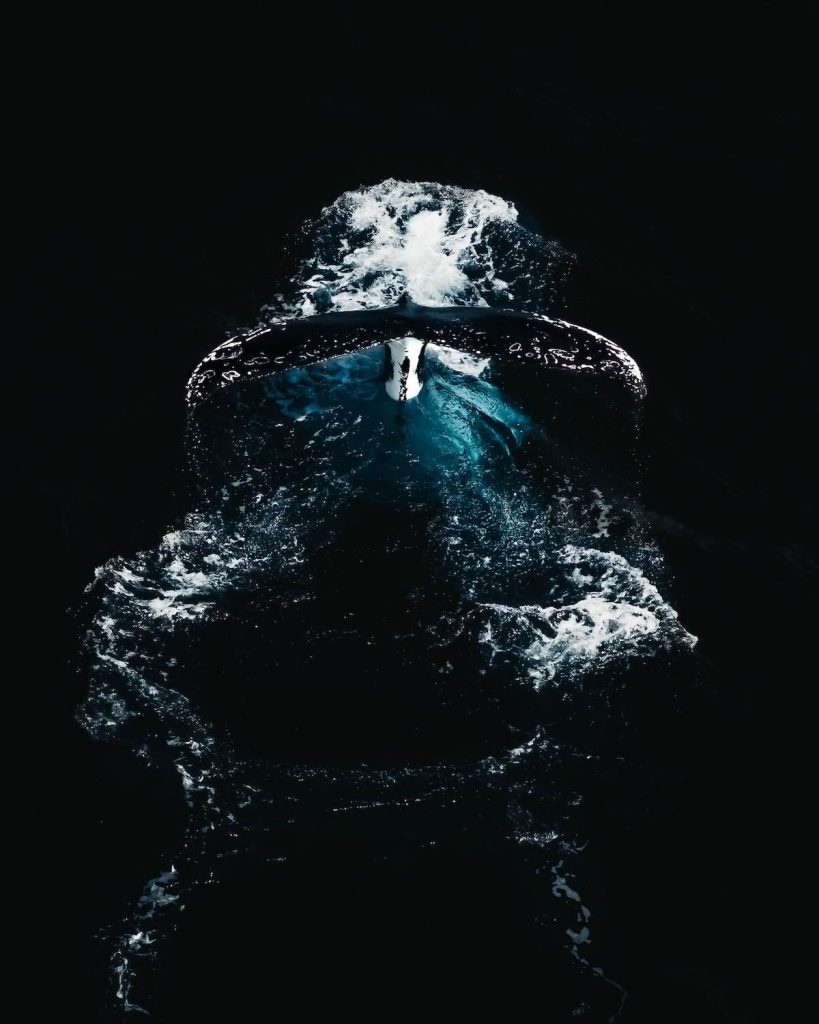
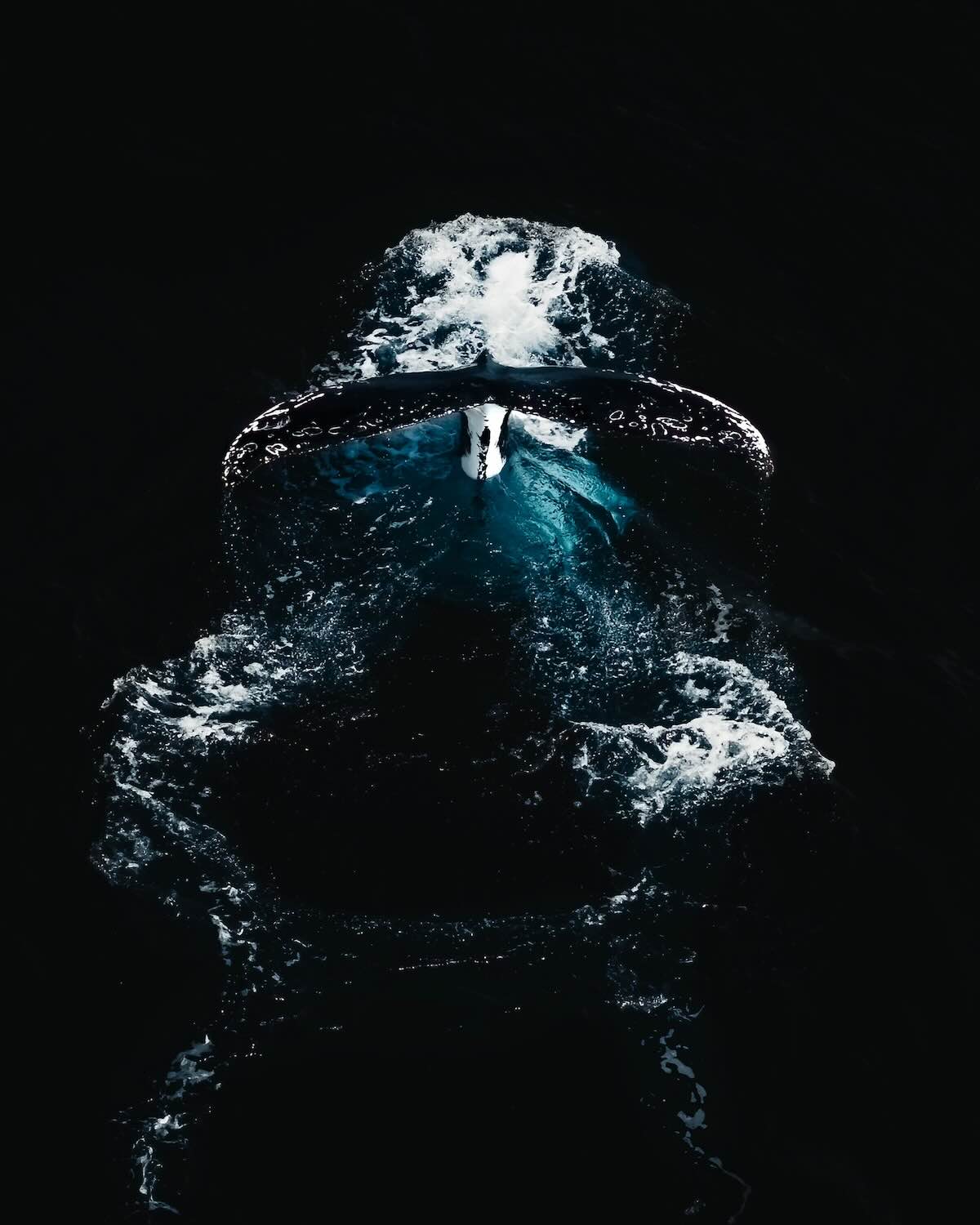
Tim Burgess. A humpback whale’s fluke reaches out the water. “During the annual whale migration, over 40,000 humpback whales travel along the Australia’s east coast,” says Burgess. © Ocean Photographer of the Year 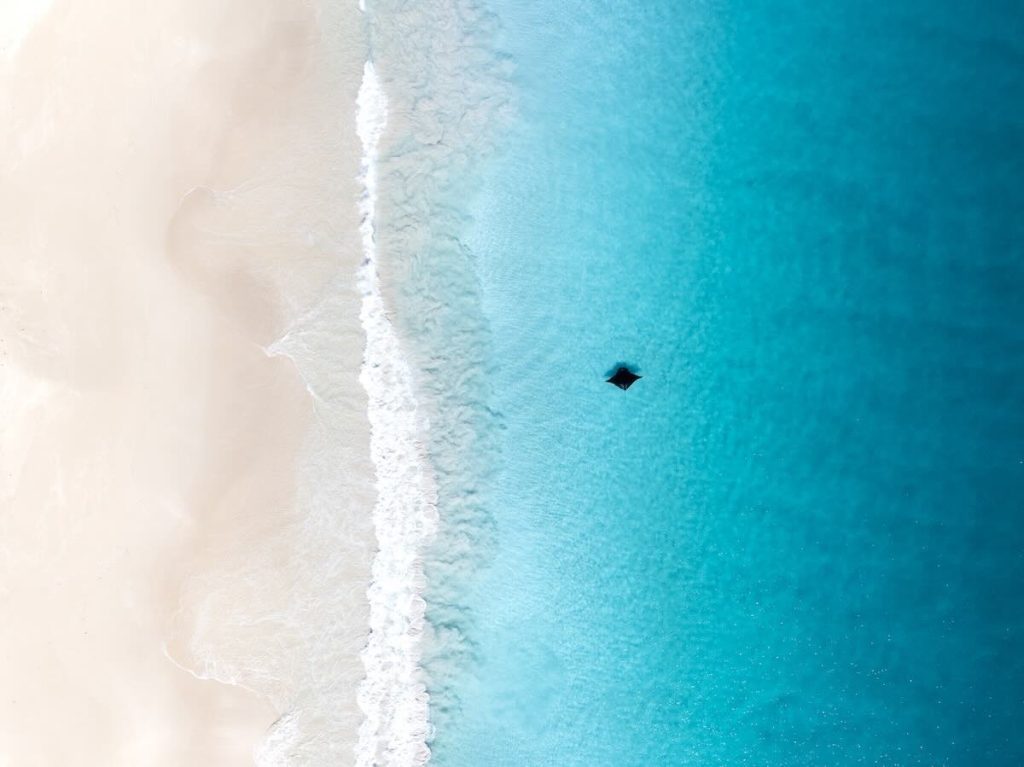
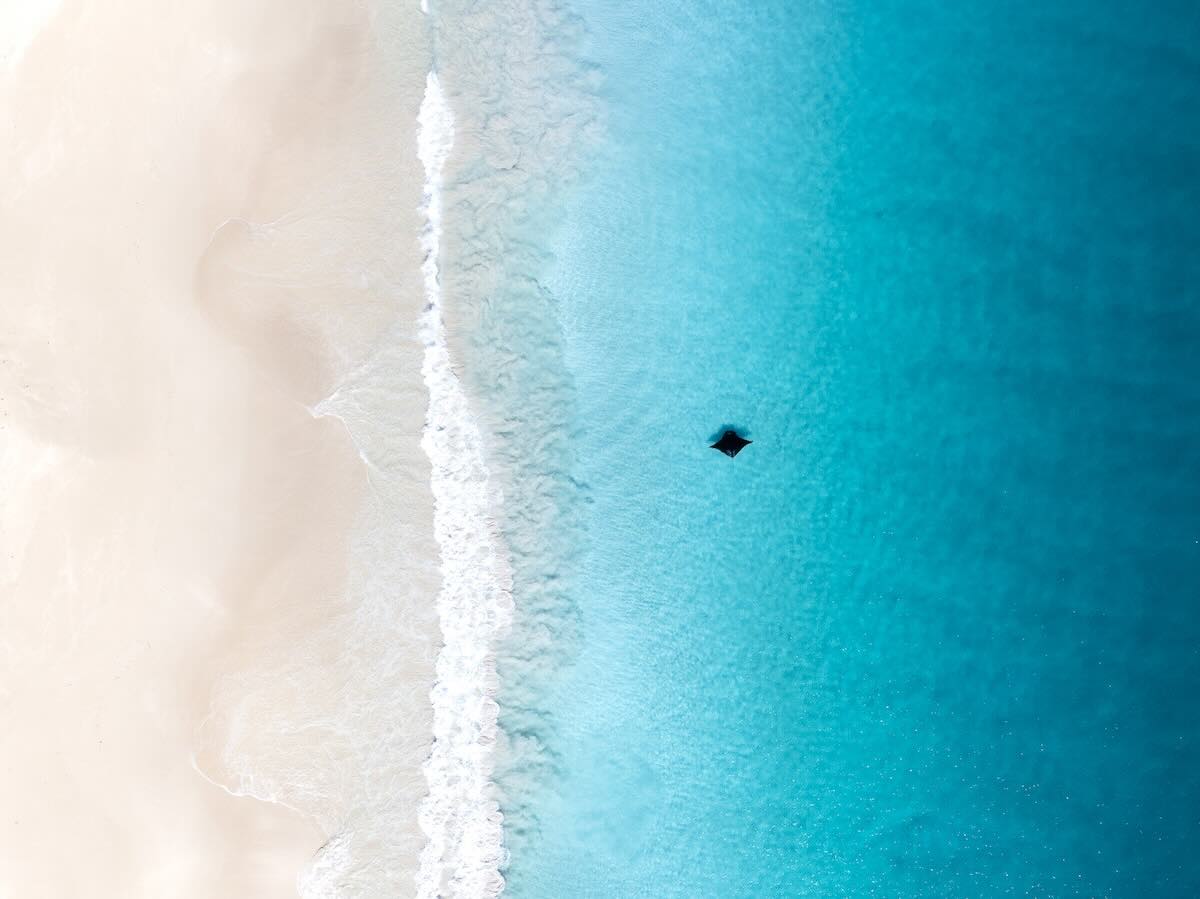
Dylan de Haas. A manta ray swims beyond the shoreline. “When I launched my drone, I discovered five of them cruising very close to shore,” says de Haas. “Calm water, soft waves, and pristine clarity made this rare sight possible.” © Ocean Photographer of the Year 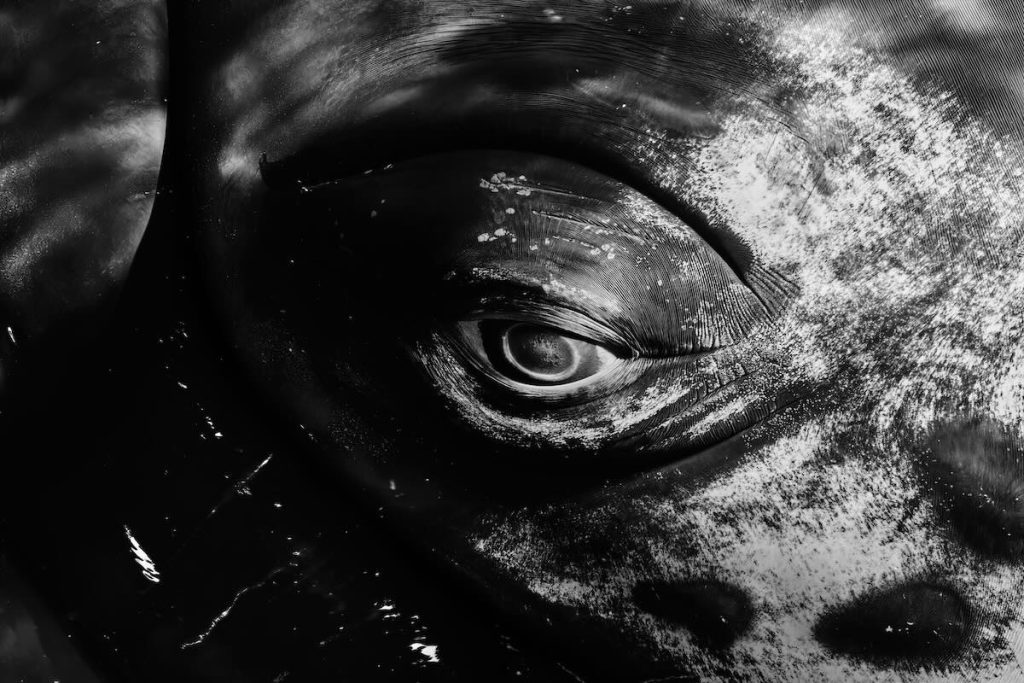
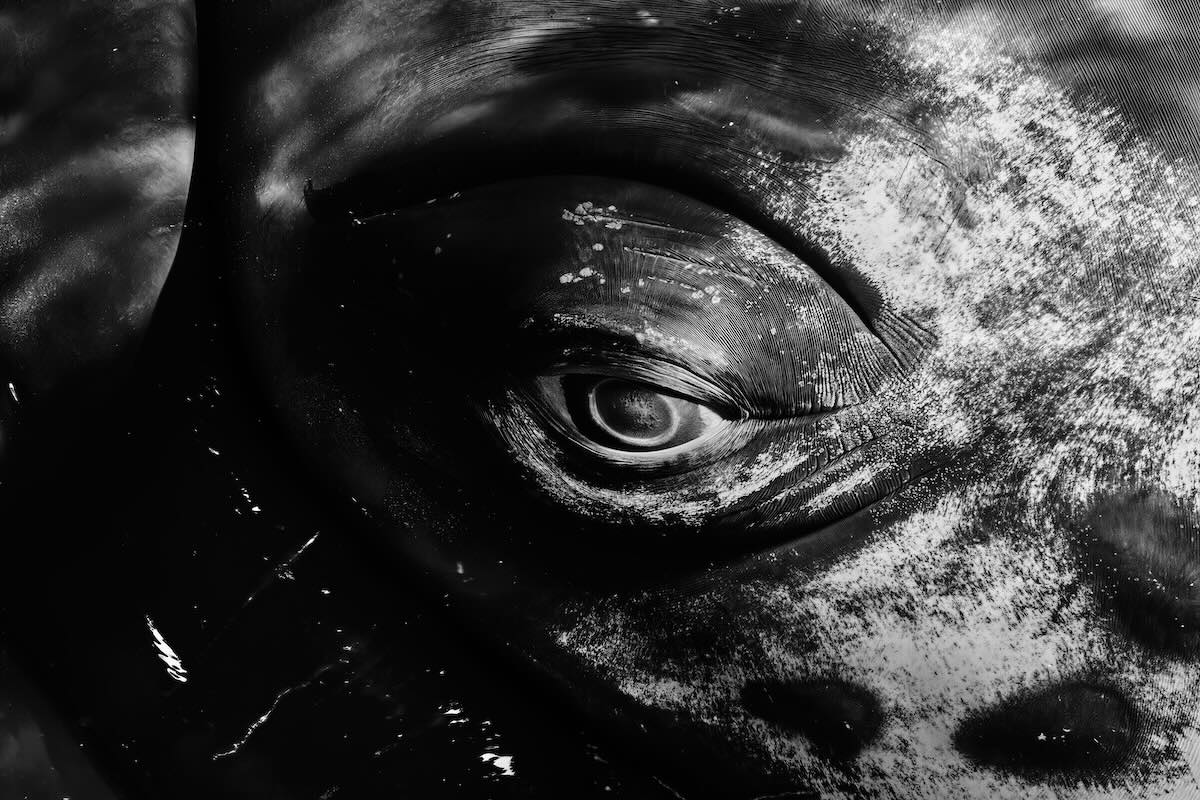
Joaquin Fregoni. Close-up photograph of a whale’s eye. “I took this photo during one of the most special encounters I’ve had in years,” says Fregoni. “This curious female whale kept coming back, over and over again.” © Ocean Photographer of the Year 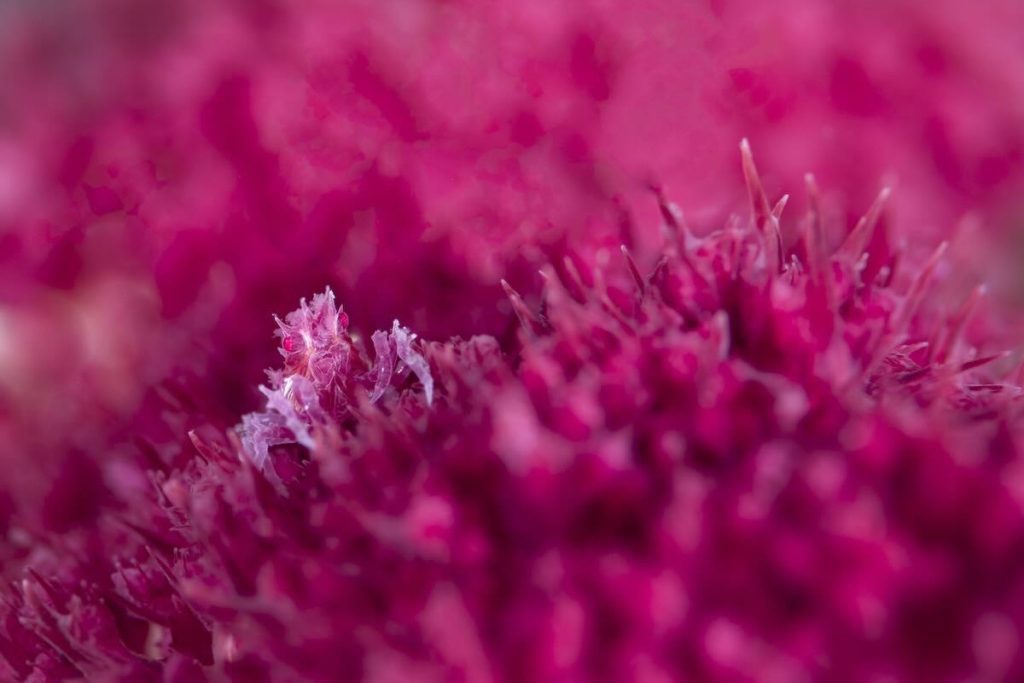
Jade Hoksbergen. A tiny juvenile candy crab, measuring a mere centimetre in size, perches on a pink coral. “The coral is also her favourite source of nutrition,” says Hoksbergen. © Ocean Photographer of the Year 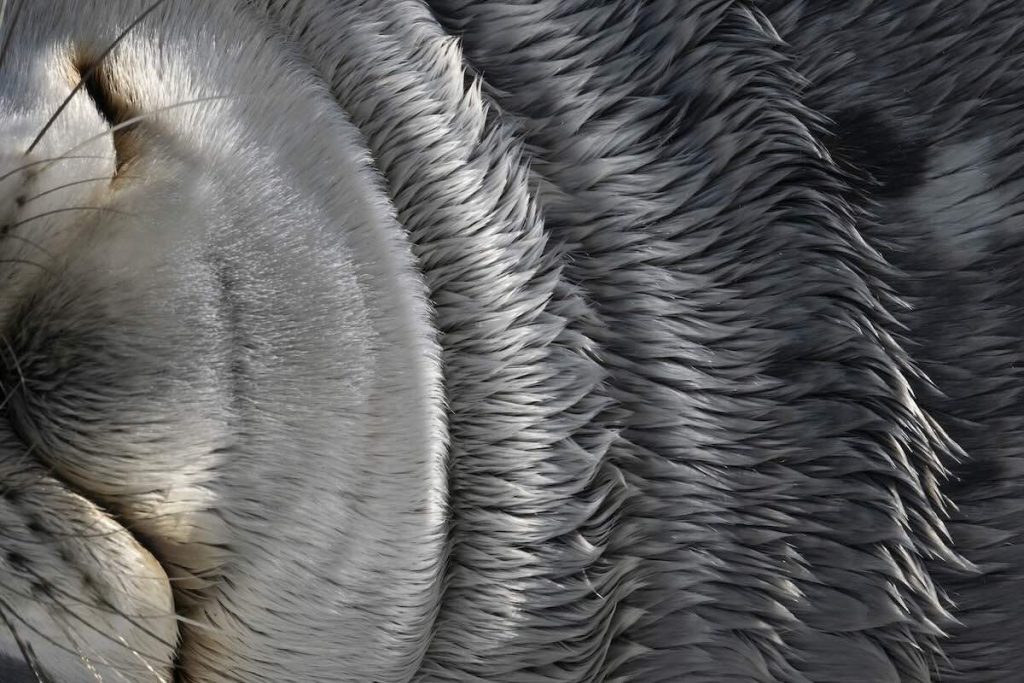
Scott Portelli. A close-up portrait of a Weddell seal. “Weddell seals thrive in the harshest environment on the planet,” says Portelli. “The finely packed fur allows them to survive in temperatures as low as -60 degrees Celsius.” © Ocean Photographer of the Year 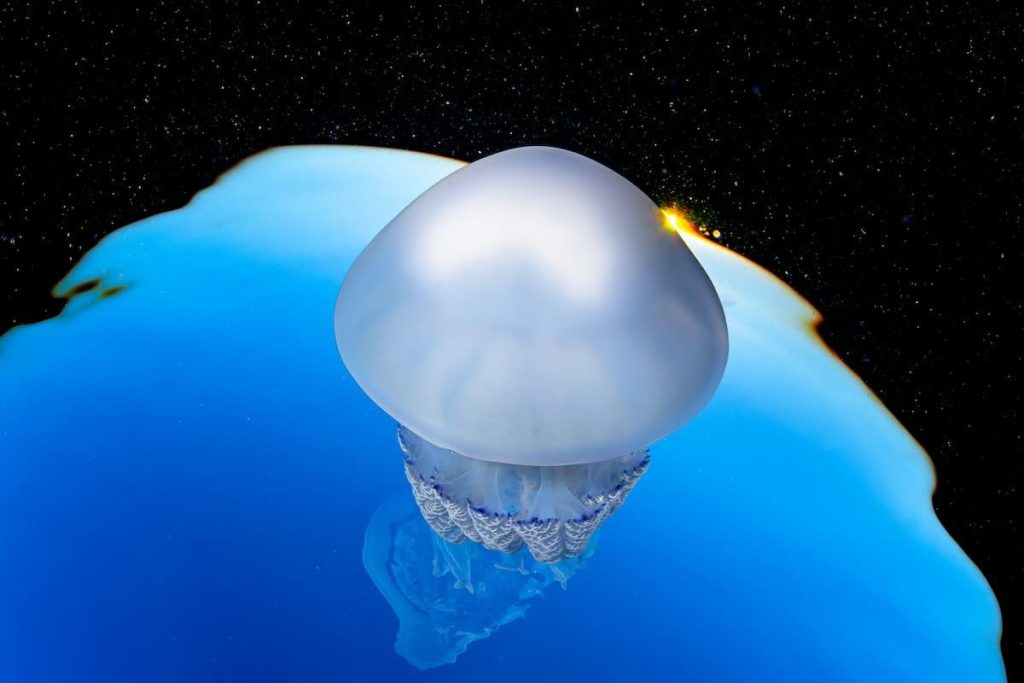
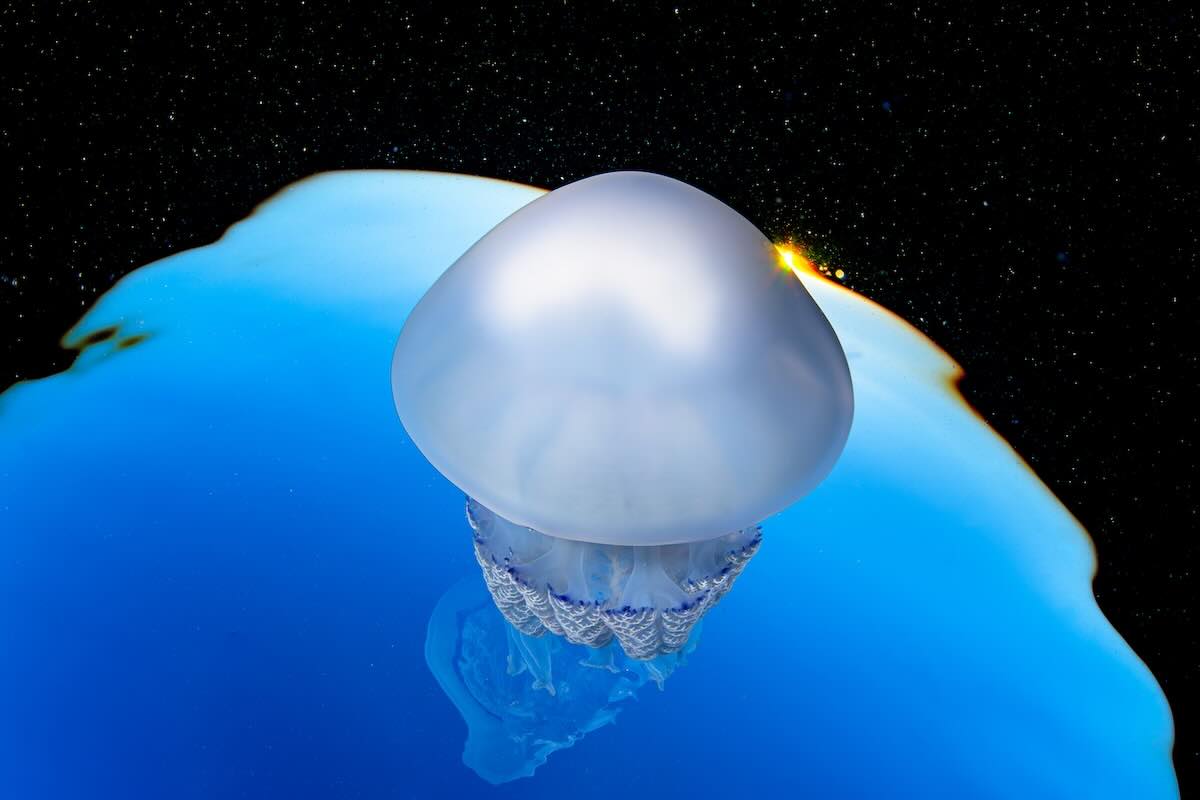
Antonio Bertran Regas. A jellyfish resembles a rocket in space. “I used a fisheye lens and took the photo just as the sun was rising. I don’t think I’ll ever be as close to space as I was that day,” says Bertran Regàs. © Ocean Photographer of the Year 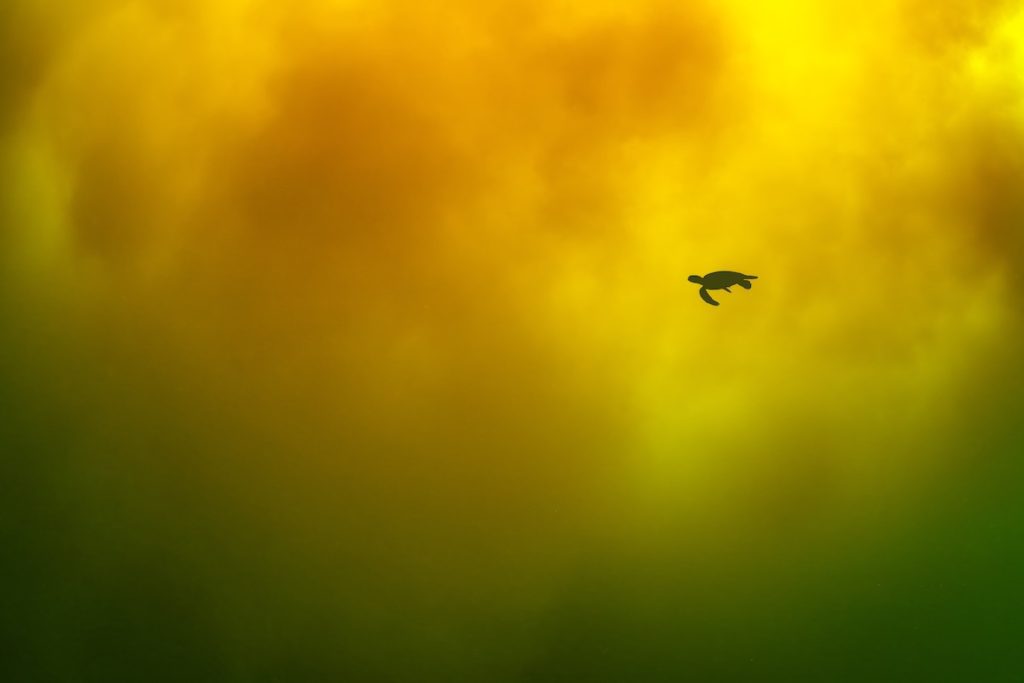
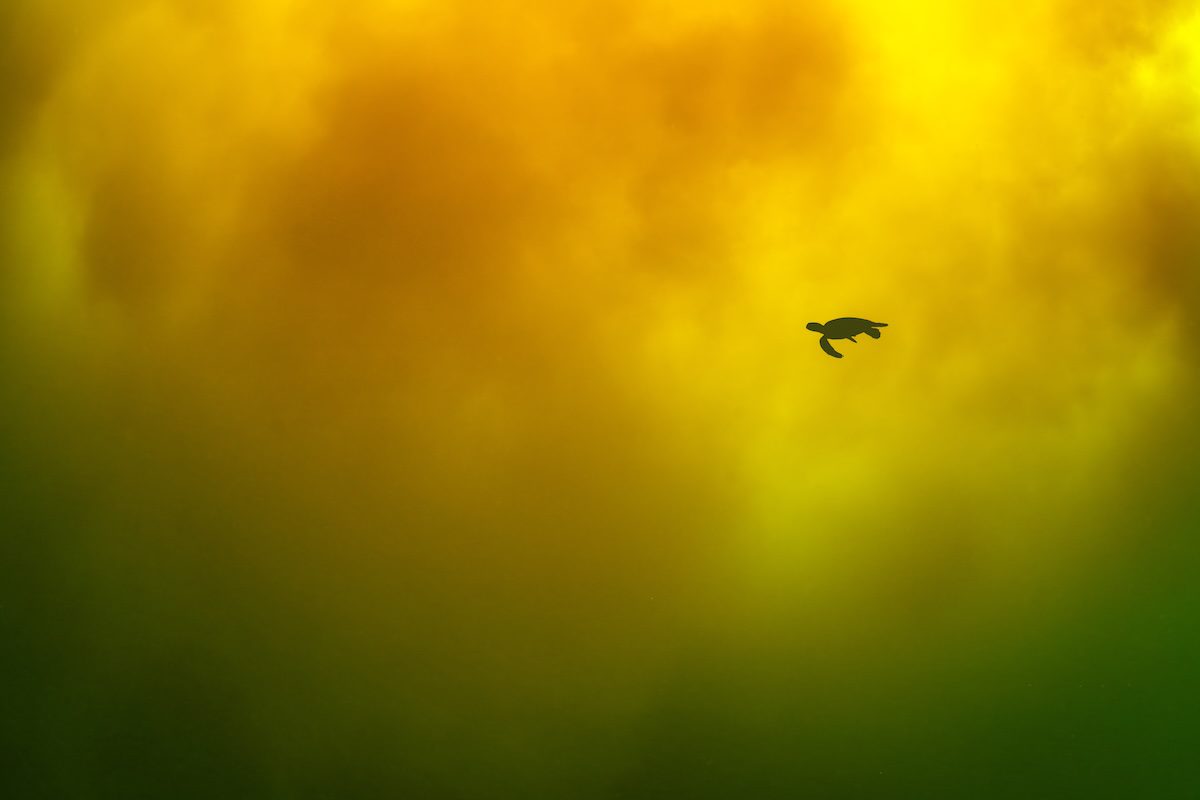
Hitomi Tsuchiya. A turtle swims through an underwater aurora. “This image was taken near Mount Iwo, where the underwater aurora can be seen,” says Tsuchiya. “The volcano spews out iron-rich substances from above ground and from the ocean floor, creating these colours.” © Ocean Photographer of the Year
FEMALE FIFTY FATHOMS
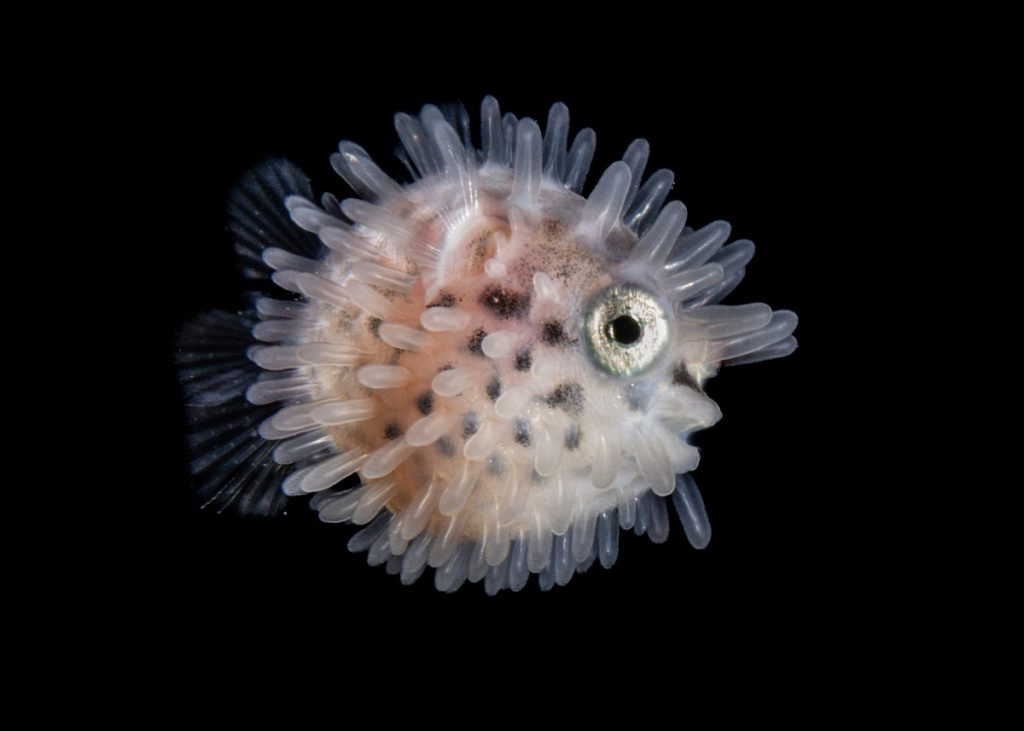
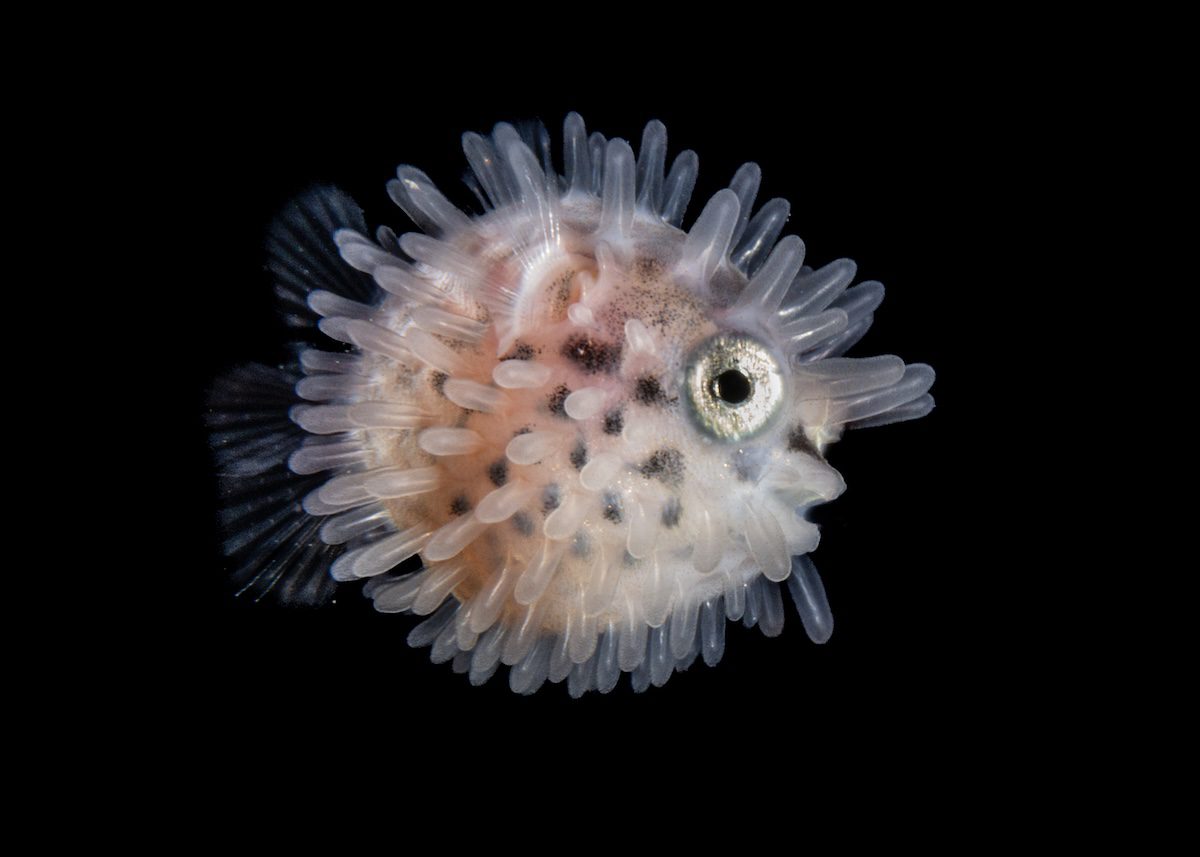
Jialing Cai A larval pufferfish, roughly the size of a thumb nail. “Although adult pufferfish are typically found around coral reefs, they begin life as plankton, drifting in the open ocean before eventually settling to the seafloor,” says Cai. © Ocean Photographer of the Year 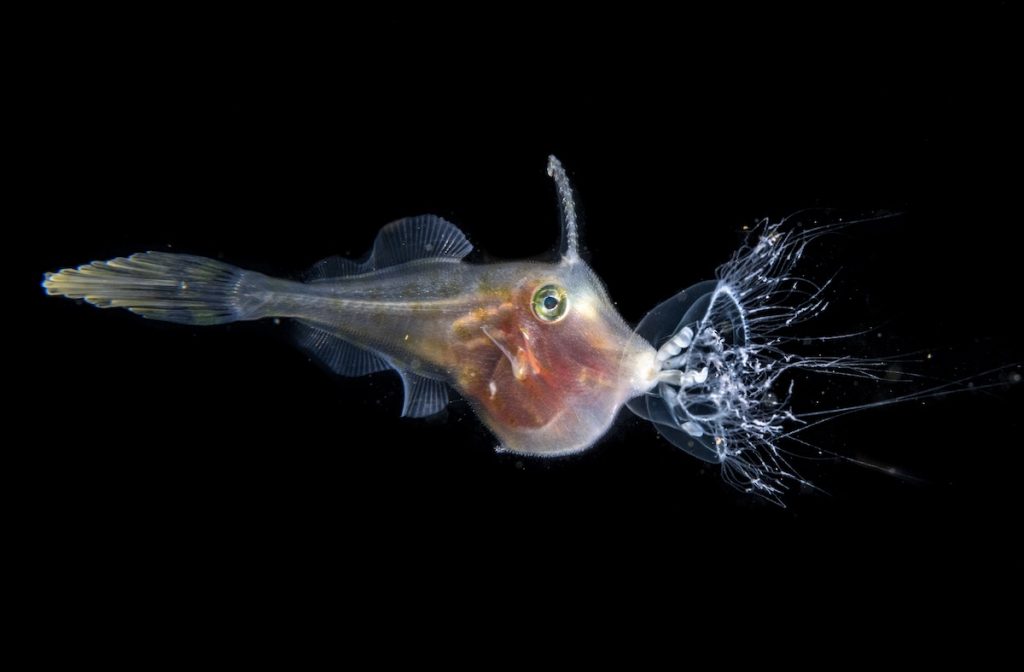
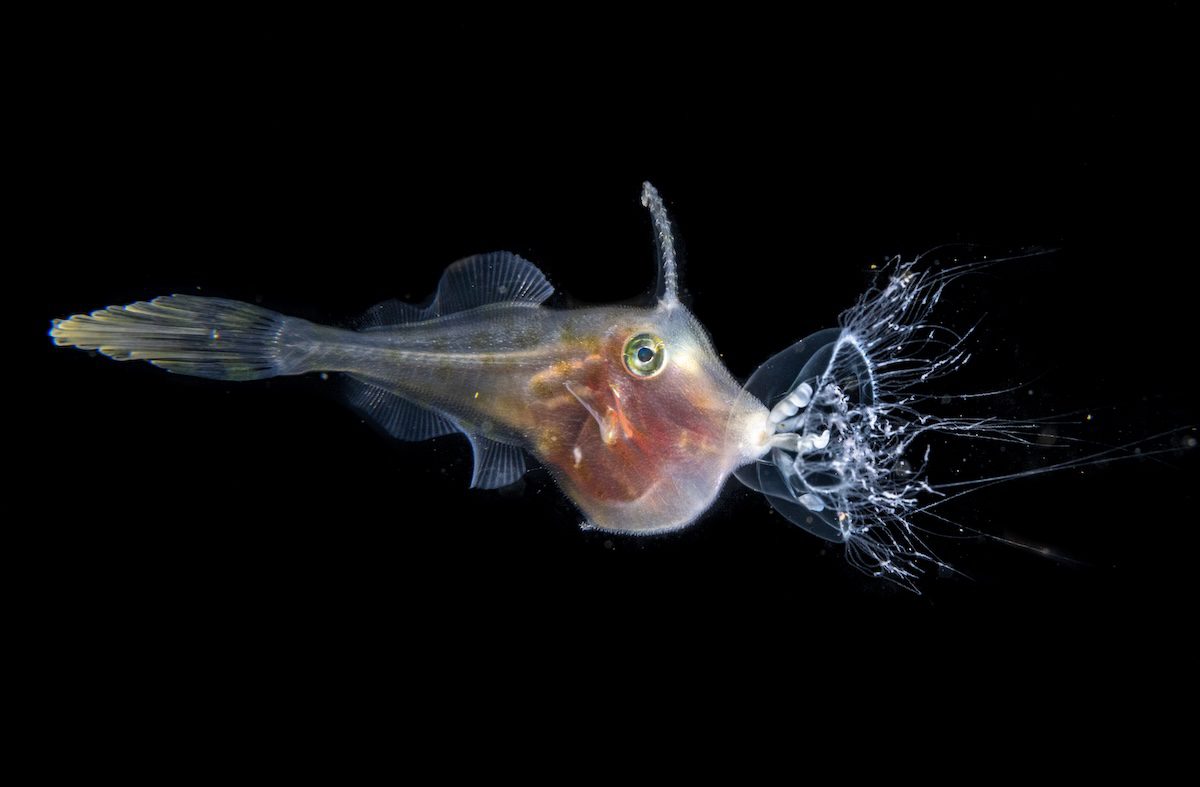
Jialing Cai A fish captures a jellyfish. “It potentially grabbed it for chemical defence by taking advantage of the toxins in its tentacles,” says Cai. “While the fish was holding the jelly, it looked like it was blowing a balloon.” © Ocean Photographer of the Year 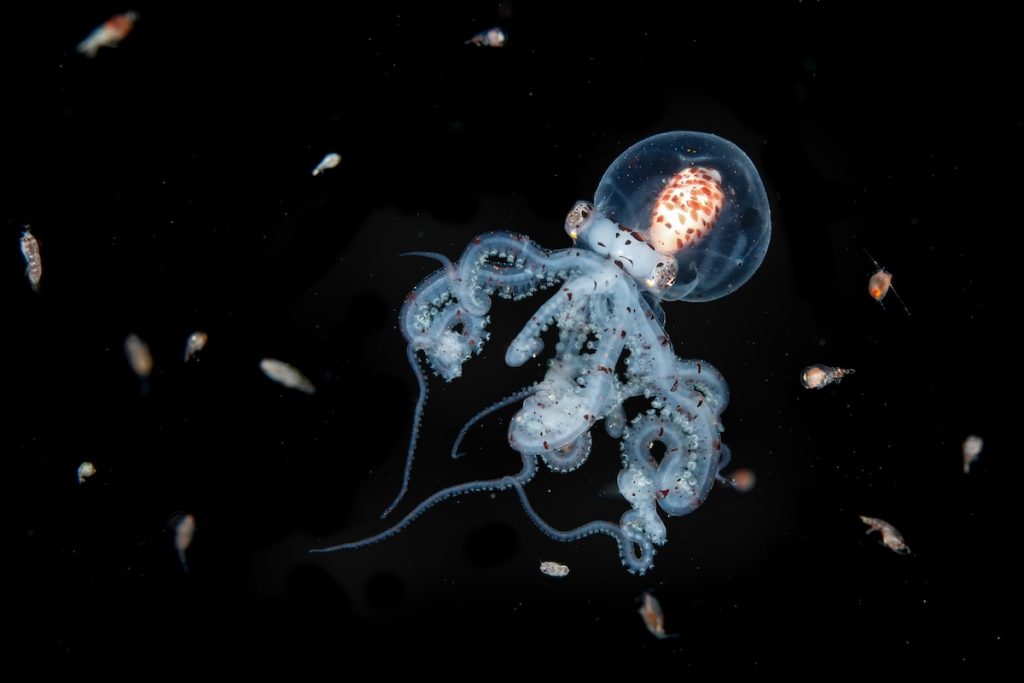
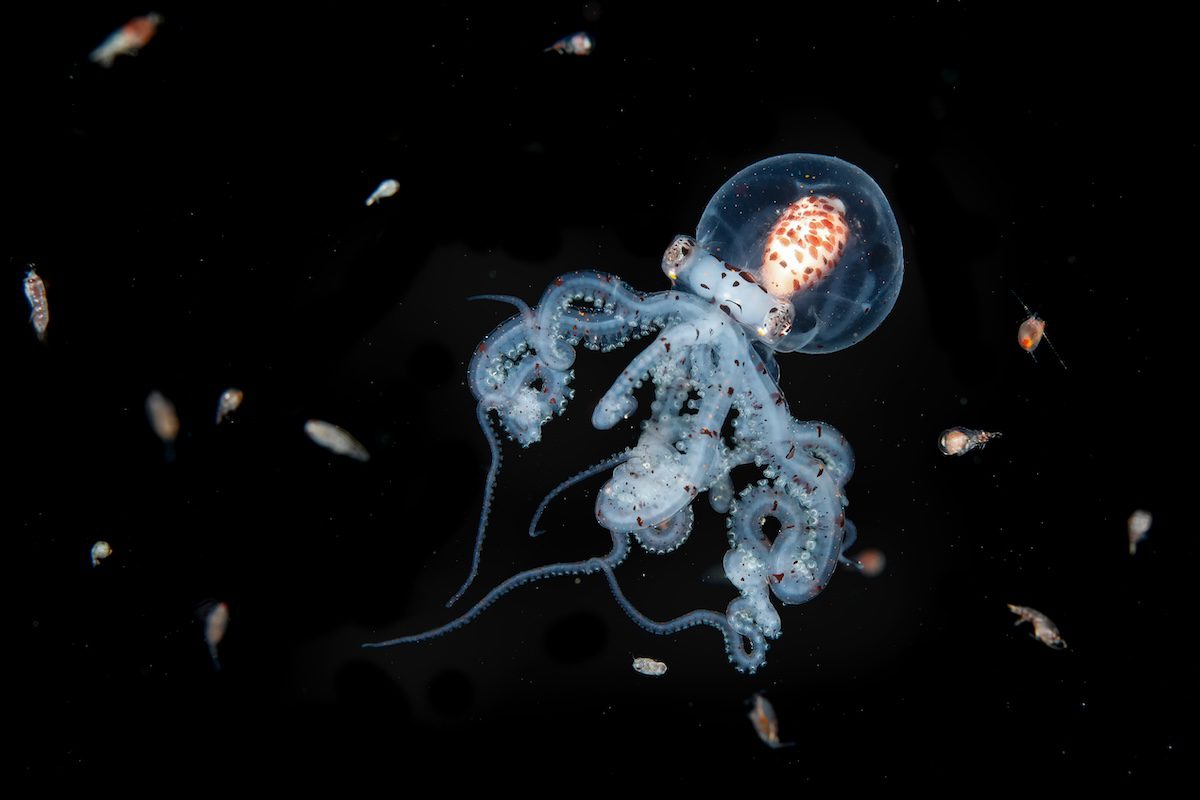
Jialing Cai Almost ethereal in its translucency, a juvenile wunderpus octopus is surrounded by a variety of small zooplankton, such as larval shrimps, crabs and worms. © Ocean Photographer of the Year 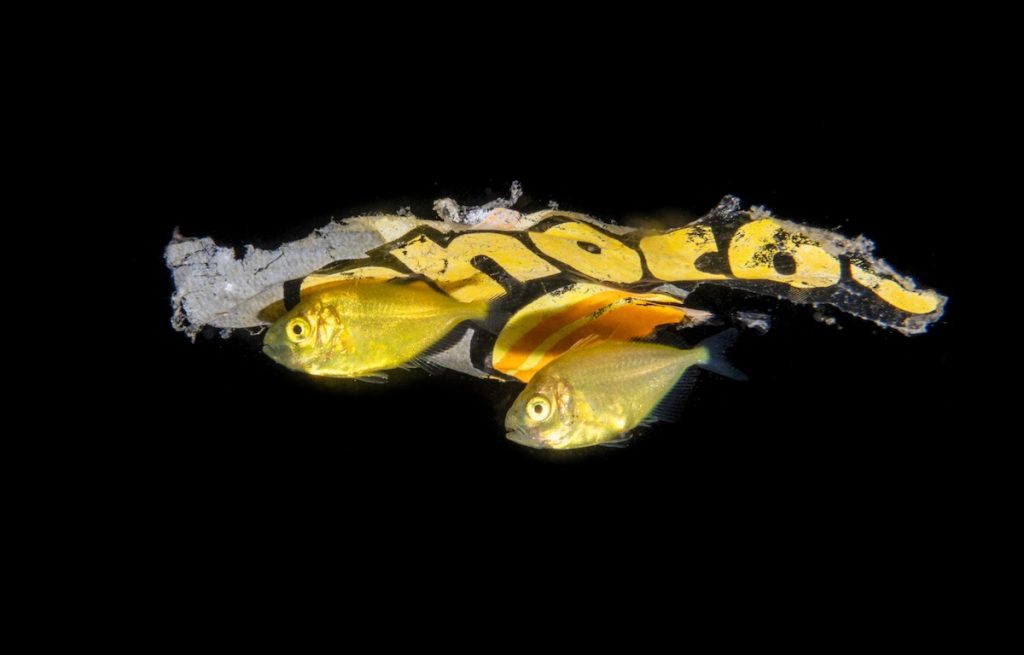
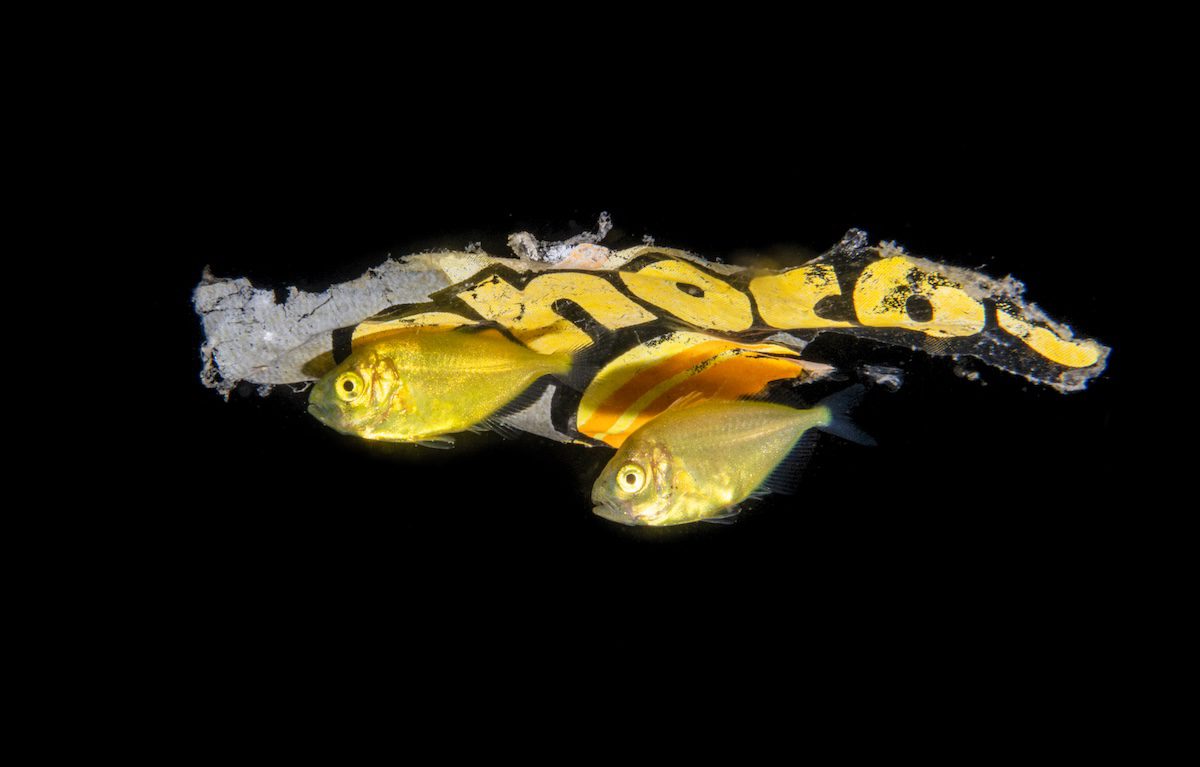
Jialing Cai Two tiny fish – no bigger than thumb nails – navigate the open ocean at night beneath the fragile shelter of a drifting piece of candy wrapper. “The wrapper was an unintended refuge in a world increasingly shaped by human debris,” says Cai. © Ocean Photographer of the Year 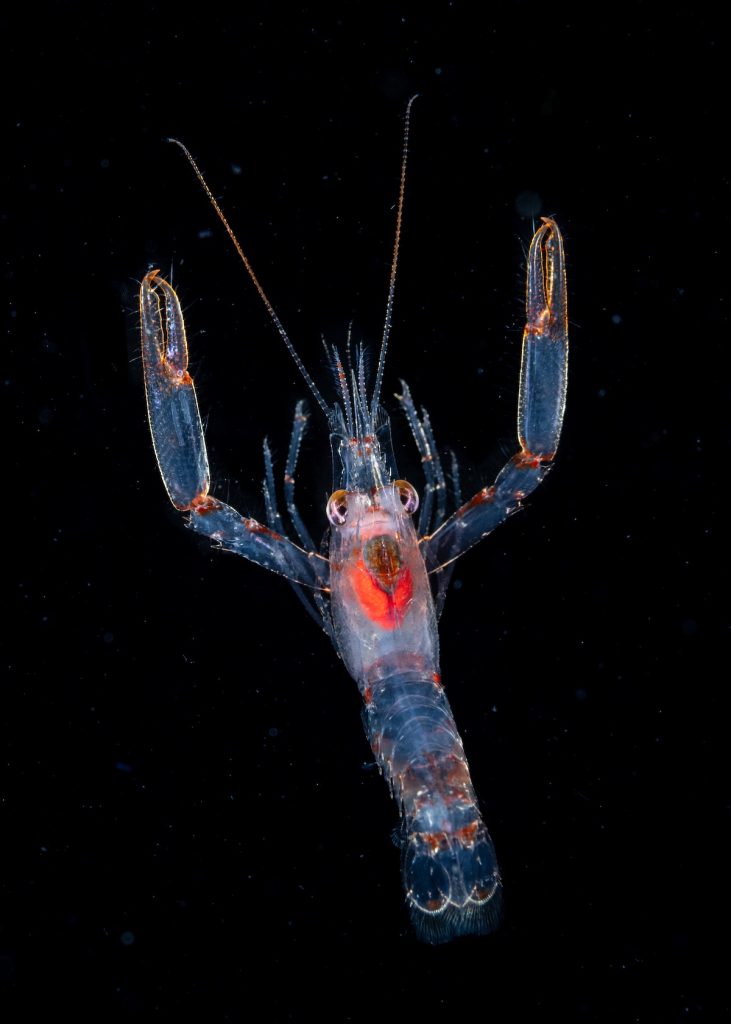
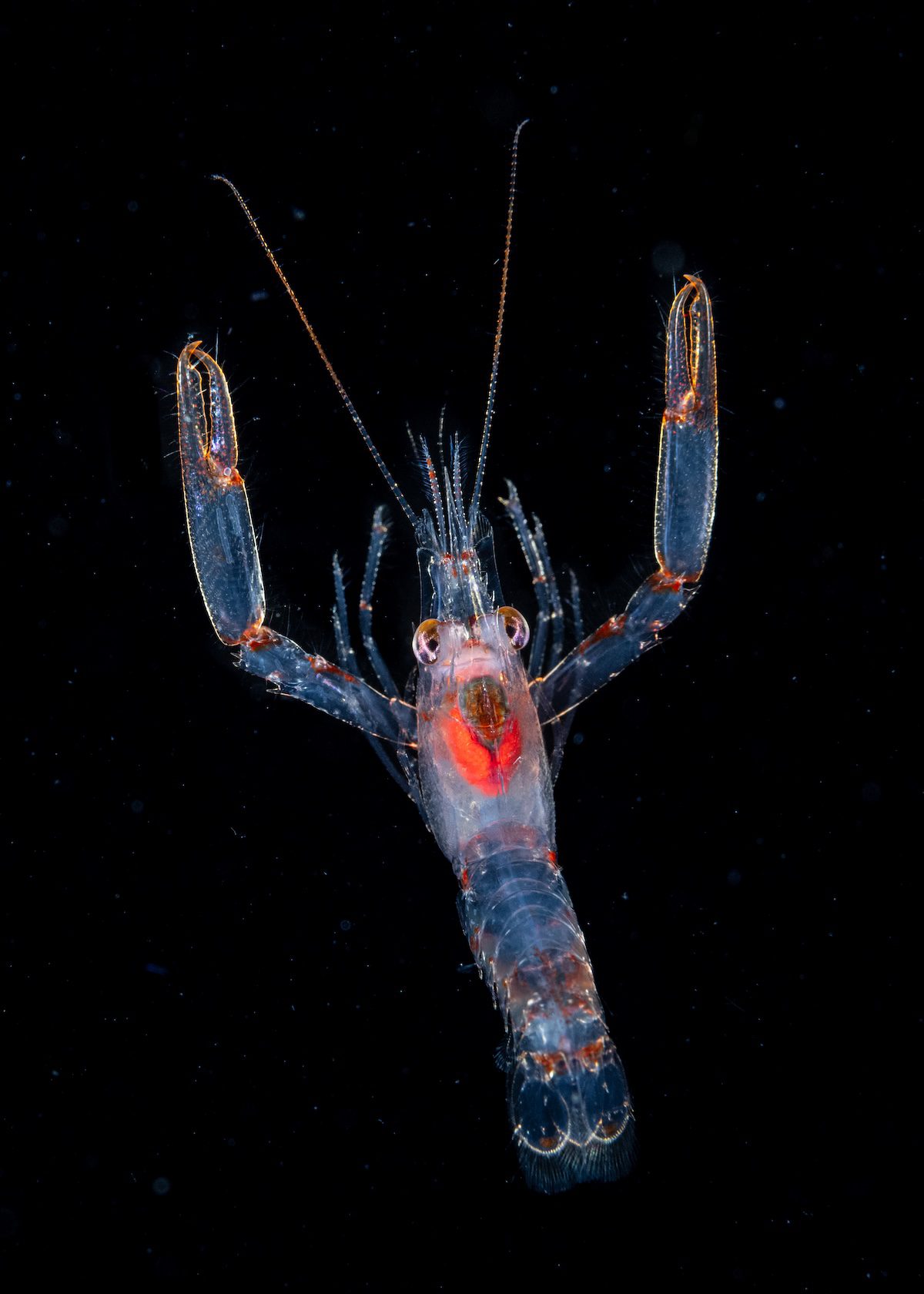
Jialing Cai A larval shrimp stretches out its claws as if in prayer. “Its translucent body reveals its bright red digestive organ,” explains Cai. “In the ocean, red is the first colour to vanish, making this internal organ nearly invisible to others.” © Ocean Photographer of the Year 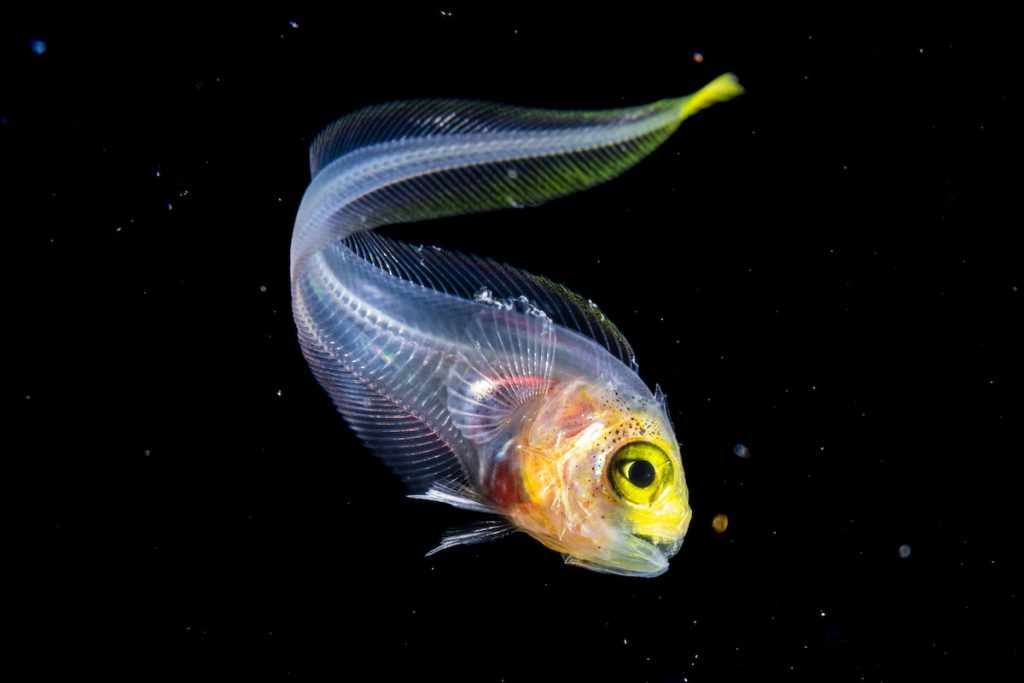
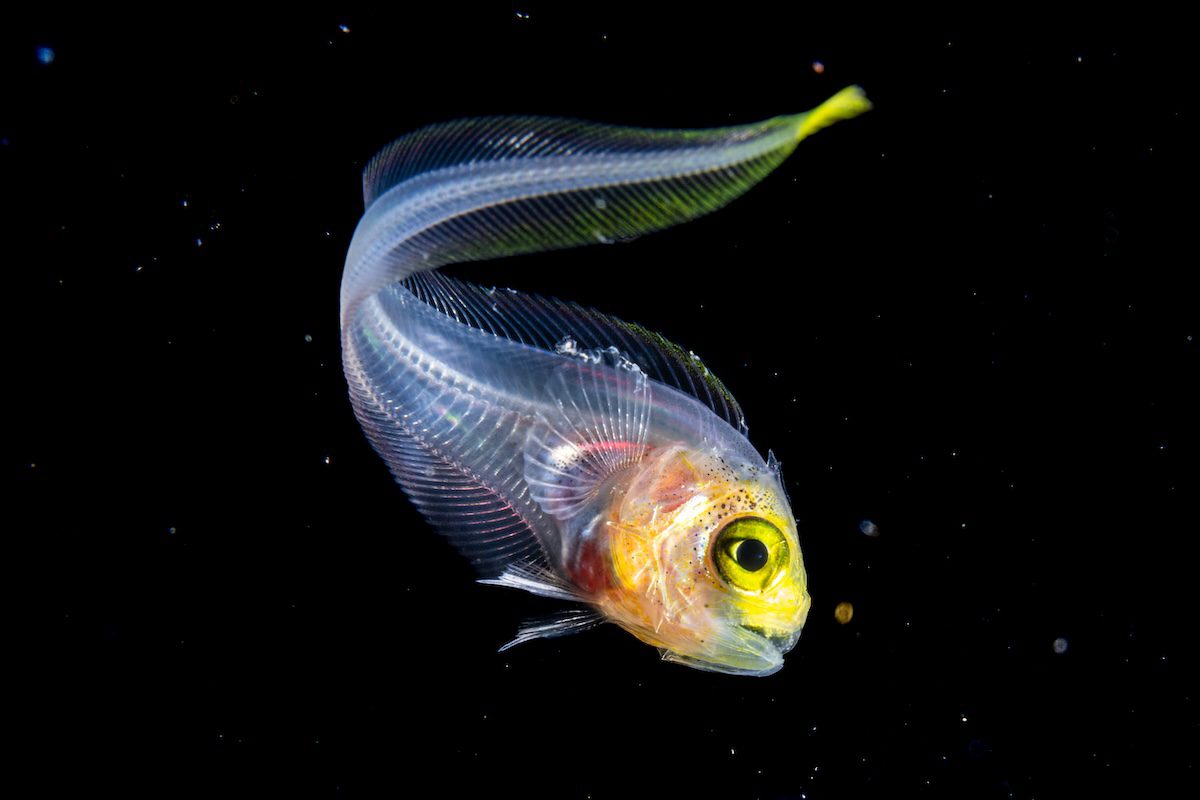
Jialing Cai A larval deep-sea fish makes a swift turn mid-water. “Its translucent body reveals a delicate scaffolding of bones,” explains Cai. “A tail trails behind in graceful motion. Though tiny in size, it carries the presence of a dragon.” © Ocean Photographer of the Year
“The Fifty Fathoms has long played a pioneering role in the history of diving and ocean exploration. Today, through our Ocean Commitment programme and the Ocean Photographer of the Year competition, we proudly continue to support underwater photography as a powerful ally in ocean exploration and conservation – helping to raise awareness, inspire, and drive protection,” says Marc A. Hayek, President and CEO of Blancpain.
Category: PORTFOLIO
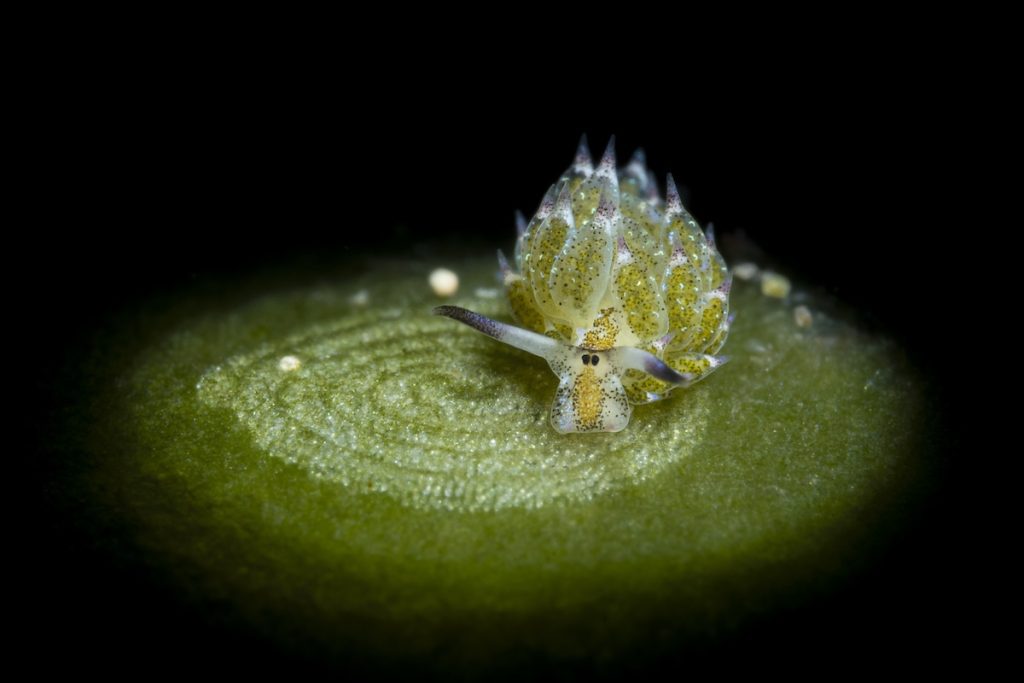
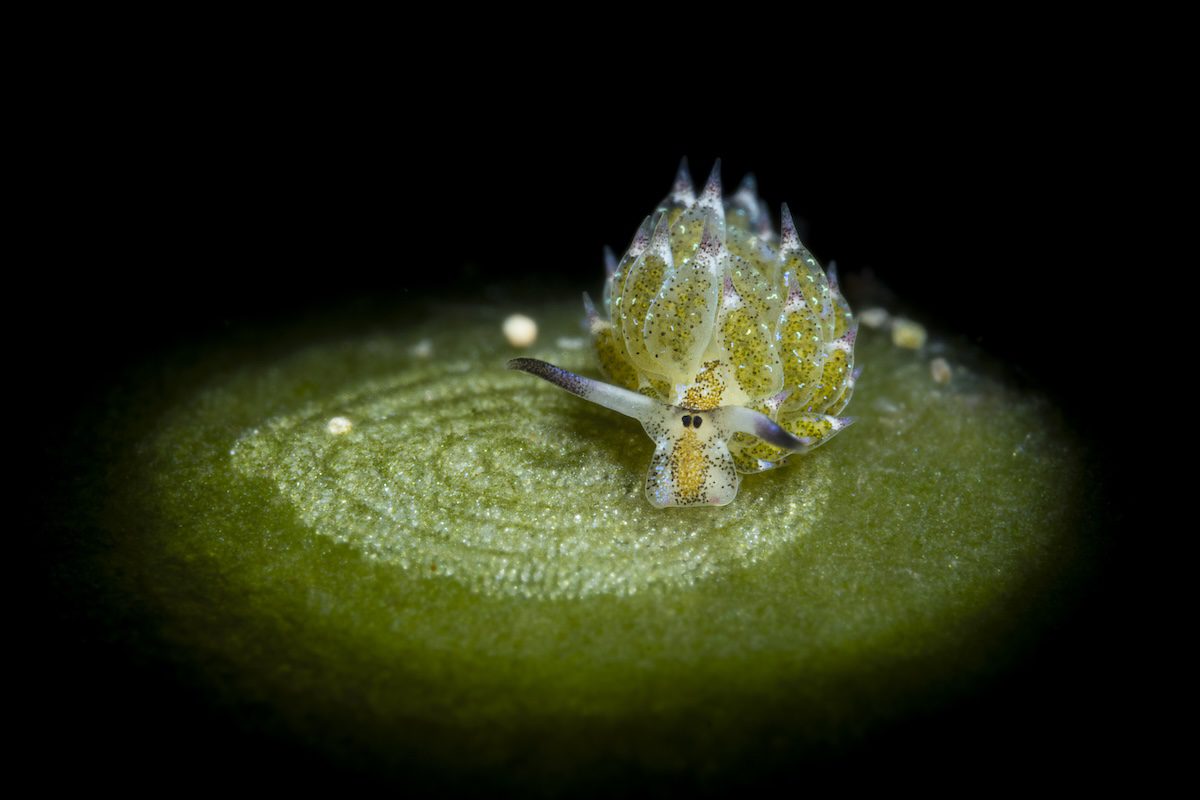
OCEAN PORTFOLIO AWARD – GIANCARLO MAZARESE The sheep nudibranch Costasiella kuroshimae deposits its eggs in a circular arrangement while feeding on algae which enables kleptoplasty – effectively making the nudibranch ‘solar-powered’. “The algal substrate provides a microhabitat for early egg development,” explains Mazarese. “It demonstrates the relationship between feeding, habitat selection, and reproductive success.” © Ocean Photographer of the Year 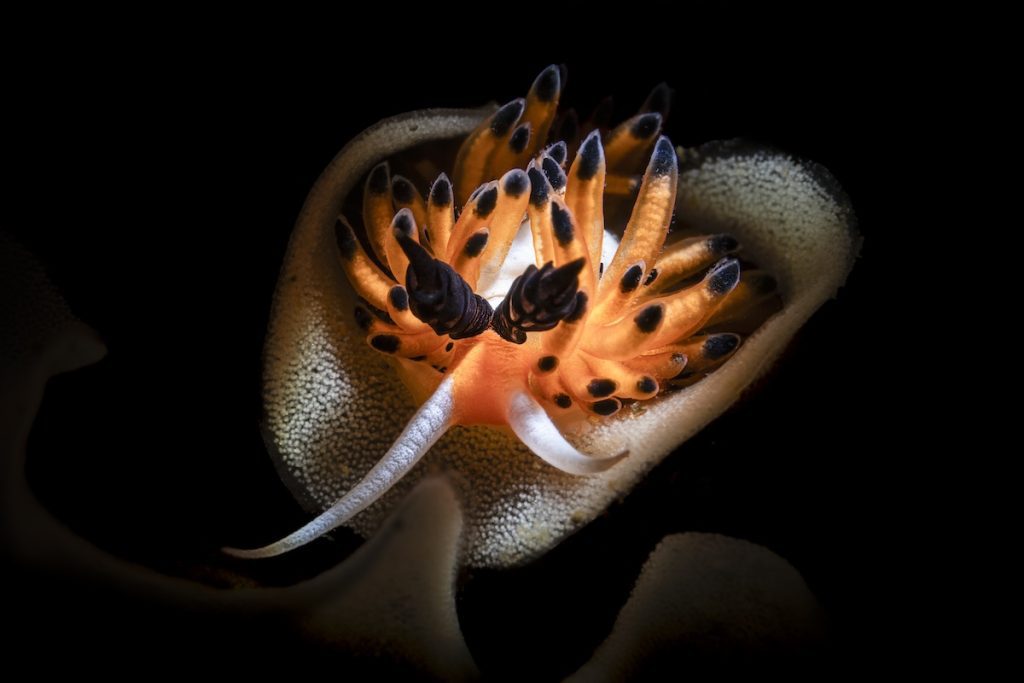
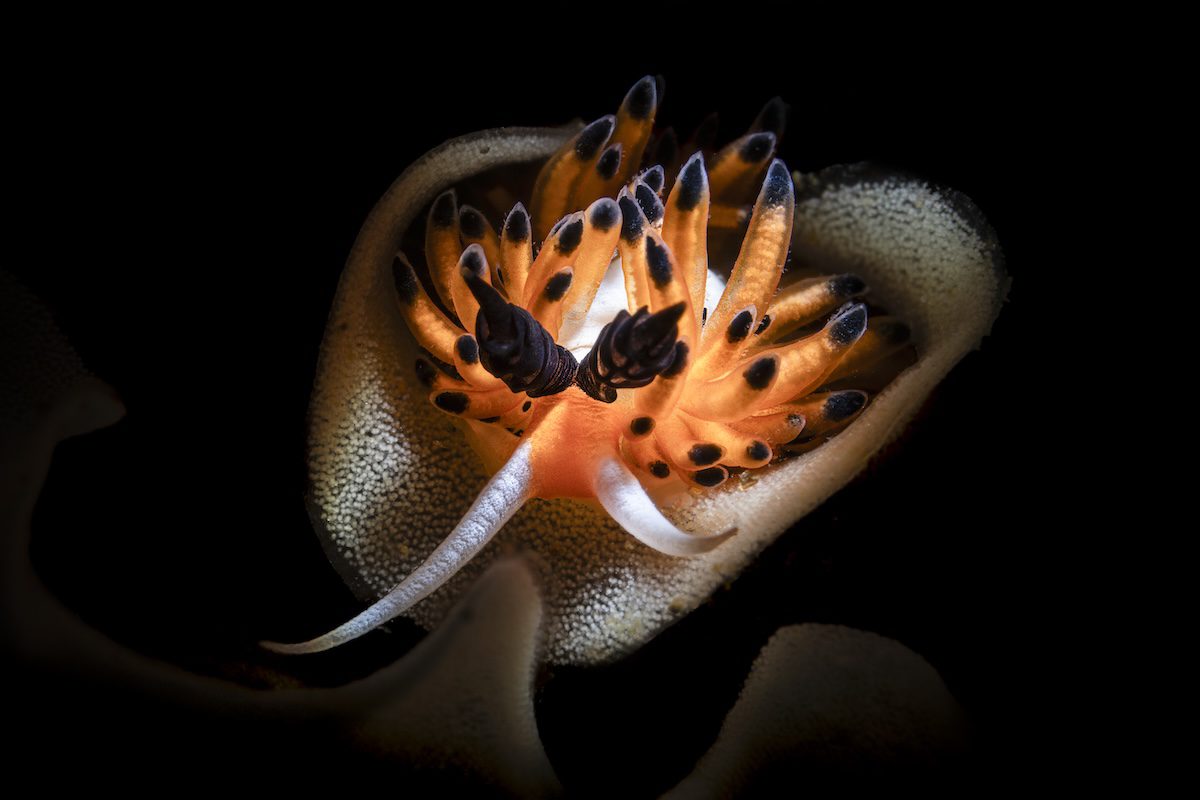
OCEAN PORTFOLIO AWARD – GIANCARLO MAZARESE “Favorinus tsuruganus feeds on the eggs of another gastropod species, demonstrating a canny ability to obtain nutrients efficiently while minimising foraging effort”, says Mazarese. By preying on eggs, the nudibranch regulates local gastropod populations and influences the dynamics of the reef. © Ocean Photographer of the Year 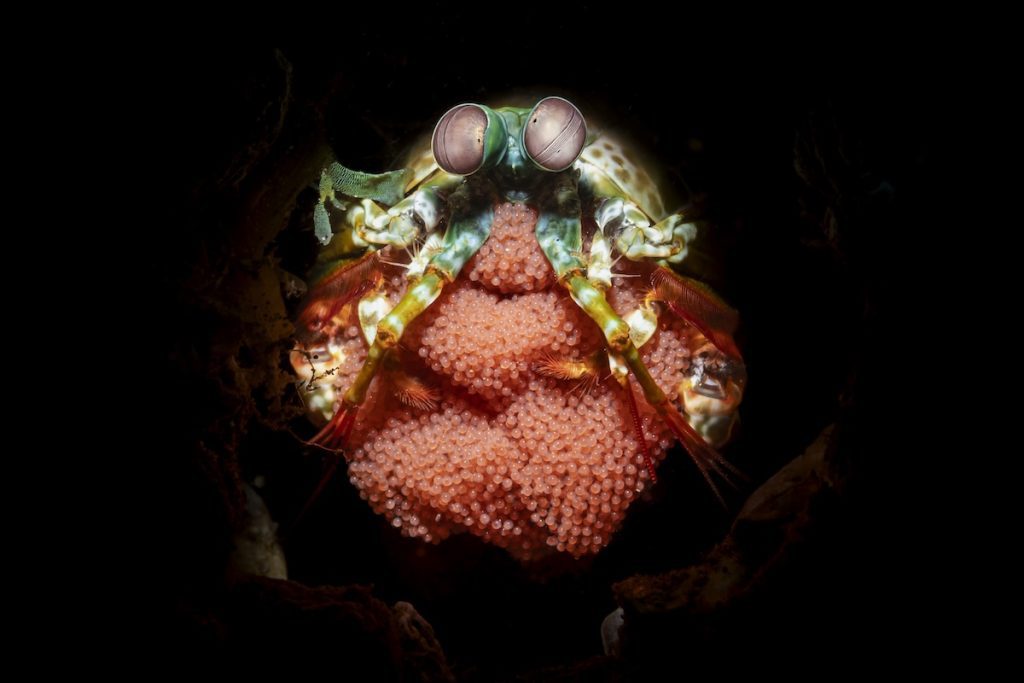
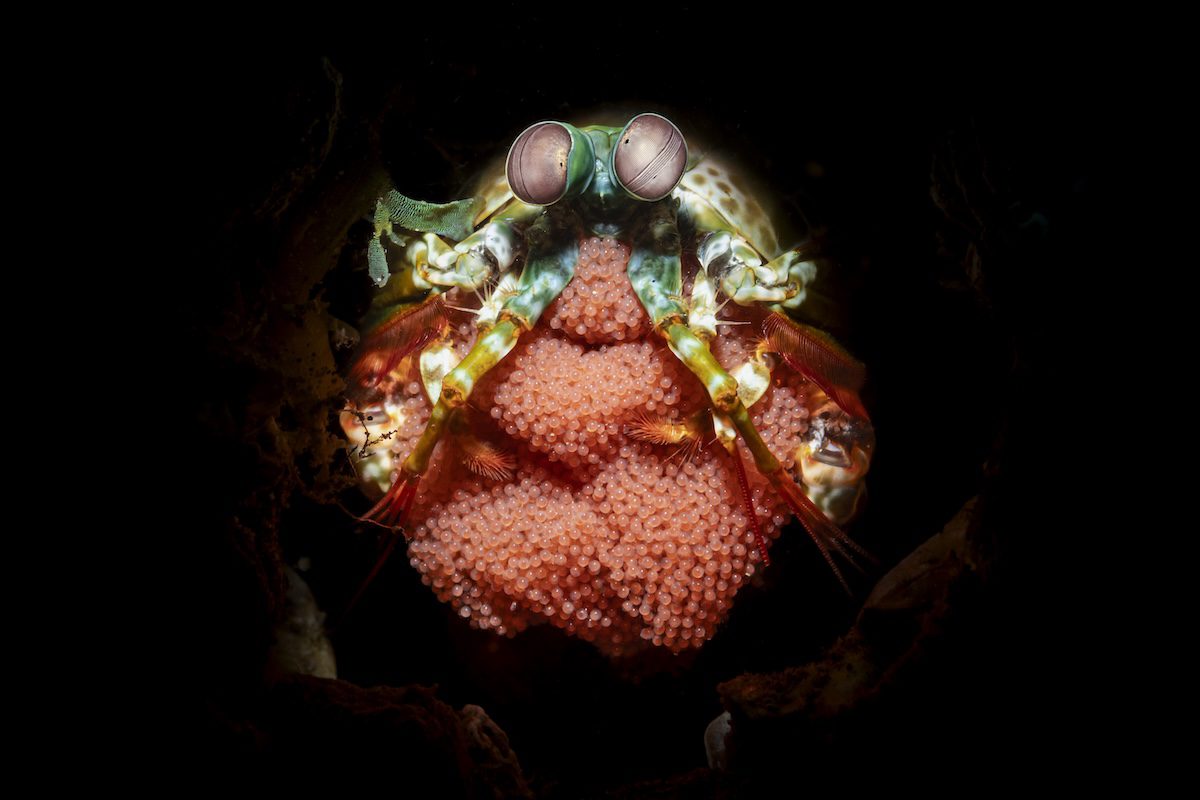
OCEAN PORTFOLIO AWARD – GIANCARLO MAZARESE The rainbow mantis shrimp (Odontodactylus scyllarus) carries its eggs until they hatch – critical for maximising survival. This image illustrates the parental care and evolutionary adaptations that enable mantis shrimps to rear their young in competitive marine ecosystems. © Ocean Photographer of the Year 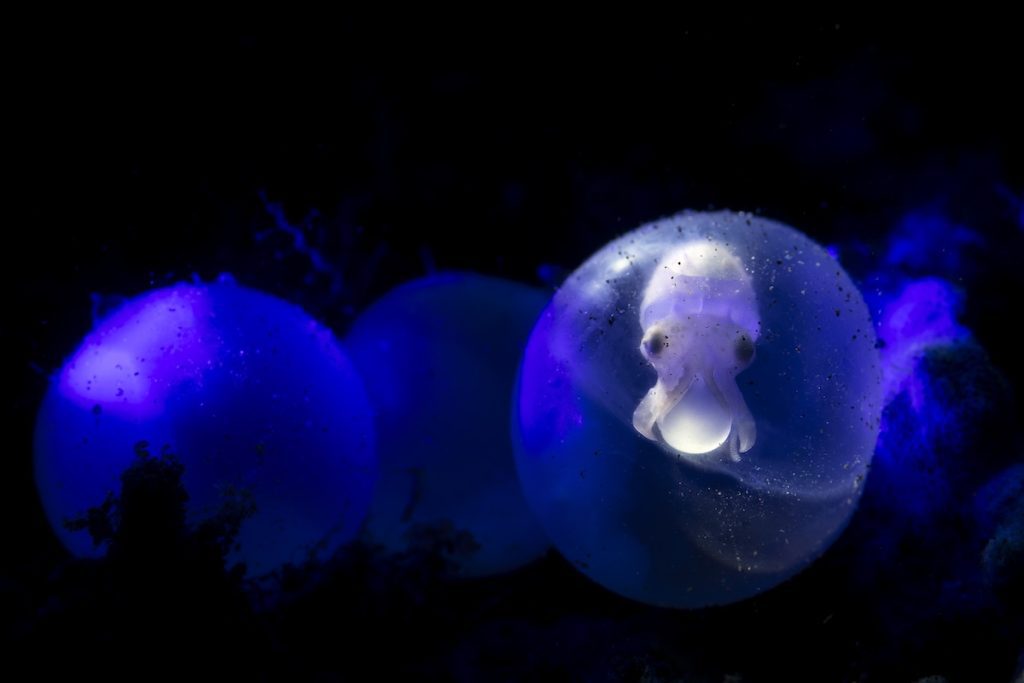
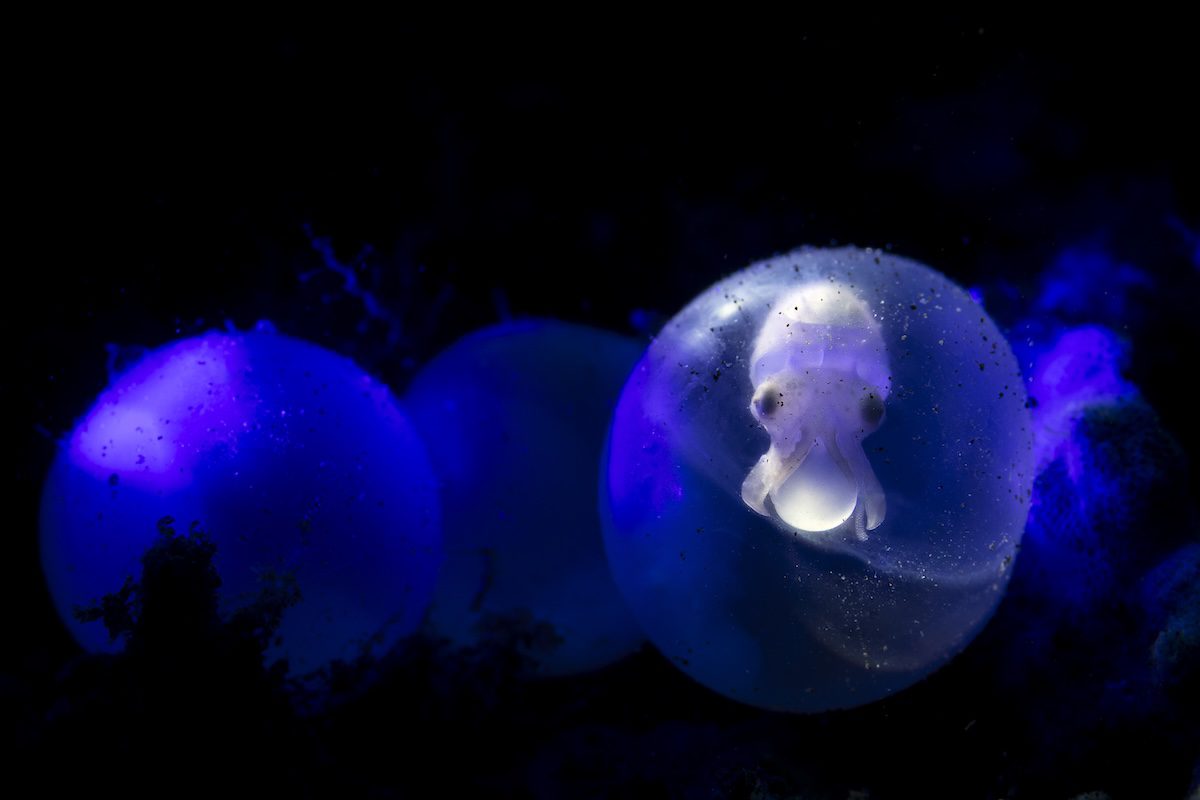
OCEAN PORTFOLIO AWARD – GIANCARLO MAZARESE Tiny cuttlefish eggs reveal the developing embryo within. One egg, illuminated using a backlit snoot, highlights the anatomy and developmental stages of the embryo. “This technique allows for a detailed observation of organogenesis and movement before hatching,” says Mazarese. © Ocean Photographer of the Year 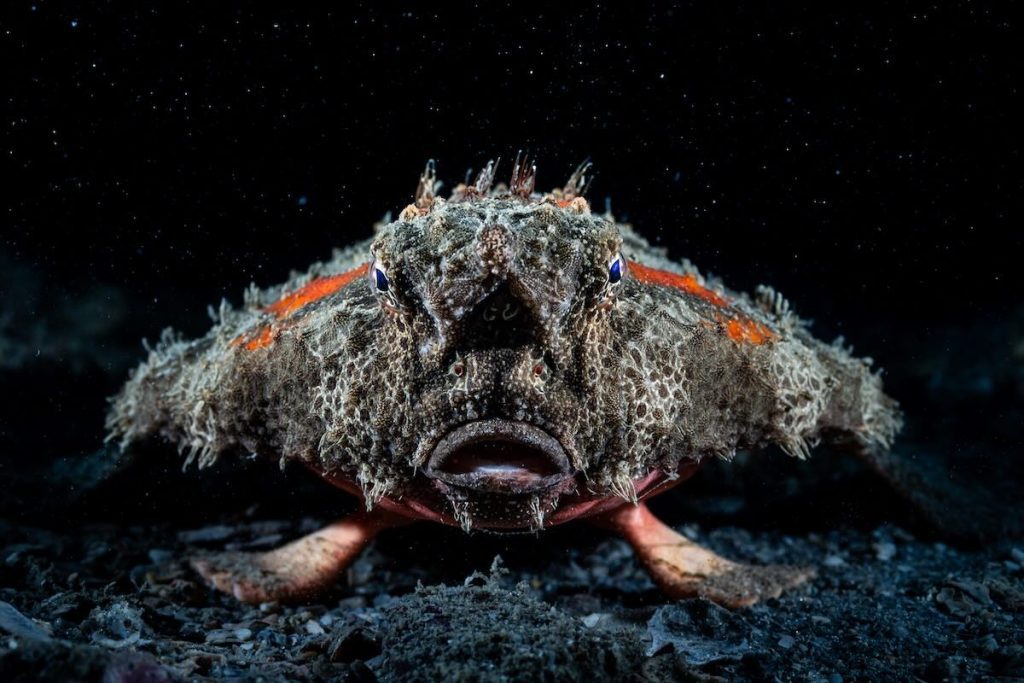
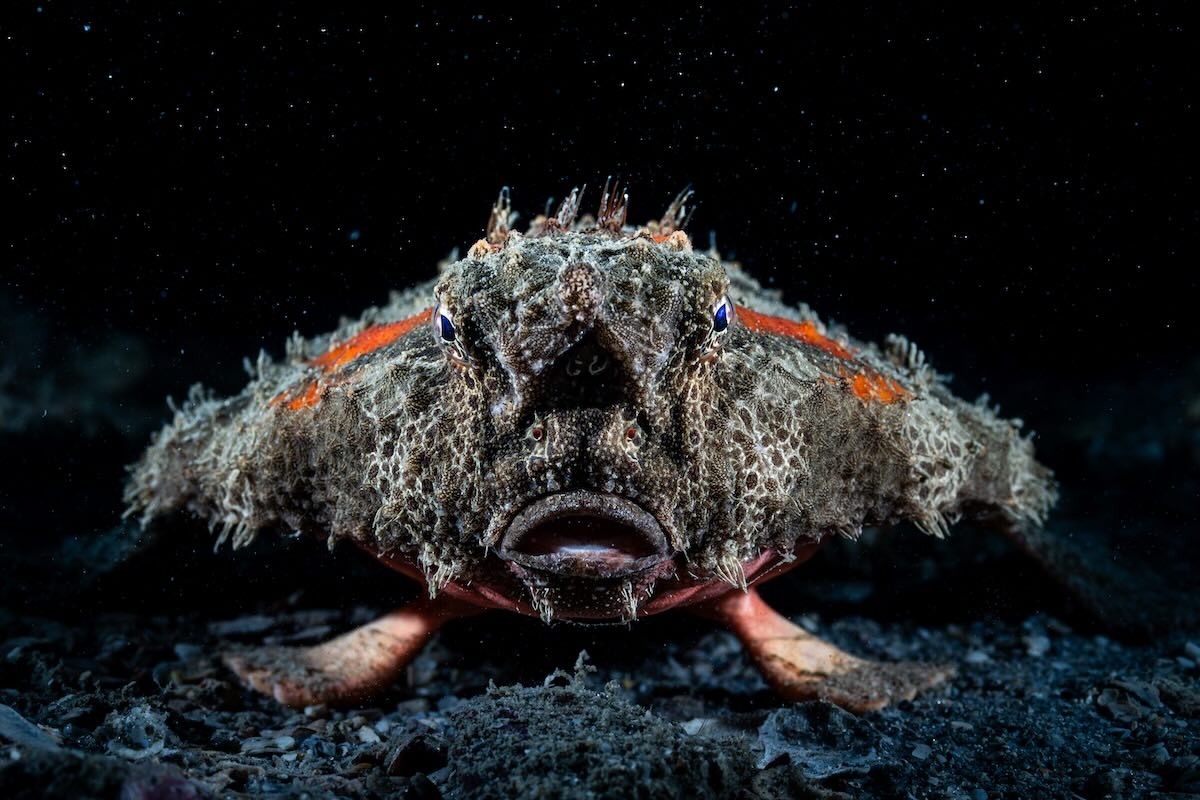
Matthew Sullivan A batfish lies on the seabed. “Polka-dot batfish are a common sight in Florida waters, but they are notoriously difficult to photograph,” says Sullivan. “After years of trying, this individual seemed relaxed, and I was able to finally take a head-on portrait.” © Ocean Photographer of the Year 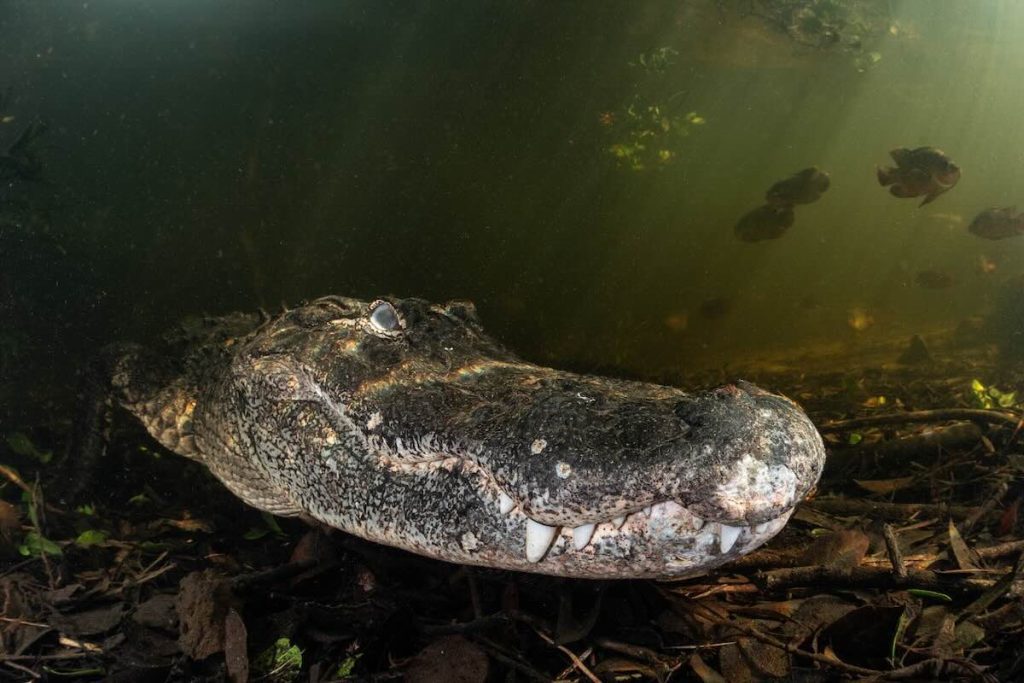
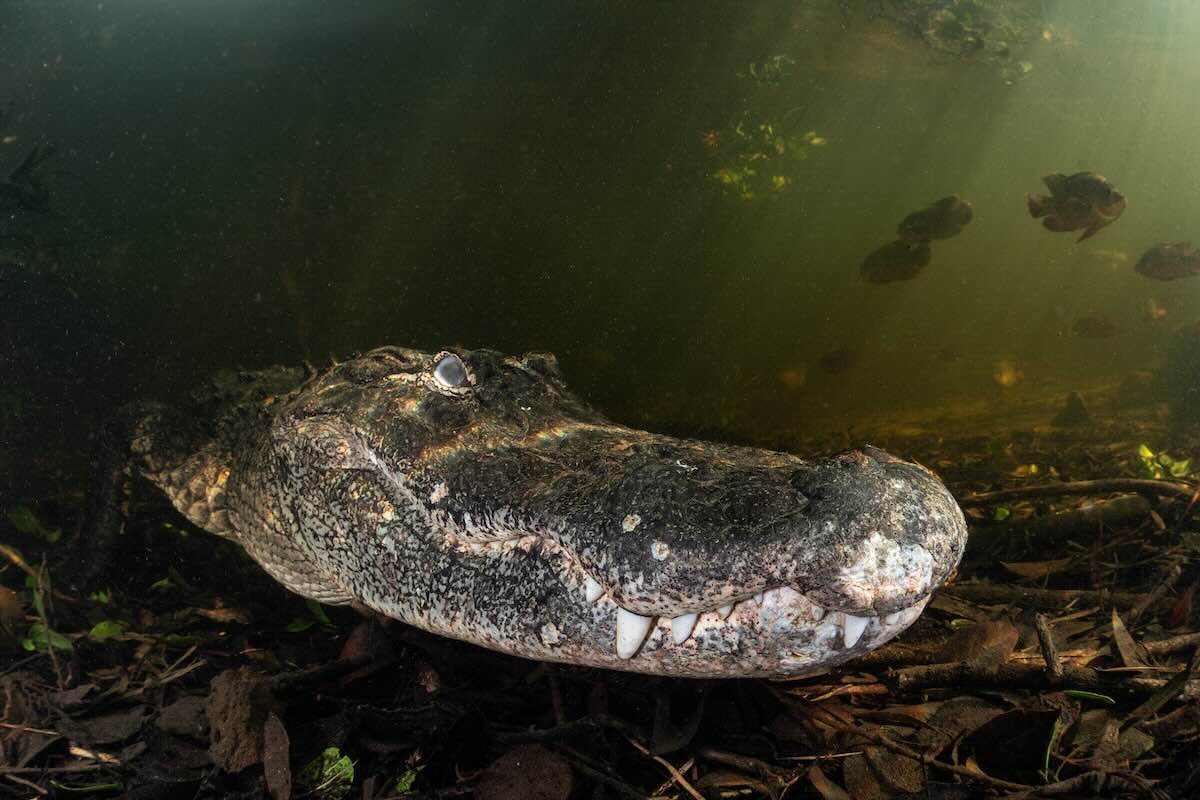
Matthew Sullivan Resting on the bottom of a cypress swamp, a large American alligator lies motionless. “Almost 12ft long, she never moved a muscle for over an hour,” says Sullivan. “The setting sun darkened the water, upping the intimidation factor of those big white teeth.” © Ocean Photographer of the Year 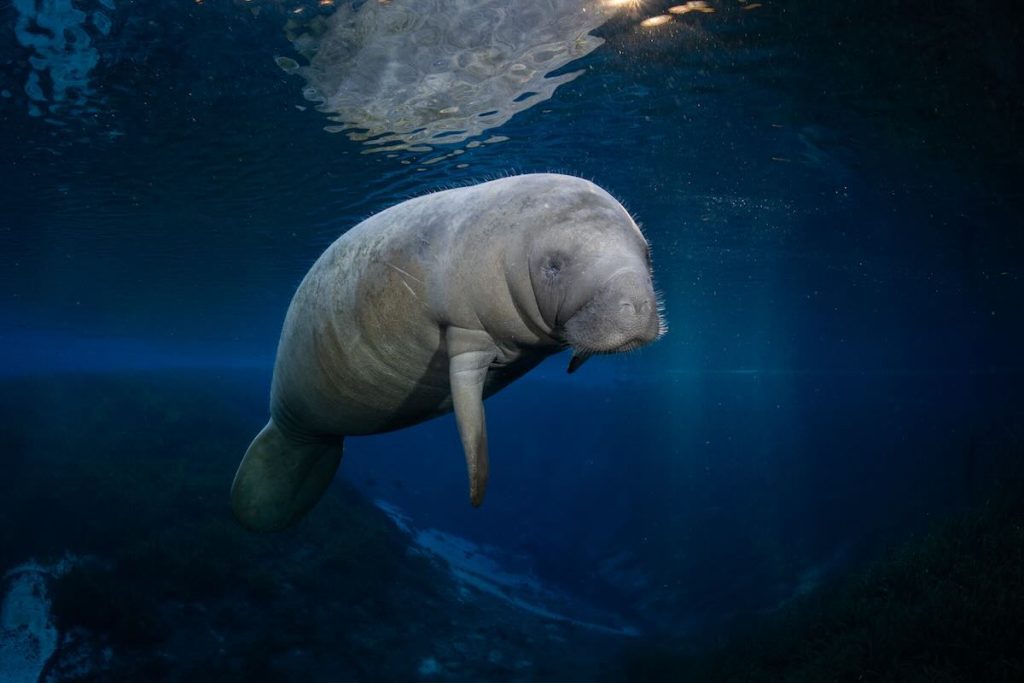
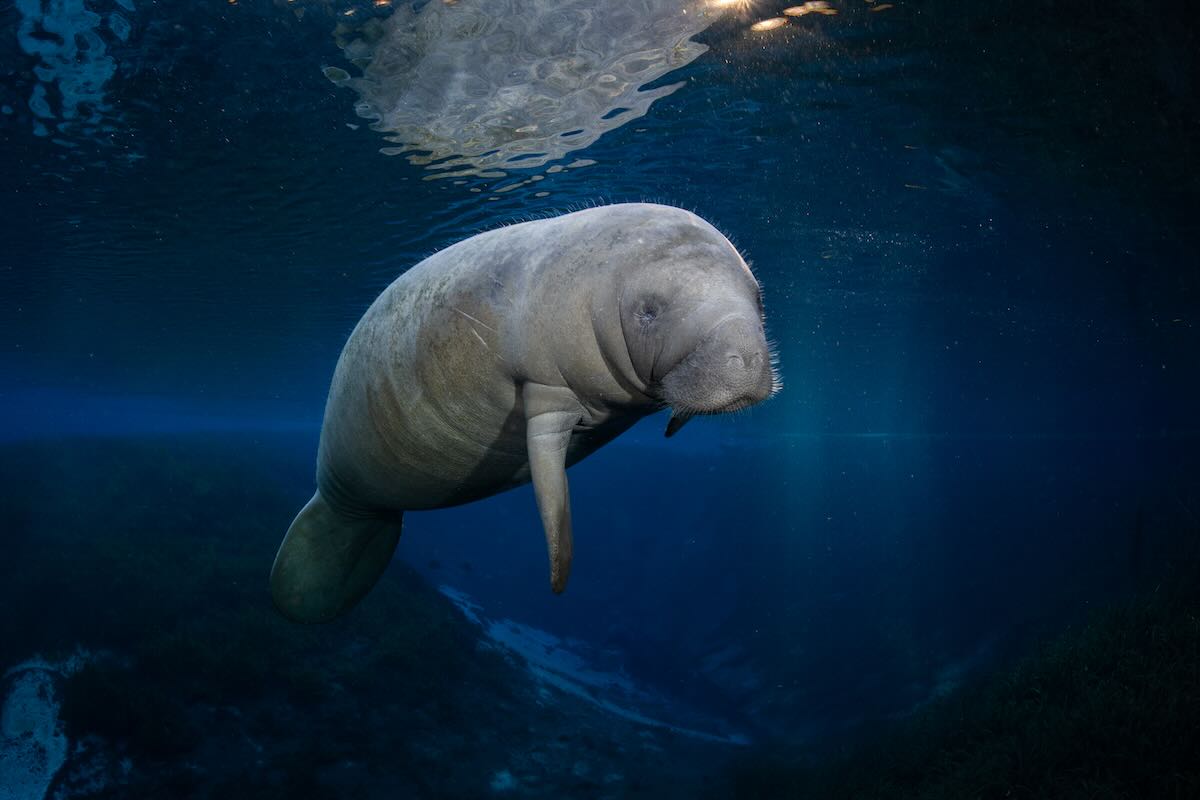
Matthew Sullivan Taken under permit, this photograph of a manatee in a spring-fed river showcases the animal’s curiosity. “The river is home to a population of manatees. Like a puppy, this individual followed me around for hours,” says Sullivan. © Ocean Photographer of the Year 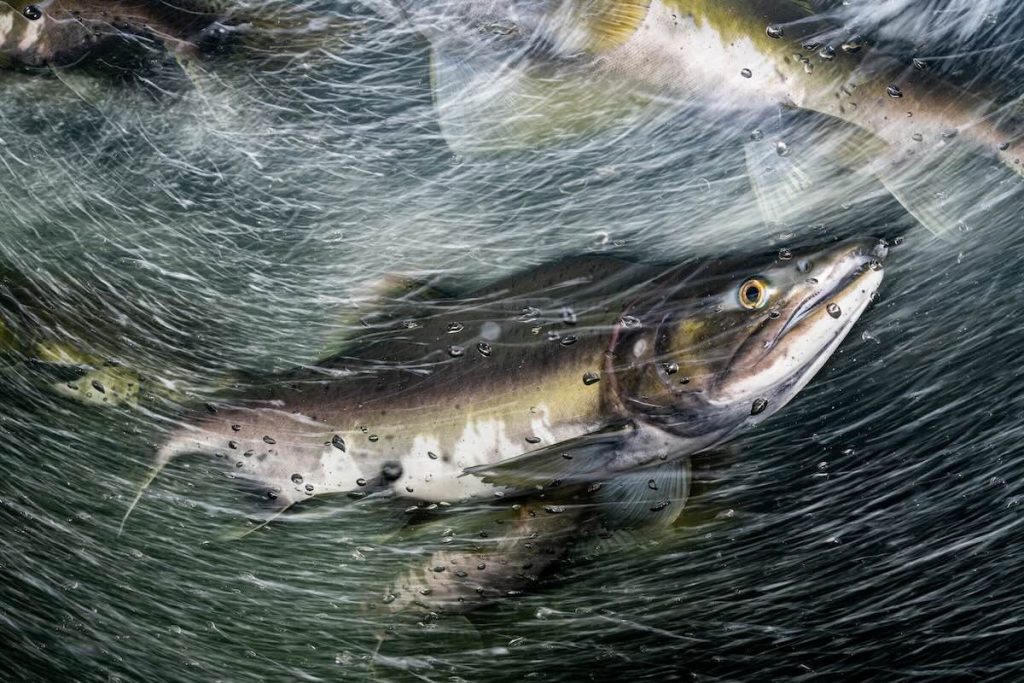
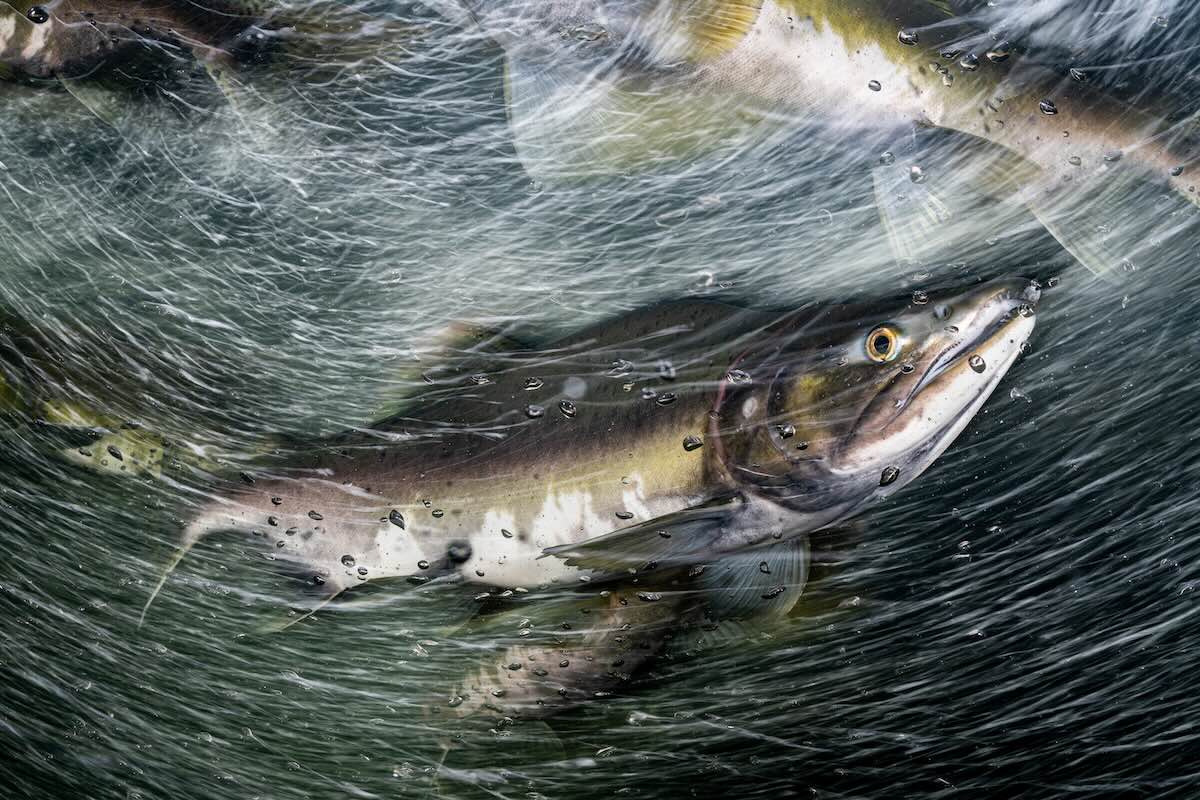
Matthew Sullivan A male salmon prepares to make a leap over a waterfall. “Campbell River is known for its salmon runs,” explains Sullivan. “When I watched the show of thousands of salmon moving upstream, the chaotic environment called for slow shutter pictures.” © Ocean Photographer of the Year 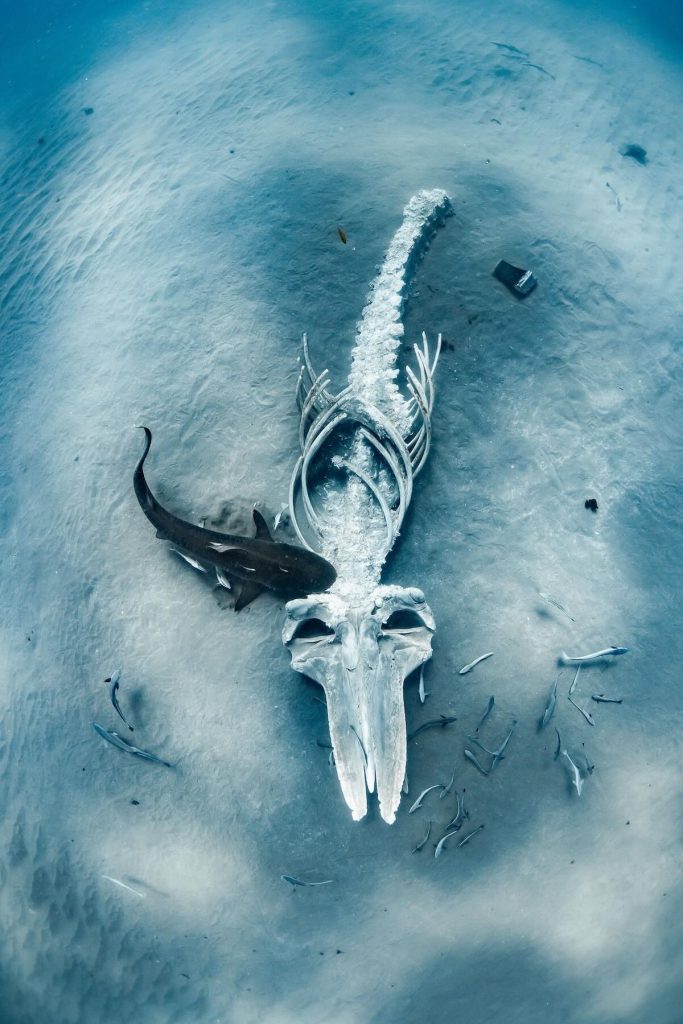
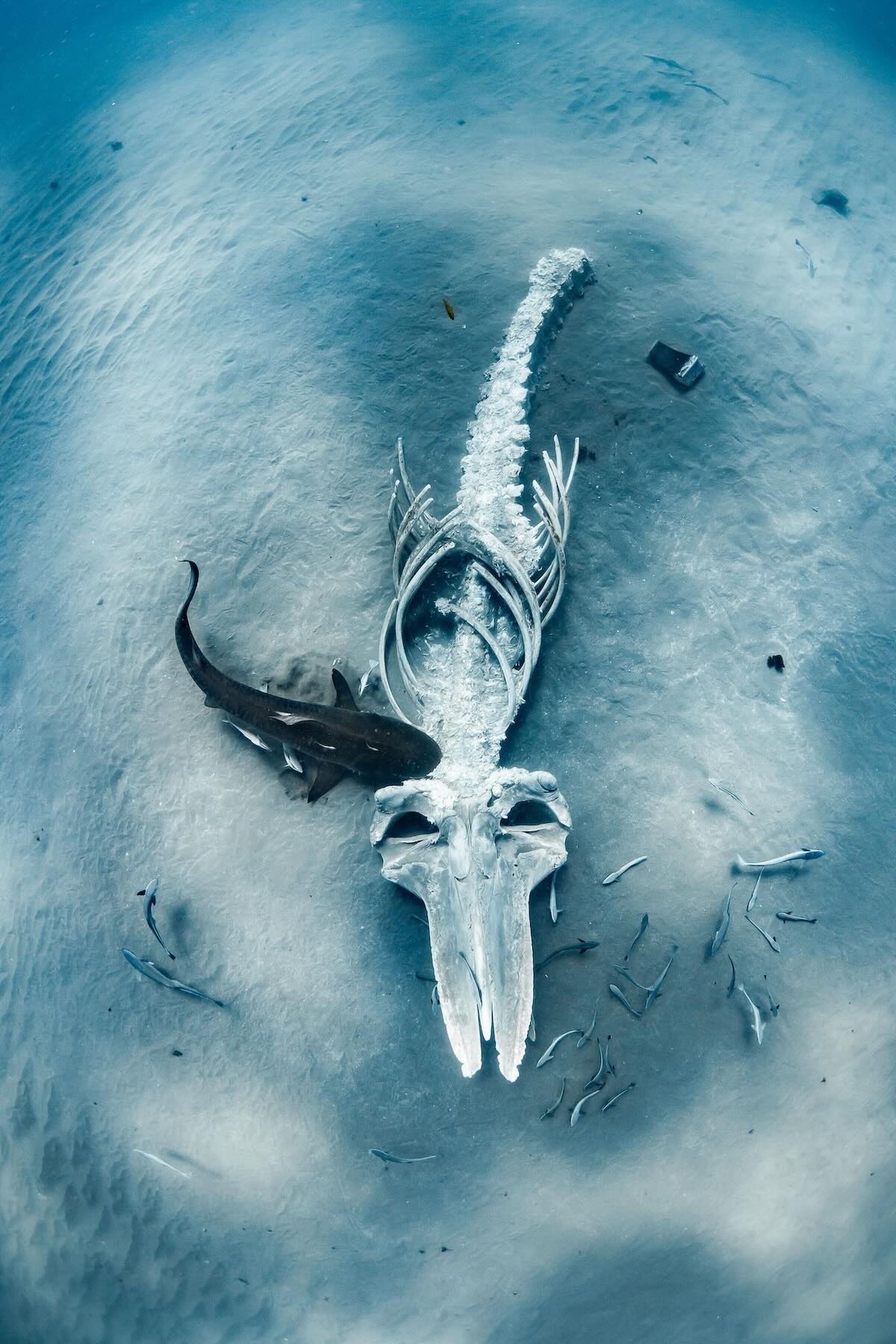
Brooke Pyke A dead humpback whale on the ocean floor. “One of the most moving scenes I’ve ever photographed. Within a few days, the bones were stripped,” says Pyke. “This tiger shark remained at the scene cleaning every scrap it could scavenge.” © Ocean Photographer of the Year 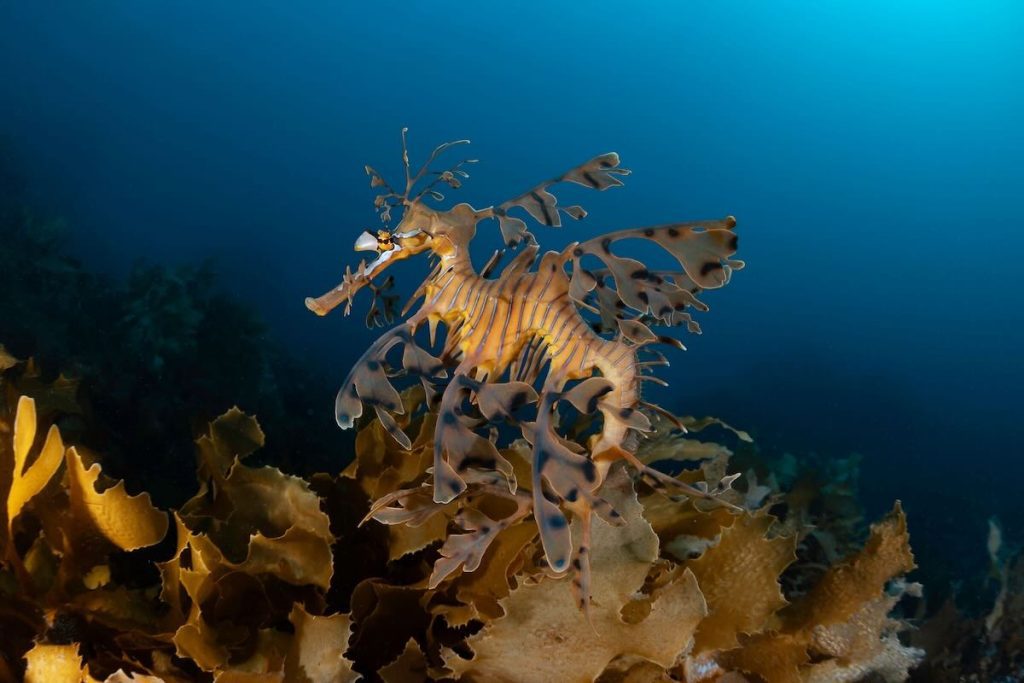
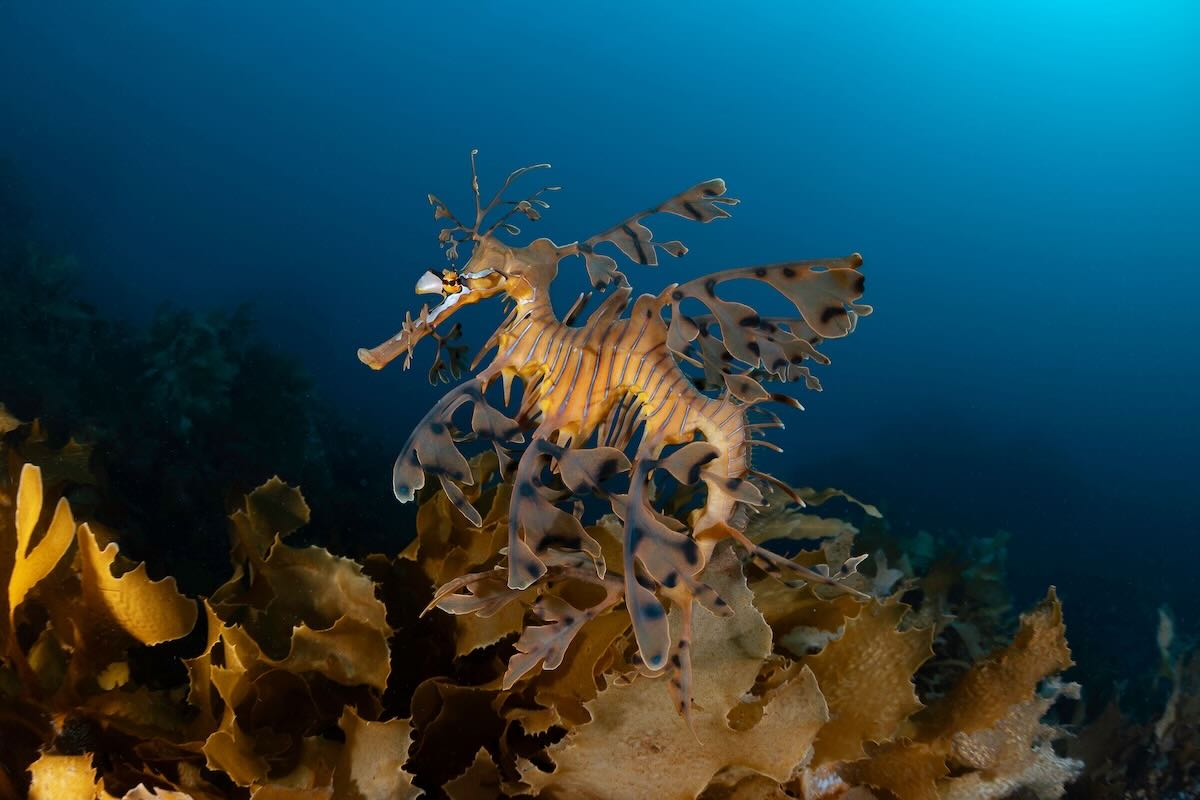
Brooke Pyke Master of camouflage, a leafy sea dragon drifts amongst the seaweed in the cold waters of Esperance. “My first time photographing a leafy sea dragon, and my second attempt to find one,” says Pyke. © Ocean Photographer of the Year 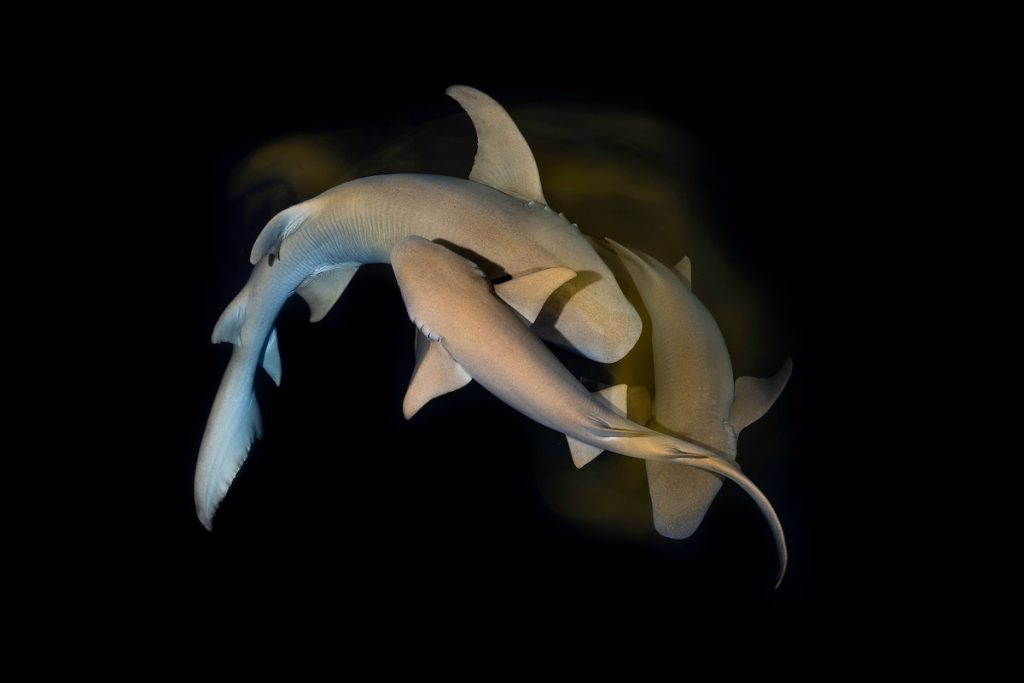
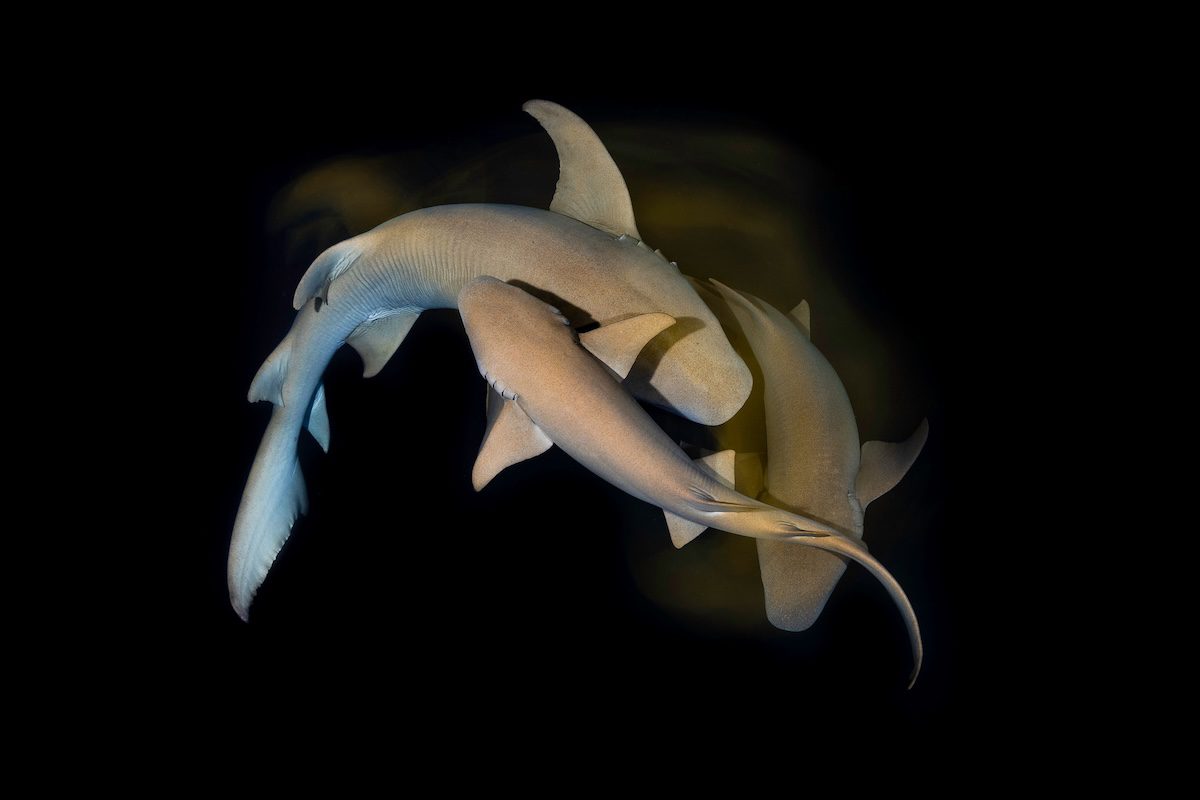
Brooke Pyke A mating ritual between three tawny nurse sharks. “Two males were chasing a female, dancing in courtship at night,” says Pyke. “I captured the movement in the dark with a slow shutter speed, strobes, and video lights.” © Ocean Photographer of the Year 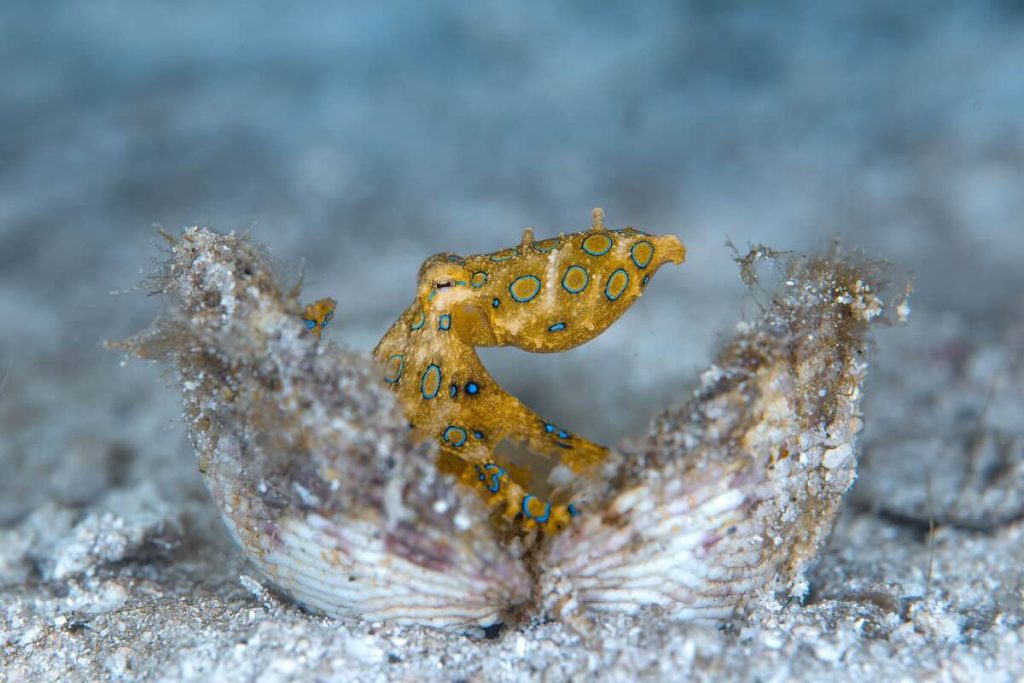
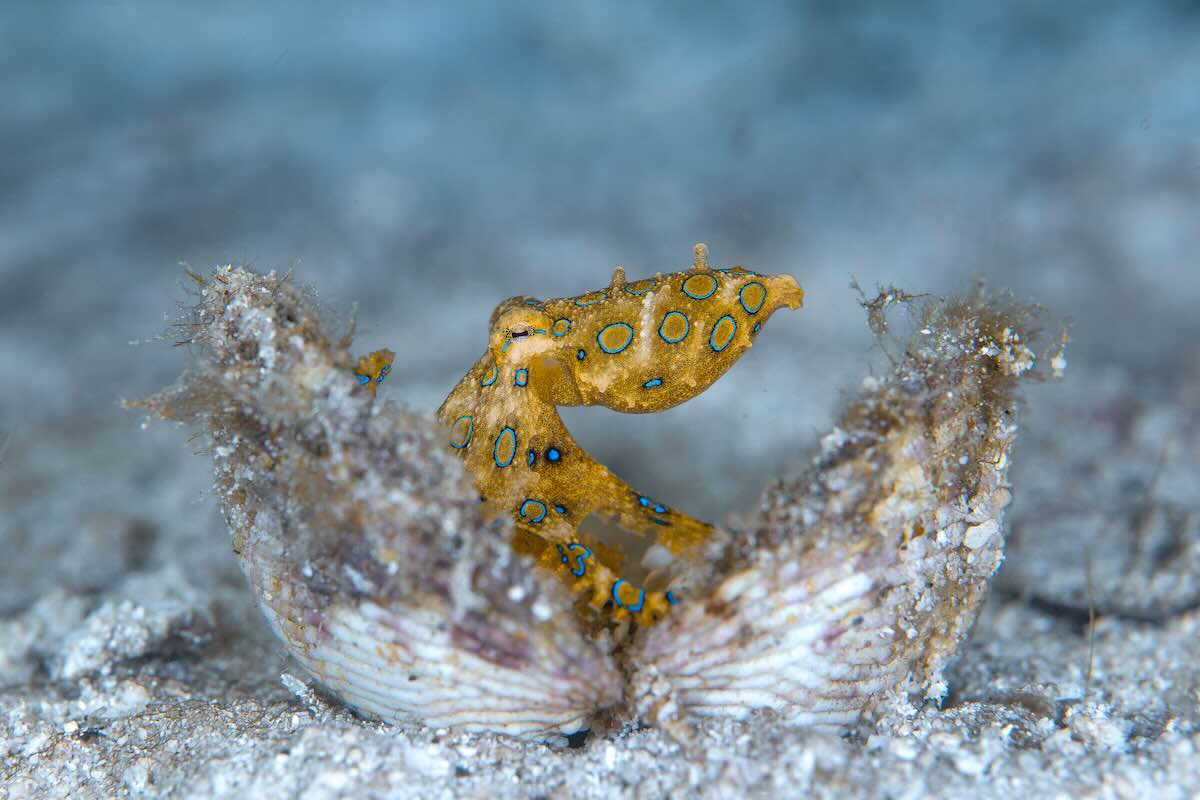
Brooke Pyke Toxic but beautiful – a blue-ringed octopus, a highly venomous species, hides between two shells. “This species was on my shot list for a long time,” says Pyke. “After following the octopus a while, I finally got lucky.” © Ocean Photographer of the Year
“The winners of this year’s Ocean Photographer of the Year remind us that photography is more than art – it is a bridge,” said Will Harrison, Director of Ocean Photographer of the Year. “Their images connect people to the ocean in ways words cannot, reaching those who may never dive in it or paddle on it, but whose lives are deeply intertwined with it. In a time of planetary urgency, this year’s photographers invite the world to see, feel, and ultimately care. Their work is critical, because we protect what we understand.”
Ocean Photographer of the Year 2025 is co-presented by Oceanographic and Blancpain Ocean Commitment.
The first major Ocean Photographer of the Year 2025 exhibition to be showcased in the UK, will open at The Historic Dockyard Chatham on March 28th, 2026. The exhibition will also open at the Australian National Maritime Museum, Sydney, on November 6th, 2025.
To learn about the Ocean Photographer of the Year contest, visit their website.
Disclosure: This post may include affiliate links.