Winners of Wildlife Photographer of the Year Highlights Nature’s Wonders
South African wildlife photographer Wim van den Heever has been named Wildlife Photographer of the Year 2025 for his striking image, “Ghost Town Visitor.” The photograph shows a rare Brown Hyena wandering through an abandoned house in the old diamond mining town of Kolmanskop, Namibia.
Brown hyenas are the rarest hyena species in the world, known for being nocturnal and mostly solitary. For van den Heever, capturing the shot was a lifelong goal. “It took me 10 years to finally get this one single image of a Brown Hyena in the most perfect frame imaginable,” he said of his photo. “I was ecstatic when I finally had success.”
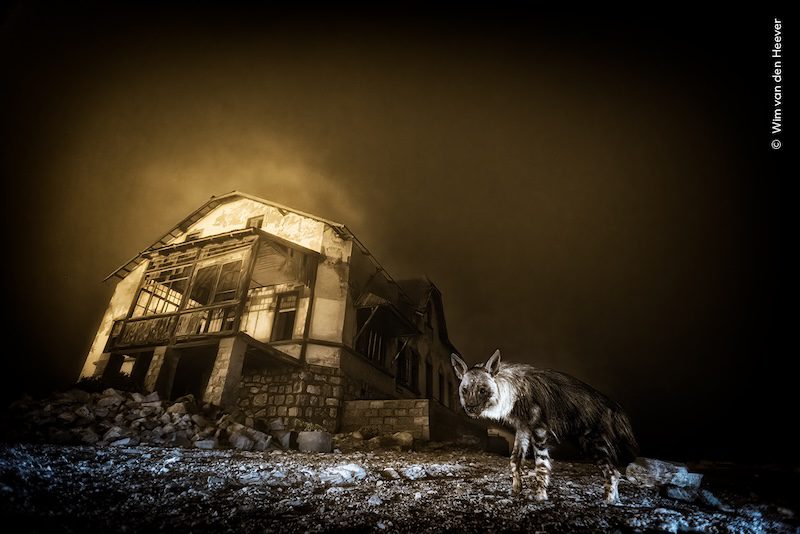
From the time he visited the Ghost Town, which is being slowly reclaimed by the Nambib desert, van den Heever has dreamt of a photograph like this. Even though he only once saw a set of Hyena footprints next to the ruins he remained undeterred. “I spoke to the security guard at the entrance of the Ghost Town about the frequency of sightings within the Ghost Town. He told me that they pass through every 4 to 6 weeks on average so I knew there was always going to be a possibility. Every single time I visited the Ghost Town I’d set up camera traps in the hope of success.”
The photo was selected from a record-breaking 60,636 entries from 113 countries and territories. Wildlife Photographer of the Year, run by the Natural History Museum, London, is the world’s leading wildlife photography competition.
Georgina Steytler / Wildlife Photographer of the Year
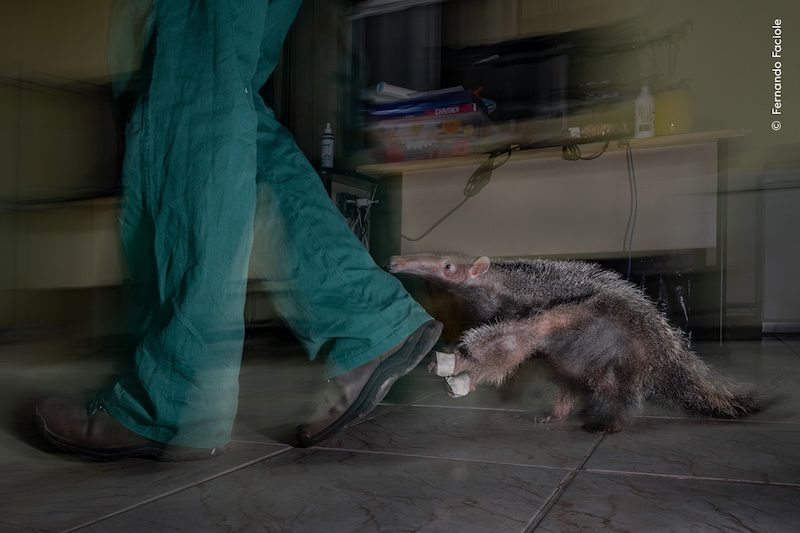
Other winners included Brazilian photographer, Fernando Faciole, for his image ‘Orphan of the Road’ which is of an orphaned giant anteater pup following its caregiver after an evening feed at
a rehabilitation centre. It won the Impact Award which recognizes a conservation success, a story of hope or positive change.
Fernando Faciole / Wildlife Photographer of the Year
“When they are very young, giant anteaters depend on constant attention from caregivers, who often need to take the animals home overnight,” said Faciole. The juvenile animal was found clinging to its mother who had been struck by a car and run over. The hope is that it will be released back into the wild after being encouraged to develop crucial survival skills by its caregiver.
Here are a selection of other winning photographs from this year’s competition.
Winner, Behaviour: Birds. Qingrong Yang (China) perfects photographic timing to show a ladyfish snatching its prey from right under this little egret’s beak.
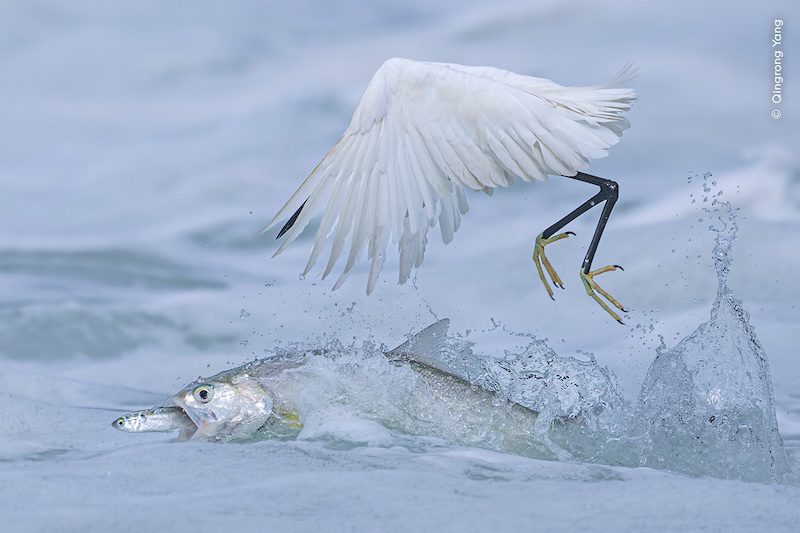
Qingrong was at Yundang Lake near his home, a place he visits regularly to photograph the feeding frenzies: little egrets patrol the surface, ready to pounce on fish leaping to escape underwater predators.
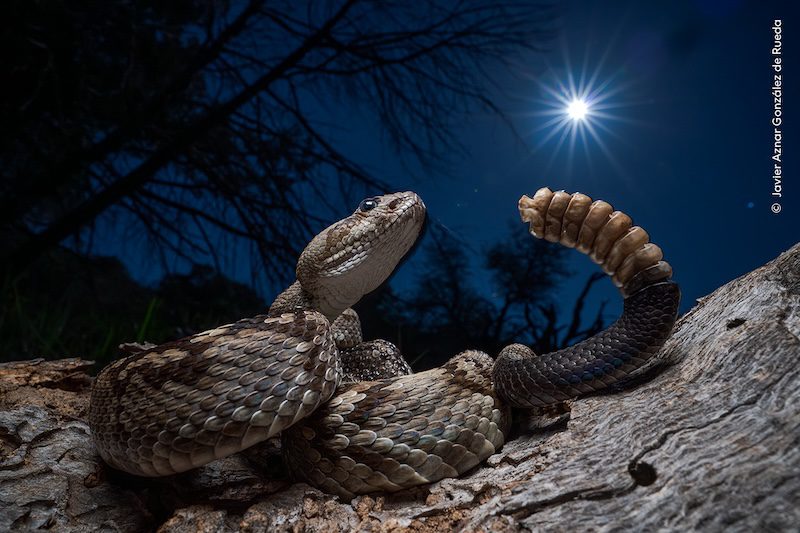
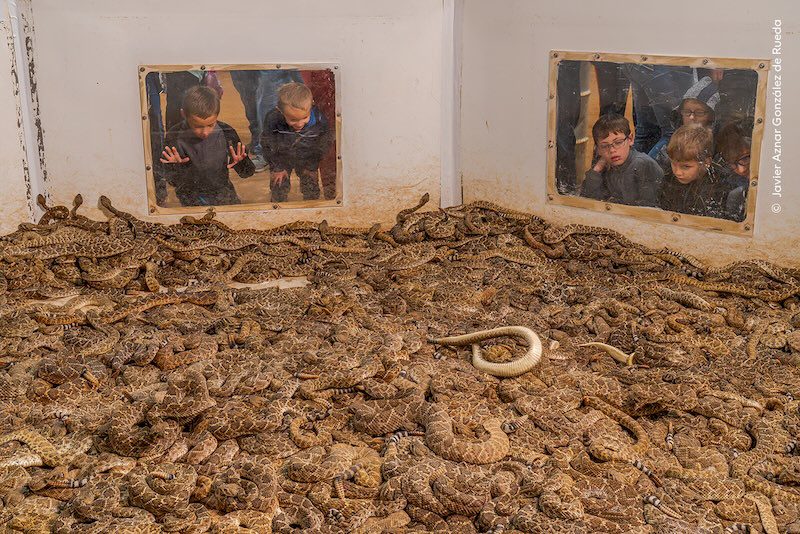
Winner, Photojournalist Story Award: Javier Aznar González de Rueda (Spain) explores the complex relationship between humans and rattlesnakes across the United States.
To raise their body temperature so they can hunt and digest, rattlesnakes often bask on warm pavement when the air cools. This Northern Black-tailed Rattlesnake (Crotalus molossus) was relocated to the roadside by a citizen concerned that it would be hit.
For centuries, rattlesnakes have been viewed in vastly different ways across the American continent – from reverence and respect to fear and suspicion. Annual rattlesnake round-ups, where hunters compete to collect the highest weight of snakes, began in the 1930s. Texas Kids watch as hundreds of Western Diamond-backed Rattlesnakes (Crotalus atrox) are accumulated in a pit during the annual Sweetwater Jaycee’s Rattlesnake Round-Up.
Winner, Animals in their Environment: Shane Gross (Canada) witnesses a peppered moray eel very much in its element hunting for carrion at low tide.
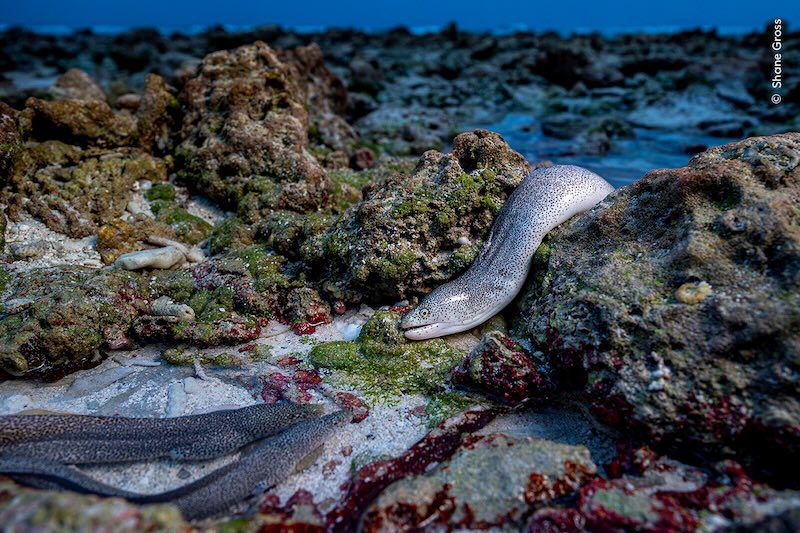
It took Shane numerous attempts over several weeks to document this rarely photographed behaviour. At first the eels were elusive, but once Shane realised that they were scavenging for dead fish, he waited. His patience was soon rewarded when these three eels appeared. Peppered moray eels are well adapted to the intertidal zone. They can hunt both above and below the water’s surface using their keen senses of smell and sight, sometimes staying out of water for more than 30 seconds.
Winner, Wetlands: The Bigger Picture: Sebastian Frölich (Germany) finds a springtail among a galaxy of neon green gas bubbles in Austrian moorlands.
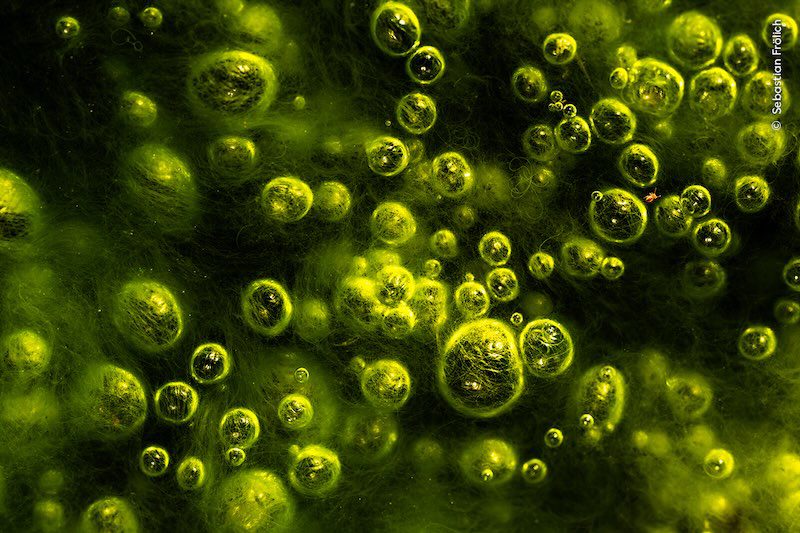
Sebastian visited this fragile wetland ecosystem to highlight its importance as a vast store of carbon dioxide and as a habitat for diverse wildlife. A tiny springtail ran across escaping gas bubbles rising through the algae, giving this image a sense of scale.
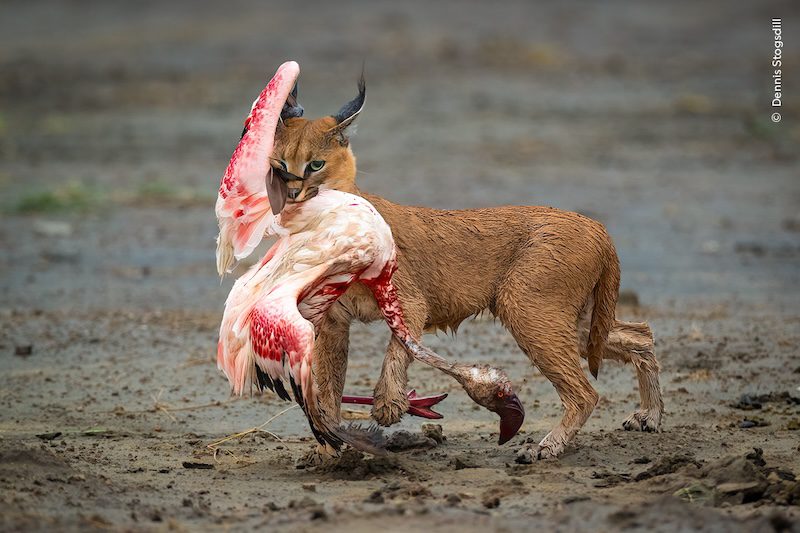
Winner, Behaviour: Mammals: Dennis Stogsdill (USA) witnesses a caracal hunting a lesser flamingo in the Serengeti National Park, Tanzania.
Dennis had been keeping an eye out for wild cats such as servals for several days when a call came over the radio: one had been seen at Ndutu Lake. But it wasn’t a serval. It was a caracal, successfully hunting wading lesser flamingos.
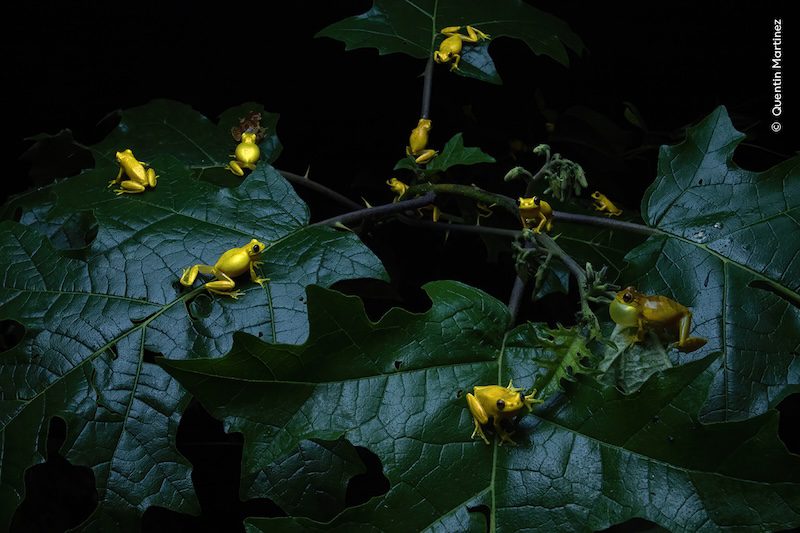
Winner, Behaviour: Amphibians and Reptiles. Quentin Martinez (France) discovers a gathering of lesser tree frogs in a breeding event.
In persistent rain, Quentin followed a flooded path to a temporary pool in a forest clearing on Kaw Mountain, French Guiana. He framed this scene with a wide-angle lens and used a diffused flash, which didn’t disturb the frogs, to highlight their metallic sheen. To attract mates, lesser tree frogs produce short, shrill calls. Huge numbers gather, and the spectacular breeding event – triggered by heavy rains – lasts for just a few hours.
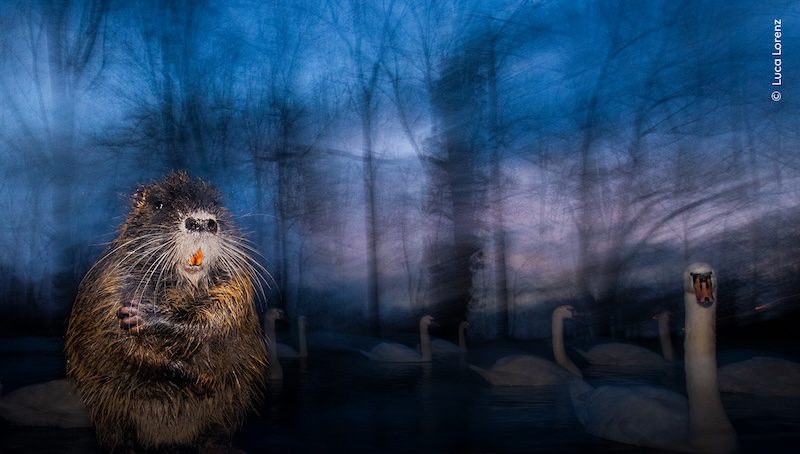
Winner, Rising Star Award: Luca Lorenz (Germany) explores his passion for the natural world by viewing it through an artistic lens.
Luca was photographing mute swans on an urban lake one evening when a coypu, a rodent introduced from South America, appeared in the frame. Having been shipped across the world for the fur trade, coypu have since established many feral populations.
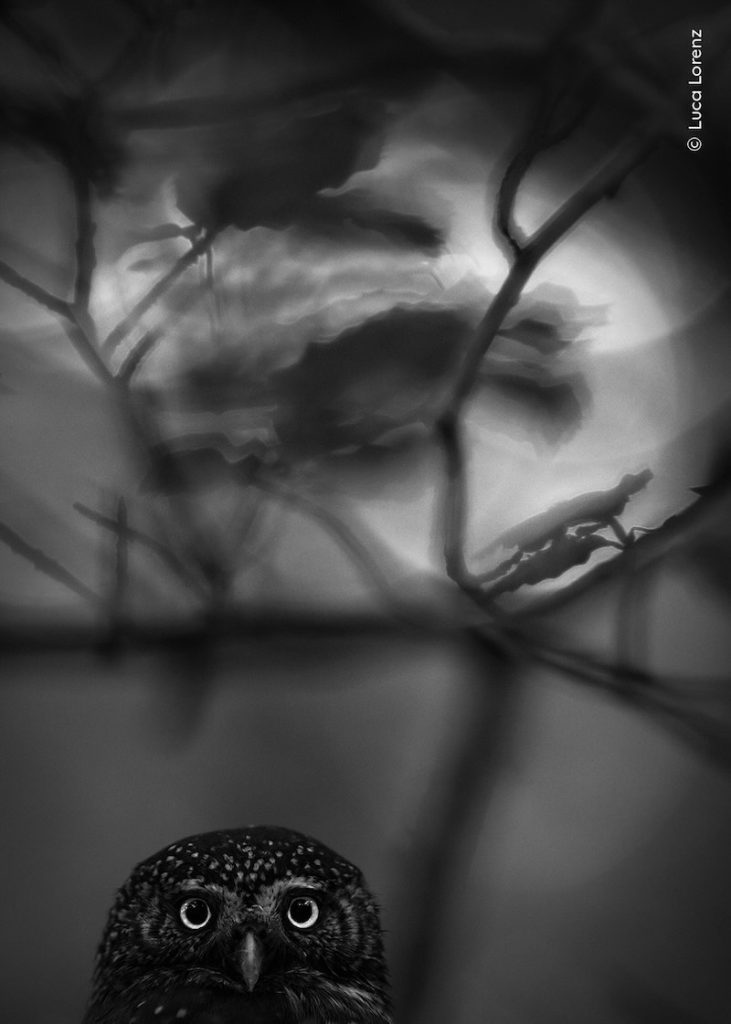
This tiny, secretive Eurasian pygmy owl hunts using both sight and sound, striking silently. This unusual black-and-white composition makes the most of the background silhouettes, which Luca felt suited a bird that lives among the shadows.
Winner, Oceans: The Bigger Picture. Audun Rikardsen (Norway) witnesses feeding time around an Atlantic fishing vessel during a polar night in northern Norway.
Audun managed to photograph this chaotic scene of gulls attempting to catch fish trapped by nets. The gulls have learnt to follow the sound of the boats to find a herring feast. Through his work, Audun aims to draw attention to the ongoing conflict between seabirds and the fishing industry.
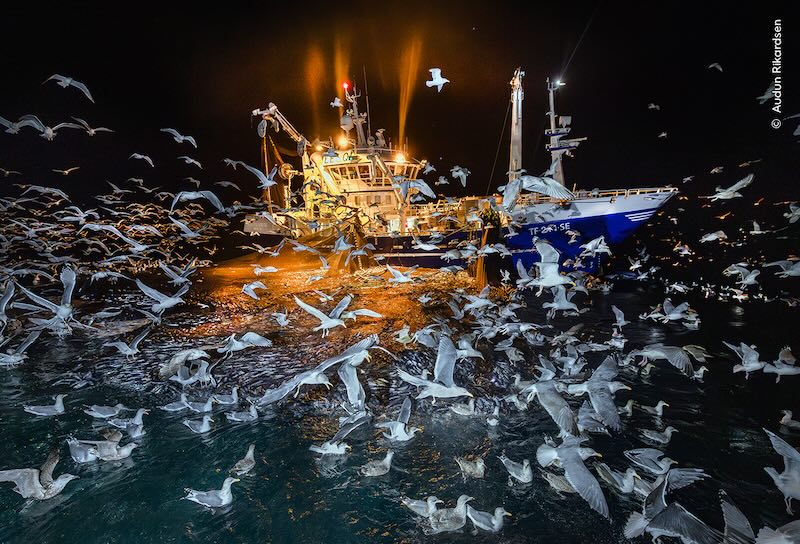
Unfortunately, many birds drown in or around these purse seine nets each year. Various fisheries and researchers are trialling solutions, including sinking the nets more quickly to make them less accessible to the birds.
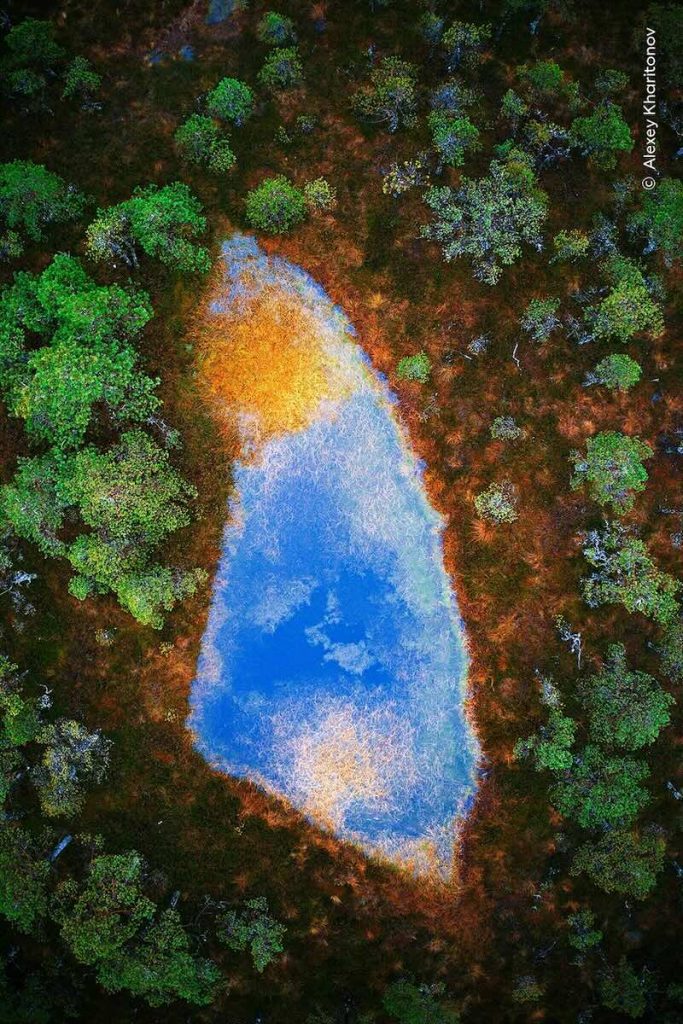
Winner, Portfolio Award: Alexey Kharitonov (Israel/Russia) finds art in unexpected perspectives across Russia’s northern swamps.
In the grey November twilight, Alexey flew his drone one last time over Bolshoe Znamenskoe Swamp before heading home. His reward was a sudden break in the clouds: a fragment of blue reflected in a small lake, surrounded by trees, and a grassy knoll posing as the sun.
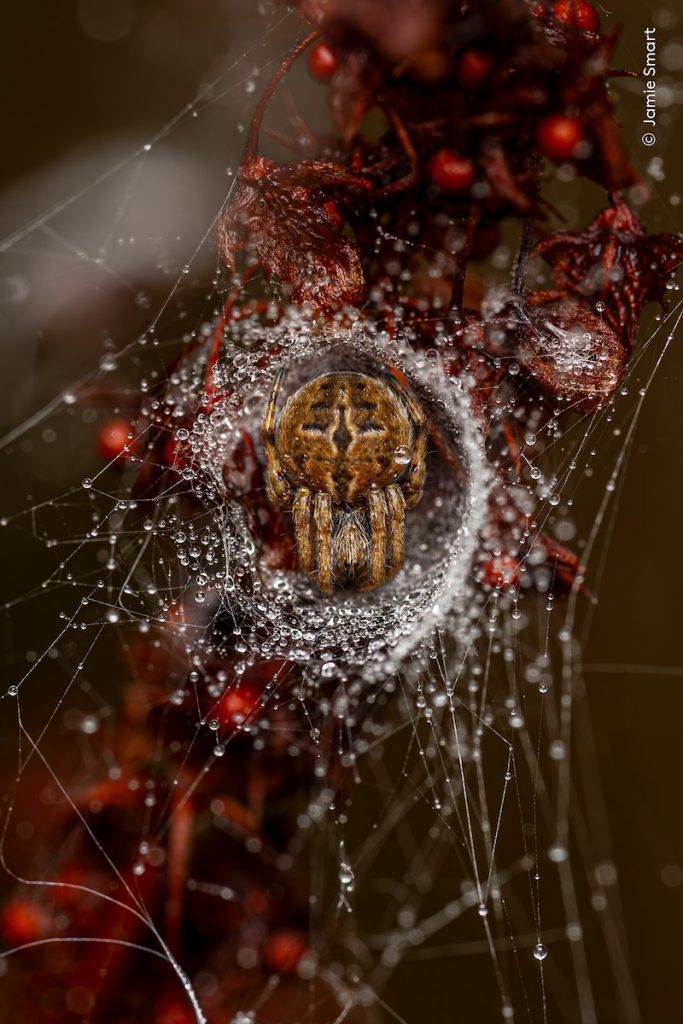
Winner, 10 Years and Under: Jamie Smart (UK) spots an orb weaver spider inside its silken retreat on a cold September morning.
Jamie first noticed the dew-laden web before realising its maker was sitting in a nest. With the patience and steadiness needed to manually focus her camera, she kept the spider perfectly lit and symmetrically framed.
Winner, 11–14 Years: Lubin Godin (France) finds himself in mist-shrouded mountains with silhouetted ibex.
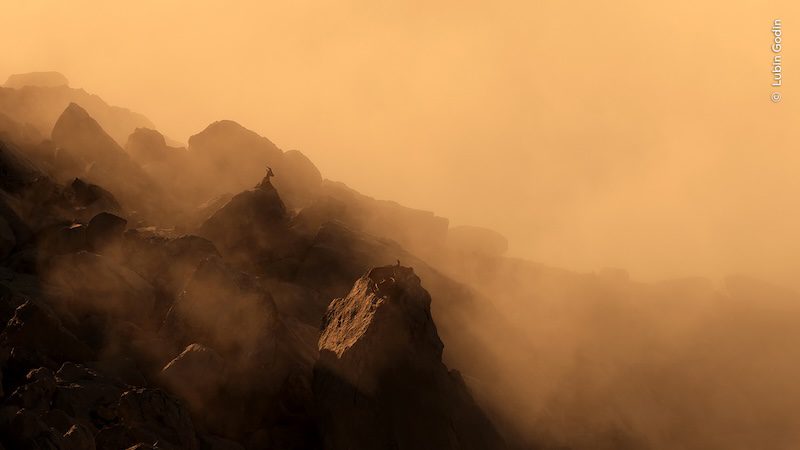
Lubin spotted the Alpine ibex resting above a sea of clouds during an early morning ascent. As the mist rose and the sun broke over the crags, he retraced his steps to capture this ethereal moment before fog thickened and the light faded.
Young Wildlife Photographer of the Year 2025, Winner, 15 – 17 Years: Andrea Dominizi (Italy) finds a longhorn beetle – a forest sentinel observing an intruder.
Andrea noticed this longhorn beetle while walking in the Lepini Mountains of central Italy, in an area once logged for old beech trees. Using a wide-angle lens and off-camera flash, he framed the beetle against abandoned machinery.
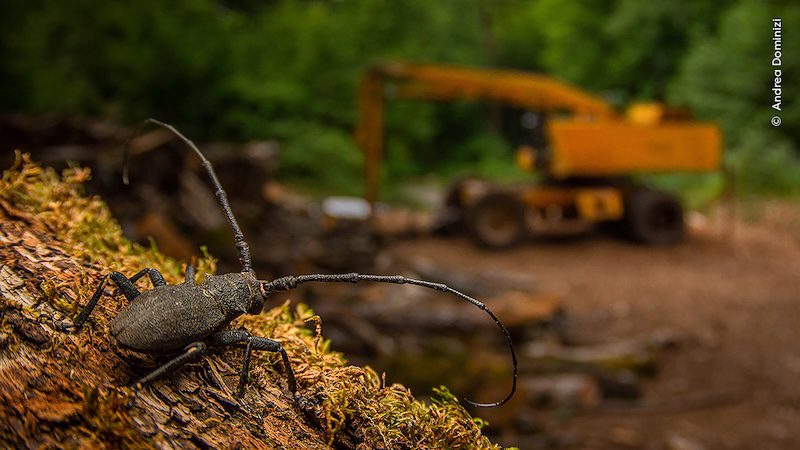
Andrea’s photograph tells a poignant story of habitat loss. As longhorn beetles tunnel into dead wood, fungi make their way inside, helping to break it down and recycle nutrients. If the beetles’ habitat is disturbed or destroyed, the effects ripple across the entire ecosystem.
Winner, Plants and Fungi: Chien Lee (Malaysia) uses a UV torch to reveal the fluorescent world of an insect-attracting pitcher plant.
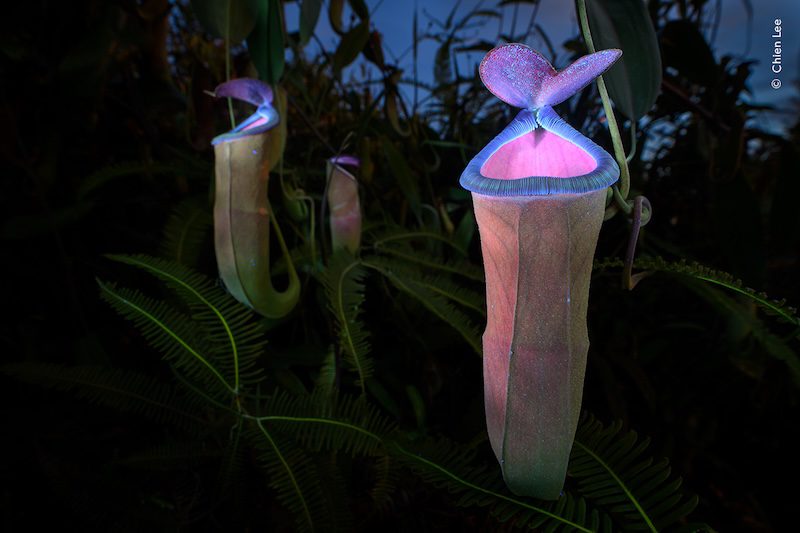
Insects can see ultraviolet (UV) light, but humans can’t, so Chien used a long exposure and a UV torch. Waiting until after sunset, he had just a five-minute window before the ambient light illuminating the backdrop disappeared completely. Some carnivorous pitcher plants reflect UV light on certain areas as part of their ‘display’. They use colour, scent and nectar to lure their prey into pools of digestive juices at the bottom of their leaves.
Winner, Natural Artistry: Simone Baumeister (Germany) shows an orb weaver spider on its web on a pedestrian bridge, silhouetted by lights from the cars below.
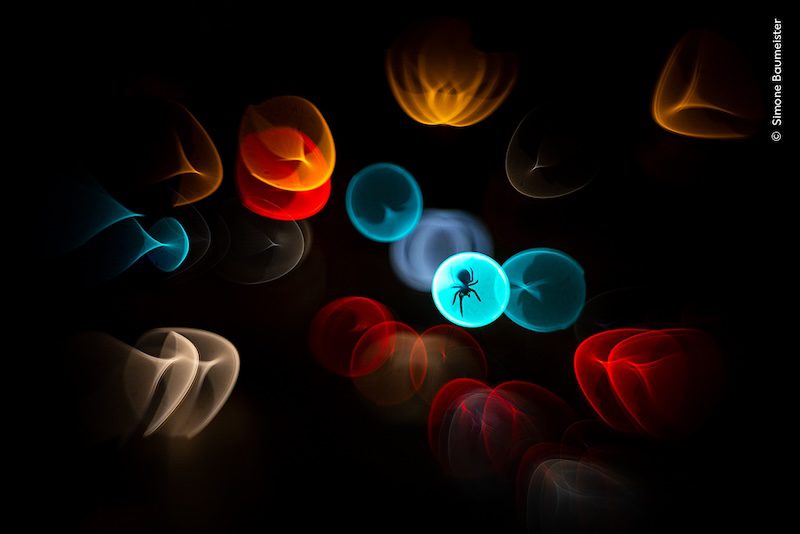
To achieve this kaleidoscopic effect, Simone reversed one of the six glass elements in an analogue lens. This distorted the image at the edges while leaving the centre sharply focused. She then cropped the picture to move the spider slightly off-centre.
Winner, Underwater: Ralph Pace (USA) beautifully illuminates the egg case of a swell shark, tethered to the base of a giant kelp.
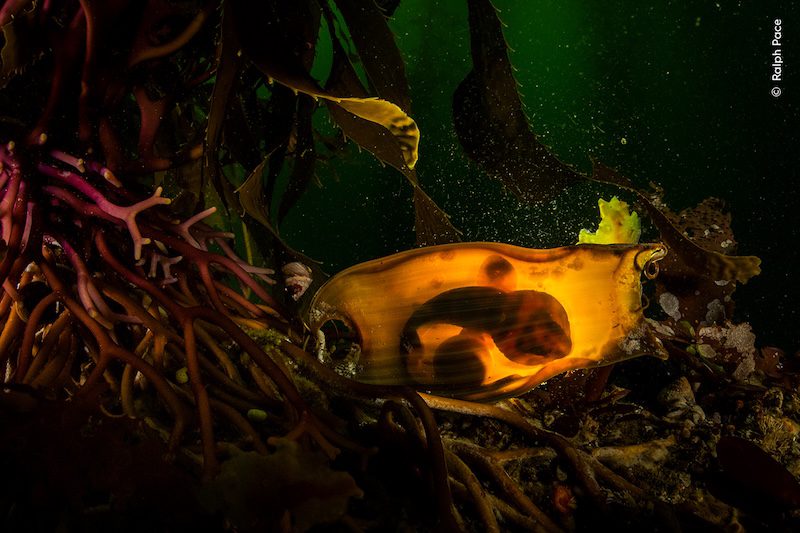
Faced with strong currents pushing him from side to side, Ralph struggled to keep steady to photograph this egg case, or ‘mermaid’s purse’. He lit the case from behind to reveal the swell shark embryo within, its gill slits and yolk sac clearly visible among the dark kelp forest.
Wildlife Photographer of the Year is developed and produced by the Natural History Museum, London. The winning photographs will be showcased at an exhibition at the Natural History Museum from Friday 17 October 2025, including 19 category winners across topics ranging from underwater to urban wildlife, and photojournalism to mammal behaviour.
Visit the Wildlife Photographer of the Year Exhibition website for details.
Disclosure: This post may include affiliate links.